




Measuring cognitive reserve in Australian clinical practice
Cognitive reserve describes the brain’s capacity to cope with neurological injury or disease despite measurable changes. It helps explain why two people with similar imaging findings or diagnoses can function very differently. Clinically, reserve is a protective resource shaped by life experience, health and social support, not a fixed score that predicts the future.
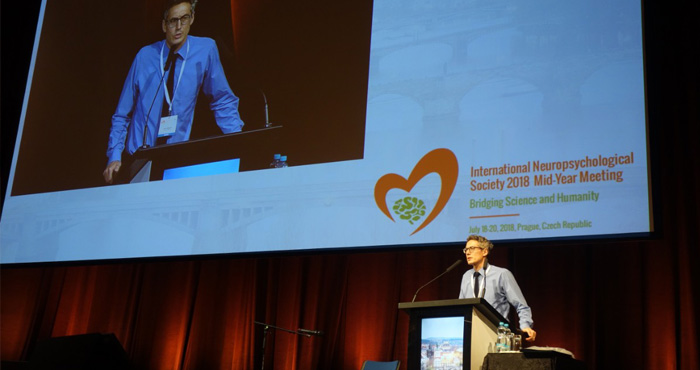
The INS 2018 meeting in Prague linked scientific advances with humane patient care. Applied to reserve, that perspective shifts attention from a deficit to how a person manages daily demands, which strengths protect them and what can be changed. The goal is a useful interpretation that informs care.
No scan or blood test measures reserve directly. Clinicians combine estimates of life exposure and activity with cognitive performance, functional history, informant evidence and attention to language, schooling, mood, sleep and sensory status. Used together, these sources can reveal the resources available to an individual.
For Australian clinicians, interpretation must fit a mixed system of public referrals, private practice, Medicare-subsidised telehealth and culturally diverse communities. Local context changes what counts as a demanding activity, how symptoms are described and which supports are realistically available.
Why reserve changes the clinical question
A given neuropathological burden creates a challenge, while reserve modifies how strongly that challenge affects performance. Education, occupation, complex leisure, social participation, language use and health all contribute, although none is a perfect proxy. The construct is dynamic and should never be reduced to assumptions about intelligence, motivation or social worth.
Outcome after a major injury illustrates the same point. A discussion of Post-haemorrhage cognitive outcomes shows why injury severity alone cannot explain daily function; premorbid reserve, treatment and recovery context also shape the result. This supports a biopsychosocial reading of test differences rather than simple labels such as early decline.
A workable measurement strategy
A workable assessment combines an interview-based estimate, performance data and current function. Structured tools such as the Cognitive Reserve Index and reserve questionnaires organise information about education, work and activities. They are screening aids rather than diagnostic tests, and their items reflect the society and schooling system in which they were developed.
Educational and occupational histories should be treated as opportunities and exposures, not measures of ability. Where possible, compare present performance with credible premorbid information and longitudinal change. A practical sequence might look like this:
- Establish the neurological, psychiatric and medical context.
- Review education, occupational roles, leisure and social participation.
- Use a validated reserve questionnaire alongside cognitive testing.
- Compare current function with prior records and informant reports.
Fitting assessment into Australian practice
Australian services operate through several pathways. Patients commonly reach specialists through GP referrals and Medicare rebates, then encounter public waiting lists or a private clinic with a possible gap fee. In Melbourne, Brisbane and Perth, private neuropsychology often works alongside tertiary services; regional and rural services may depend more heavily on telehealth. NDIS plans and aged-care assessments can provide valuable functional evidence when consent and roles are clear.
Culturally safe assessment is central. Aboriginal and Torres Strait Islander patients, refugees and people from culturally and linguistically diverse communities may have schooling, language and occupational histories poorly represented in standard norms. Qualified interpreters and community health workers can improve participation. Plain-language discussion—such as linking reserve to “keeping the brain active” or “coping after injury”—also helps patients connect the concept to work, family and community roles.
- Medicare and referral pathways shape access, rebates and out-of-pocket costs.
- Telehealth reaches distant patients, but privacy, bandwidth and a suitable room vary.
- NDIS and aged-care information can clarify everyday role demands.
- Interpreters and community health workers support valid, respectful testing.
Turning reserve estimates into individual care
Measurement matters only if it changes a plan. A parallel oncology resource on individualised treatment strategies illustrates a wider principle: combine disease burden, biological information, comorbidity and the person’s goals rather than applying one pathway to everyone. In neuropsychology, reserve estimates can similarly prevent overemphasis on a single score and reveal whether support should target cognition, health, communication, environment or participation.
Reserve is not directly trainable, but several contributors are clinically actionable. Hearing loss, vascular risk, sleep disturbance, depression, medication effects and social isolation can reduce effective capacity. Care may combine rehabilitation, speech or occupational therapy, symptom management and meaningful activity. Goals should be framed around the patient’s roles—for example, managing work, caring for family or remaining active in community life—rather than a generic improvement on a test.
Telehealth, follow-up and evidence
Remote assessment makes functional verification essential. Lessons summarised in Telehealth lessons from INS reinforce the value of interviewing a reliable informant, observing the home or work setting when possible, and checking that technology has not distorted performance. A hybrid sequence can combine initial testing, structured interviews and video follow-up, while in-person review remains useful when sensory, motor or communication needs are complex.
Longitudinal data are especially informative: stability, gradual change and sudden change imply different possibilities. Australian evidence should include diverse populations, standardised functional measures and educationally and culturally fair comparisons. A credible clinical model therefore treats reserve as an informed estimate used in a conversation about strengths, risk and support, with plans reviewed as function changes.
General Information
Important information about the meetingIndustry
Support and exhibition opportunitiesCzech Republic
Beautiful country situated in the very heart of EuropeContact
How can we help you?
Prague Congress Centre (KCP)
5.května 65140 21 Prague 4
Czech Republic
Phone: +420 261 171 111
Website: www.kcp.cz