




Gender differences in visuospatial processing following brain injury
When a blow to the skull leaves someone struggling to navigate a familiar hallway or read a map they once knew by heart, the loss often feels deeply personal. Visuospatial skills, the cognitive tools that allow us to judge distance, rotate objects mentally, and find our way through space, are among the most reliably sex-linked abilities in neuropsychology. After a traumatic brain injury, these gendered patterns can shift in surprising ways, with consequences for recovery, rehabilitation planning, and long-term independence in everyday tasks.
For clinicians working across Australian rehabilitation units, from busy trauma wards at Royal Melbourne to community-based programs in outer suburban Sydney, understanding these patterns has real-world importance. Patients recovering after motor vehicle accidents, sporting collisions, or workplace falls often present with visuospatial deficits that respond differently depending on biological sex, age, and hormonal status. Recognising those differences shapes how therapists design interventions, how families set realistic expectations, and how funding bodies such as the NDIS allocate support hours.
Biological foundations of visuospatial cognition
Population studies consistently show that, on average, cisgender men outperform cisgender women on mental rotation, maze navigation through unfamiliar environments, and targeted throwing tasks. Women, by contrast, tend to score higher on measures of spatial location memory and object landmark recognition. These differences appear early in development and persist across cultures, though the magnitude of the gap varies considerably between populations.
Functional imaging work from Australian and international laboratories indicates that men more often recruit right-hemisphere parietal regions during mental rotation, while women sometimes engage bilateral or more frontal networks. After a brain injury, the integrity of these networks becomes critical, and damage to either hemisphere can produce unique profiles of deficit.
Patterns of impairment after traumatic brain injury
Following moderate to severe traumatic brain injury, both sexes typically show reduced visuospatial performance compared with healthy peers. Some studies suggest women experience greater relative declines in mental rotation accuracy, while men show steeper drops in spatial memory for locations. These shifts do not simply reflect baseline differences; the injured brain appears to draw on compensatory regions differently in each sex.
In Australian trauma cohorts, particularly those referred through the TAC system in Victoria after road accidents, men account for roughly two-thirds of severe TBI cases. This sampling reality means most rehabilitation datasets remain male-dominated, leaving female recovery patterns under-represented in published norms.
Hormonal influences across the lifespan
Estrogen exerts measurable neuroprotective effects in animal models of brain injury, and human observational data point to similar patterns. Premenopausal women sometimes show better recovery trajectories than age-matched men, particularly in the weeks after mild to moderate injury. Post-menopause, this advantage appears to attenuate.
Progesterone, testosterone, and cortisol each modulate spatial processing through receptors and pathways in the hippocampus and parietal lobes. Researchers at Neuroscience Research Australia of southern Sydney have contributed to international consortia examining how these hormonal markers interact with lesion location and rehabilitation outcomes.
Assessment practices in Australian clinics
Standard neuropsychological batteries, including the Wechsler spatial span, Rey Complex Figure, and Judgment of Line Orientation, form the backbone of visuospatial assessment. Australian clinicians frequently adapt these tools for culturally diverse populations, including Aboriginal and Torres Strait Islander patients, where European-derived normative data may not apply cleanly. Telehealth follow-ups, partly subsidised through Medicare arrangements, allow remote patients in places like Cairns or Kalgoorlie to access repeated testing without travelling to tertiary centres.
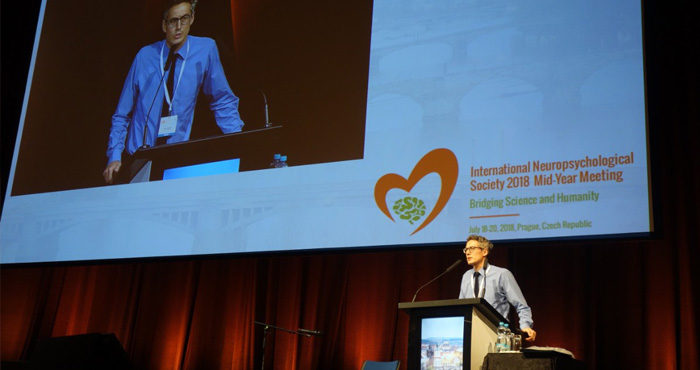
For clinicians seeking to deepen their assessment toolkit, the continuing education workshop descriptions at the Prague gathering offered dedicated sessions on cross-cultural neuropsychological testing and sex-sensitive interpretation of spatial tasks.
Rehabilitation approaches tailored to sex and gender
Therapy approaches that capitalise on residual strengths tend to yield better outcomes than those that ignore baseline sex differences. Women who retain strong landmark memory may benefit from navigation strategies that emphasise route learning through verbal labelling of environmental cues. Men, particularly those with strong mental rotation skills, often respond well to map-based training and computer-generated spatial tasks.
In community settings across Brisbane and Perth, occupational therapists increasingly use virtual reality applications to retrain spatial abilities after stroke and TBI. These tools can be adjusted to emphasise either egocentric or allocentric navigation, allowing clinicians to target the specific visuospatial domain most impaired in each individual.
Cultural and clinical implications across Australia
Australia's geographical spread creates unique service gaps. Patients in rural Western Australia or far north Queensland may wait weeks for specialist follow-up, during which visuospatial deficits can compound through reduced independent mobility and increased fall risk. Cultural factors also matter: language diversity, educational background, and prior exposure to computer-based tasks all influence baseline performance.
Programs funded through the NDIS increasingly recognise visuospatial dysfunction as a core barrier to community participation. Practical supports, such as home modifications, route-training with support workers, and smartphone-based wayfinding apps, can substantially reduce disability when matched to the individual's cognitive profile.
Future directions for research and clinical practice
Large, prospective cohorts with adequate female representation remain the field's most pressing need. Studies that combine neuroimaging, hormonal assays, and repeated behavioural testing across the recovery arc offer the best chance of untangling cause from correlation in sex-based outcome differences.
For conference delegates planning their travel, practical advice on Prague public transport tips helps free up mental energy for the dense scientific program. Embedding sex-sensitive analysis into routine clinical reasoning will sharpen the bridge between research evidence and humane patient care that the meeting sought to build.
General Information
Important information about the meetingIndustry
Support and exhibition opportunitiesCzech Republic
Beautiful country situated in the very heart of EuropeContact
How can we help you?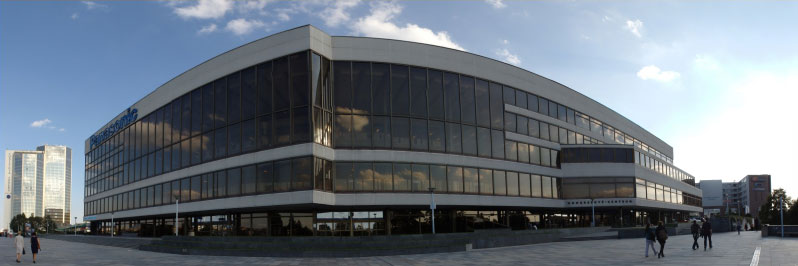
Prague Congress Centre (KCP)
5.května 65140 21 Prague 4
Czech Republic
Phone: +420 261 171 111
Website: www.kcp.cz