



A practical approach to arithmetic assessment
Testing arithmetic skills in patients with acalculia is most informative when it explains why calculations fail, rather than only whether an answer is wrong. Acquired acalculia can follow stroke, traumatic brain injury, tumour treatment or encephalitis, affecting number reading, symbolic quantity, written operations, calculation speed or working memory.
Assessment should combine a structured arithmetic sample with cognition, education, language and everyday function. This balances scientific rigour with humane care, while adapting interpretation to Australia’s diverse education systems, languages and health pathways.
Distinguish acquired from developmental difficulties
Developmental dyscalculia and acquired acalculia can look alike on a worksheet, so establish the history before testing. Ask about school mathematics, especially Australian Years 3–5, streaming, attendance, calculator use, number talk at home and any earlier difficulty. Document the neurological event, symptom onset and whether performance changed sharply from a stable premorbid baseline.
Neurological localisation offers hypotheses, not a diagnosis. Left-hemisphere injury may affect symbolic processing, while right-sided or spatial deficits can distort columns and number placement; fatigue, medication and pain also change performance. Systemic disease adds further complexity, and the autoimmune encephalitis article is a useful reminder to examine arithmetic alongside attention, memory and daily function.
Build a task profile rather than one score
Begin with a low-demand sample that moves from reading and writing numerals to counting, magnitude comparison, one-digit operations and multi-digit calculations. Vary complexity, speed, support and modality: spoken answers, written work, mental arithmetic, paper-and-pencil calculation and calculator-assisted performance can reveal different constraints. Record latency, strategy, slips and help-seeking rather than score alone.
Select age-appropriate achievement and cognitive measures with Australian norms, then interpret them beside qualitative data. A current Wechsler Adult Intelligence Scale edition can sample processing speed and working memory, while the Wide Range Achievement Test 4 and relevant Woodcock-Johnson number tasks contribute achievement information. The IPR 2016 resource may support programme comparison, but it does not replace test manuals, local validation or clinician judgement.
Use a compact assessment checklist
Start with a brief screen and add standardised measures only when they answer a clinical question. Useful measures include:
- A graded arithmetic and number-symbol screen
- Wechsler Working Memory and Processing Speed indices
- WRAT4 arithmetic and relevant Woodcock-Johnson number tasks
- Targeted language, visual, executive and motor measures
The record should also capture:
- Premorbid mathematics, schooling, language history and calculator use
- Vision, hearing, fatigue, pain, mood, medication and motor limitations
- Representative errors, response times and compensatory strategies
- Goals involving Australian dollars, household bills, timetables or medication quantities
Interpret errors as a pattern
Classify errors across symbolic, spatial, attentional, speed, memory and executive processes. A patient may understand place value but fail to retrieve facts, manage carrying, align columns or suppress a premature answer. Repeated “12 + 9 = 21” slips differ from slow but accurate work; multiplication-table gaps differ from an inability to read the multiplier. Patterns should guide hypotheses, not imply that every error localises one lesion.
Then examine whether the difficulty matters in daily life. In Melbourne, calculating a tram fare or change in Australian dollars may be a relevant goal; in Sydney, an Opal card top-up, taxi split or supermarket checkout may provide a more meaningful sample than a classroom-style test. Let the person show how they check an answer or use a phone calculator, then identify the point at which support is needed. A low arithmetic score cannot by itself indicate limited intelligence or decision-making capacity.
Navigate Australian referral and privacy pathways
Neuropsychological assessment occurs in public memory clinics, private practices, rehabilitation centres and telehealth services. Medicare rebates may cover eligible GP-referred services, while private insurance, self-payment and workplace or school arrangements differ. An NDIS plan may fund assessment when it directly supports functional goals, although routine school assessment is not generally an NDIS service; confirm current funding rules and avoid promising access.
Under the Privacy Act 1988, Australian Privacy Principles govern how health information is collected, stored and disclosed, including for telehealth. Obtain informed consent for testing, recording and report sharing, and apply the applicable state or territory law when decision-making capacity is in question. Use qualified interpreters for people who communicate in another language, and make reports accessible to people who have limited literacy, vision or hearing. Arithmetic performance cannot substitute for a capacity assessment.
Report findings for clinicians and everyday decisions
A useful report separates the arithmetic profile from associated strengths and weaknesses, states the evidence for each interpretation and includes representative errors. Describe performance with and without time pressure, calculator access, prompting and reduced visual clutter. Recommendations can include extra processing time, written steps, checking routines, assistive technology and task-specific strategies, while distinguishing helpful accommodation from treatment claims.
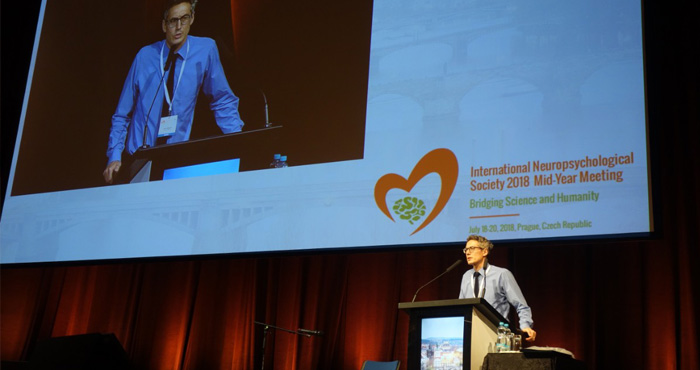
International meetings can support comparison of methods, and the INS 2018 Prague materials preserve useful historical context through its programme, posters and workshops. The site’s Prague visitor information supported delegates attending the July 2018 meeting, while current Australian standards and test manuals should guide present practice. Combining psychometric evidence, functional observation and careful safeguards produces a report clinicians, families and participants can use.
General Information
Important information about the meetingIndustry
Support and exhibition opportunitiesCzech Republic
Beautiful country situated in the very heart of EuropeContact
How can we help you?
Prague Congress Centre (KCP)
5.května 65140 21 Prague 4
Czech Republic
Phone: +420 261 171 111
Website: www.kcp.cz