




Neuropsychology of Autoimmune Encephalitis in Clinical Practice
Autoimmune encephalitis (AE) is a group of inflammatory brain disorders in which immune activity disrupts cognition, behavior, emotion, and neurological function. Symptoms may develop over days or weeks, often combining memory loss, confusion, seizures, psychosis, sleep disturbance, language problems, or abnormal movements. Because the presentation can resemble infection, epilepsy, dementia, or a primary psychiatric illness, neuropsychological expertise is central to timely recognition.
The neuropsychology of autoimmune encephalitis extends beyond identifying impaired scores. It examines how attention, learning, executive control, social cognition, and emotional regulation change during acute illness and recovery. It also considers premorbid abilities, education, language, culture, fatigue, medication effects, and the patient’s experience of losing reliable access to familiar mental skills.
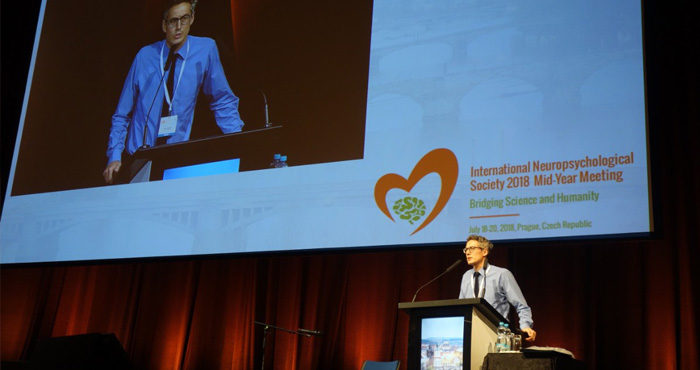
The scientific and clinical themes associated with the INS 2018 meeting remain relevant: advances in neuroscience are most useful when translated into humane, culturally responsive patient care. A careful assessment can support diagnosis, guide rehabilitation, and help families understand changes that may otherwise appear unpredictable.
Recognizing The Cognitive Profile
Memory impairment is among the most visible features of AE, particularly when the hippocampus or related medial temporal systems are affected. Patients may struggle to retain new information, repeat questions, or reconstruct recent events. Yet the pattern is rarely uniform. Attention, processing speed, verbal fluency, working memory, visuospatial skills, and inhibitory control may also fluctuate substantially.
Psychiatric symptoms can dominate the early presentation. Anxiety, agitation, hallucinations, disinhibition, apathy, or altered personality may be interpreted as evidence of a primary psychiatric disorder. Neuropsychological examination helps place these symptoms alongside objective cognitive findings, neurological signs, sleep changes, autonomic instability, and seizure activity.
Assessment Across Acute And Recovery Phases
Testing during the acute phase should be flexible. Delirium, sedation, seizures, sleep deprivation, pain, and emotional distress can make a long battery invalid or unnecessarily exhausting. Brief measures of orientation, attention, language, memory, and executive function may provide a useful baseline, followed by targeted assessment as the patient stabilizes.
A comprehensive evaluation later in recovery should compare multiple domains rather than relying on a single global score. Interviews with relatives are especially important because patients may have limited awareness of their deficits. Serial testing can reveal meaningful improvement even when everyday difficulties persist, such as forgetting appointments, becoming overwhelmed in busy environments, or losing track of multistep tasks.
Antibodies, Networks, And Individual Differences
Antibody status can offer valuable biological context, but it does not determine a patient’s cognitive outcome by itself. Anti-NMDA receptor encephalitis is often associated with psychiatric symptoms, executive dysfunction, memory difficulties, language disturbance, and reduced social cognition. LGI1-associated disease frequently involves episodic memory impairment and seizures, while GABA-B receptor and CASPR2-related syndromes may present with combinations of memory, seizure, sleep, peripheral nerve, or behavioral symptoms.
These patterns are tendencies rather than fixed diagnostic templates. MRI and cerebrospinal fluid findings may be normal or nonspecific, and cognitive performance can be influenced by treatment delay, inflammation, seizure burden, intensive care complications, and relapse. A network-based perspective therefore works best: clinicians track disrupted functions, compensatory strategies, and changes over time instead of treating an antibody label as a complete explanation.
Measuring Recovery And Daily Function
Recovery may continue for months or years after immunotherapy. Improvements in basic orientation can occur before patients regain efficient learning, flexible problem-solving, or confidence in social situations. Neuropsychologists can distinguish genuine cognitive change from reduced performance caused by depression, fatigue, medication, sleep disturbance, or fear of failure.
Rehabilitation should connect test findings with real-world goals. External memory aids, structured routines, written instructions, spaced retrieval, errorless learning, and graded exposure to complex activities can support independence. Evidence from adjacent cognitive rehabilitation fields, including this evidence review, can inform strategy selection, while treatment remains individualized for inflammatory brain disease.
| Clinical domain | Possible difficulty | Useful clinical response |
|---|---|---|
| New learning | Repetition, rapid forgetting, poor recall of conversations | Spaced practice, notebooks, phone reminders |
| Attention | Distractibility, slowed processing, mental fatigue | Short tasks, quiet settings, planned rest |
| Executive skills | Poor initiation, disorganization, impulsive decisions | Checklists, routines, step-by-step coaching |
| Social cognition | Misreading cues or changes in emotional expression | Explicit feedback, role-play, family education |
| Emotional regulation | Irritability, anxiety, apathy, or frustration | Psychological support and coordinated medical care |
Coordinating Humane Patient Care
Families should receive an explanation that behavior changes may reflect brain dysfunction rather than deliberate opposition. This framing can reduce blame and improve cooperation with rehabilitation. Clinicians should also ask how cultural expectations, language, family roles, and health literacy affect symptom reporting and treatment decisions.
A multidisciplinary team may include neurologists, psychiatrists, neuropsychologists, speech-language therapists, occupational therapists, nurses, social workers, and rehabilitation physicians. Clear communication is essential because cognitive symptoms can affect consent, medication adherence, driving, employment, and the ability to manage finances or childcare.
Practical Priorities For Clinicians
- Establish a brief, repeatable cognitive baseline once the patient can engage reliably.
- Interpret scores alongside seizures, medications, sleep, mood, fatigue, and neurological findings.
- Use culturally and linguistically appropriate measures, with qualified interpreters when needed.
- Convert assessment results into specific compensatory strategies for home, school, or work.
- Schedule follow-up assessments to monitor delayed recovery, relapse, and changing rehabilitation needs.
Neuropsychological care is strongest when it preserves the patient’s identity while addressing measurable impairment. A person recovering from encephalitis may need support with memory and planning while still retaining preferences, relationships, expertise, and meaningful goals.
The INS 2018 archive offers a useful reminder that neuropsychology connects laboratory discovery with compassionate clinical practice. Explore the conference resource and related clinical material at INS 2018 to continue examining how cognitive science can improve assessment, recovery planning, and patient-centered care.
General Information
Important information about the meetingIndustry
Support and exhibition opportunitiesCzech Republic
Beautiful country situated in the very heart of EuropeContact
How can we help you?
Prague Congress Centre (KCP)
5.května 65140 21 Prague 4
Czech Republic
Phone: +420 261 171 111
Website: www.kcp.cz