




Subjective and Objective Cognitive Decline: What the Gap Tells Us
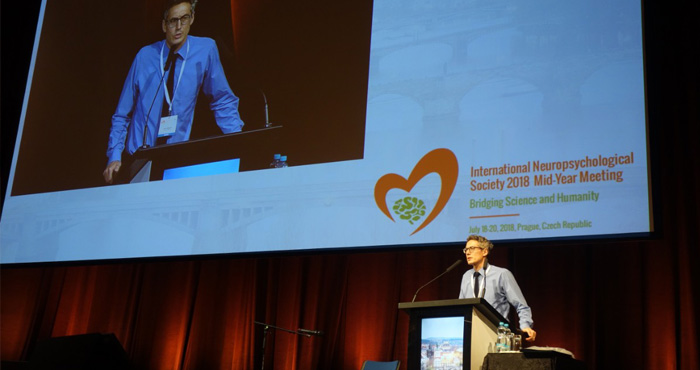
The International Neuropsychological Society's mid-year meeting in Prague, 18–20 July 2018, placed basic neuroscience, cultural context and hands-on clinical work on a single programme. Posters, plenary talks and continuing education workshops converged on one question: how do we turn scientific advance into humane care?
A recurring theme was the relationship between subjective and objective cognitive decline — the distance between what a person feels their memory is doing and what a test battery records. Patients worry while families watch; the same patient may score within normal limits. That distance is not error, and it carries information.
Getting the relationship right shapes what happens next: whether a referral is warranted, whether driving advice is needed, whether someone is reassured or sent for investigation. The Prague meeting treated this as clinical practice as much as psychometrics, and the framing travels well to Australian clinics.
Why feeling and measuring so often disagree
Subjective decline arrives as complaint: forgetting names, repeating questions, misplacing keys, getting lost on a familiar route. Objective decline arrives as performance: MoCA and MMSE scores, reaction times, digit span, delayed recall. Both capture something real, and they do not move together.
Some people overestimate their loss, especially under stress, grief or poor sleep. Others understate it, because anosognosia limits self-monitoring or because they have reorganised life around the difficulty. A score does not say whether someone can manage the household accounts or drive after dark; a complaint does not establish impairment.
Where subjective decline shows up in ordinary Australian days
Most people notice change inside habits rather than on test forms: a text read twice in the drive-through queue, a wrong turn on the school run that was never wrong before, laps around the local park abandoned because the route no longer feels reliable.
Because these events are anchored to specific routines, they are useful for history-taking but hard to score, and they are rarely volunteered. Open questions about the past week — what was missed, what was avoided, who noticed first — surface more than a yes/no checklist, and usually arrive before any change appears on a screen.
Objective testing and the limits of a single number
Objective assessment is rarely one instrument. A battery samples memory, executive function, attention, language and visuospatial ability, and interpretation depends on normative data collected in Prague, Boston or elsewhere that may not match an Australian outpatient population.
Screening tools are also hostage to education, language, vision and hearing, so someone who left school early or has untreated hearing loss can look impaired while cognitively intact. Motor and cognitive demands interact, and pairing them exposes what either misses alone: physio-led dual-task gait and balance work is documented in the 27kiso rehabilitation research, so functional screening increasingly accompanies pencil-and-paper testing.
Networks that distort self-appraisal
Self-evaluation of one's own thinking draws on the anterior cingulate, insula and frontoparietal networks; as these change, the accuracy of self-report can drift away from measured performance without anyone intending to mislead.
The cerebellum, long treated as a coordination structure, has moved closer to cognitive science. Reviews of cerebellum and higher cognition outline contributions to attention, language and working memory, and suggest mechanisms for slow failures of self-monitoring that standard batteries under-detect.
Add anosognosia and the subjective report becomes a noisy signal rather than a stand-in for a test result. Depression, fatigue, obstructive sleep apnoea and polypharmacy all raise that noise.
Brain injury as a natural experiment in awareness
Survivors of aneurysmal subarachnoid haemorrhage show how far awareness and performance can separate: some improve substantially on testing while remaining unaware of what they have lost, others grasp their deficits long before scores catch up. Reviews of outcomes after aneurysmal haemorrhage chart both patterns across the recovery years.
The practical lesson is procedural — track the two trajectories separately and never infer one from the other. With consent, ask an informant as well: family members often detect compensation strategies that have masked decline from both the patient and the test.
Culture, language and the Australian clinical setting
Subjective reports reach clinics in many languages, and the concepts do not translate cleanly. Arabic, Mandarin, Greek, Vietnamese and Italian speakers describe memory difficulty in ways standard questionnaires were not built to capture; validated local norms and a professional interpreter, rather than a worried relative, keep the history usable.
Aboriginal and Torres Strait Islander clients may frame memory problems in ways deficit-first questionnaires miss, and culturally safe assessment — making room for the person's own account, asking who noticed changes — improves the reliability of everything that follows.
Local rules also govern sharing. Records under the My Health Records Act 2012 and the Privacy Act 1988 carry consent conditions that differ from a European clinic's, while aged care and NDIS participants sit inside their own frameworks. Medicare referrals, the PBS and long cognitive clinic waits in Melbourne, Sydney and Brisbane make telehealth follow-up increasingly practical.
A defensible approach to the gap
The relationship between what a person feels and what a test records is measurable, and it shifts over time. Assessment works best when both streams are gathered, plotted against each other, and read alongside mood, sleep, sensory function and medication burden. These steps fit ordinary Australian practice — general practice, memory clinics, aged care and allied health — without new technology.
- Record the subjective complaint and the objective score separately at each review, so divergence stays visible instead of being averaged away.
- Ask open, functional questions about the past fortnight before reaching for a rating scale.
- Screen for depression, sleep apnoea, hearing loss, vision and medication effects before attributing complaints to a neurodegenerative process.
- Seek an informant's account with the patient's consent, and use a professional interpreter for clients who speak a language other than English.
- Pair cognitive results with functional follow-up — physiotherapy, occupational therapy and formal driving assessment — so change is judged where independence is actually lived.
General Information
Important information about the meetingIndustry
Support and exhibition opportunitiesCzech Republic
Beautiful country situated in the very heart of EuropeContact
How can we help you?
Prague Congress Centre (KCP)
5.května 65140 21 Prague 4
Czech Republic
Phone: +420 261 171 111
Website: www.kcp.cz