



Executive function and social functioning in autism spectrum disorder
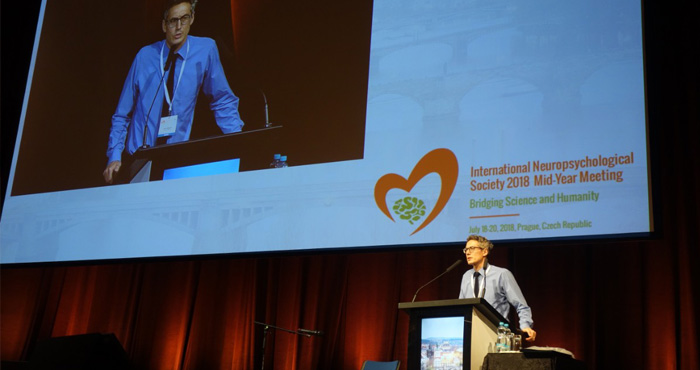
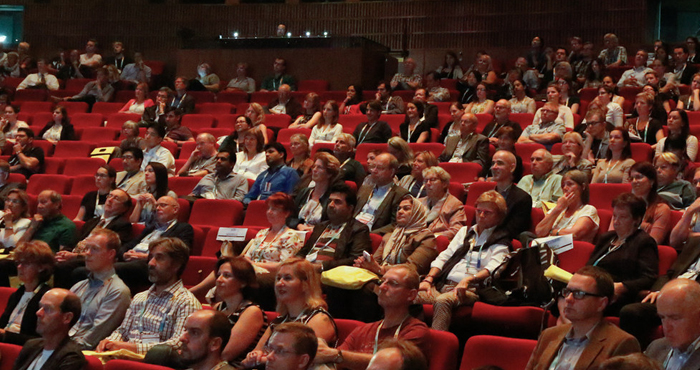
The INS 2018 mid-year meeting in Prague, held from 18 to 20 July 2018, brought neuroscientists and clinicians together around a central challenge: how should scientific advances translate into humane care? The programme, posters and workshops connected evidence about cognition and social participation with the realities of assessment and intervention. Learn more about 運動後の筋痛と炎症反応の基礎的知見.
Discussions of executive function and social functioning in autism spectrum disorder made that challenge especially visible. Executive control and social communication are related but distinct, and both vary widely across individuals, developmental stages and environments. A useful clinical approach therefore looks beyond diagnostic labels to the person's goals, strengths, co-occurring needs and the demands placed on them.
From laboratory insight to clinical practice
Executive function covers the management of attention, working memory, inhibition, planning and flexible shifting. In autism, these processes may vary widely: one person may struggle to begin a task, while another handles initiation readily but loses track of multi-step instructions. Difficulties can also become more visible under time pressure, fatigue or unfamiliar settings.
Social functioning includes reciprocal communication, interpreting social information, building relationships and participating in groups. It should not be treated as a one-sided skills deficit. Differences between autistic and non-autistic communication can create the double empathy problem, where both parties struggle to understand each other. The INS 2018 emphasis on humane care therefore favoured environmental adaptation and partnership rather than demands for conformity.
Executive control in everyday life
Executive difficulties often appear as missed transitions, lost materials, rigid schedules or difficulty recovering from an interruption. Standardised scores may not reveal these problems, so clinicians should ask about routines across home, school, work and community. A plan built around predictable cues and visible reminders may be more useful than expecting greater effort or faster processing.
Support works best when it changes the task and environment rather than demanding constant self-control. Written checklists, visual timetables, reduced instructions and advance notice can preserve independence. For people who use physical activity to support regulation, background on exercise-related muscle pain can help distinguish expected physiological responses from persistent symptoms that warrant assessment.
Communication, reciprocity and social confidence
Social functioning may involve differences in eye contact, conversational timing, interpretation of metaphor or understanding unwritten rules. Masking, or consciously imitating expected social behaviour, can support participation in some settings but may also produce exhaustion, anxiety and loss of confidence. The aim should be access and wellbeing, not effortless conformity.
Assessment should combine developmental history, daily examples, observation and reports from people who know the individual. It must account for language, culture, sleep, ADHD, anxiety and sensory needs, because each can alter performance. Autistic strengths such as detailed observation, persistence and specialist knowledge should also inform the formulation and goals.
Culture, language and neurodiversity
Culture shapes communication norms and what counts as competent participation. Multilingual households need assessment that distinguishes language proficiency from reasoning and social inference. Neuropsychological perspectives on bilingualism and the brain can help clinicians choose measures and interpret results without penalising familiarity with one language or an unfamiliar educational system.
Clinical goals should be co-designed with autistic people and their chosen supporters. Professional interpreters may be needed for consent and assessment, rather than relying on family members. Feedback should identify the specific context of a difficulty, offer choices, and respect an individual's communication preferences without assuming one universal autistic experience.
Australian assessment and service contexts
Australian services operate through a mixed funding market. In Sydney, Melbourne, Brisbane and Perth, private neuropsychologists work alongside psychologists, occupational therapists, speech pathologists and public services. The NDIS funds eligible supports, while Medicare rebates for psychological and allied-health care depend on eligibility and GP referrals; teams should check the relevant pathway instead of assuming one subsidy covers an entire care plan.
For Aboriginal and Torres Strait Islander children and families, cultural safety is part of clinical quality. Services should work with local Aboriginal health organisations, follow local communication protocols and establish whether an Aboriginal practitioner is available. In regional and remote Australia, telehealth, outreach and planning for technology access can be as important as the assessment itself.
A practical comparison highlights how related needs may require different responses.
| Area | Executive-function pattern | Social-function pattern | Shared response |
|---|---|---|---|
| Starting | Difficulty initiating a task | Difficulty entering an interaction | Give one cue and a clear first step |
| Shifting | Rigid response to change | Difficulty updating social expectations | Preview changes and rehearse alternatives |
| Tracking | Losing steps or details | Losing conversational threads | Use visible reminders and written cues |
| Monitoring | Difficulty checking progress | Misreading a social cue | Use calm feedback and explicit repair |
These are possibilities, not fixed profiles. Individual strengths, co-occurring conditions and preferences should determine which supports are prioritised.
Practical recommendations for clinicians and families
Clinical recommendations should follow the person's goals and be feasible across daily settings.
- Set priorities in the person's own terms, including what participation should feel like.
- Pair executive supports with communication and environmental changes rather than training skills in isolation.
- Plan for fatigue, anxiety, sleep and sensory load, with adjustment built into the routine.
- Review outcomes with the person and chosen supporters, using observable participation indicators.
Consistency across home, school and clinic turns these recommendations into reliable support rather than isolated strategies. A coordinated plan should specify who provides each prompt, what happens when a plan fails, and how outcomes will be reviewed when context or priorities change.
General Information
Important information about the meetingIndustry
Support and exhibition opportunitiesCzech Republic
Beautiful country situated in the very heart of EuropeContact
How can we help you?
Prague Congress Centre (KCP)
5.května 65140 21 Prague 4
Czech Republic
Phone: +420 261 171 111
Website: www.kcp.cz