




Bilingualism And The Brain In Neuropsychology
Bilingualism offers a natural lens for studying how the brain learns, manages, and retrieves language. People who use two or more languages constantly coordinate vocabulary, grammar, sounds, and social meaning, creating a rich field for neuropsychological research.
The subject also carries direct clinical importance. Language history can shape test performance, recovery after brain injury, patterns of cognitive aging, and how patients communicate symptoms. A fair assessment therefore requires more than translating an English test into another language.
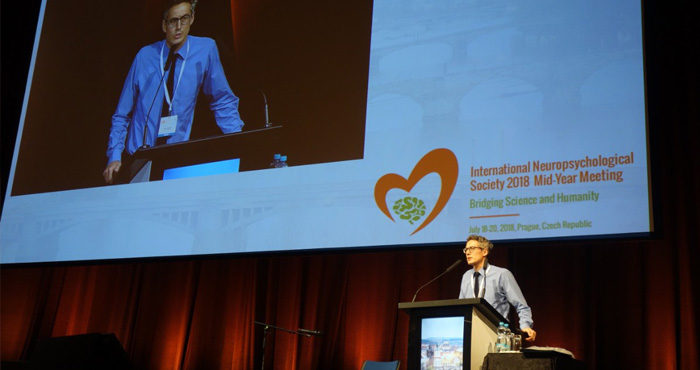
The International Neuropsychological Society meeting in Prague in 2018 placed scientific progress alongside humane patient care and cultural awareness. Its program, posters, workshops, and clinical discussions provide a useful context for understanding bilingual cognition from both laboratory and practice-based perspectives.
Why Language Experience Matters
Bilingual experience is highly varied. Age of acquisition, proficiency, frequency of use, literacy, language similarity, and the settings in which each language is spoken can all influence cognitive performance. A person who learned a second language in childhood may show a different neural profile from someone who became bilingual in adulthood.
These differences make broad claims about “the bilingual brain” difficult to sustain. Executive control, working memory, attention, and cognitive flexibility may be influenced by language management, but outcomes depend on the individual’s complete linguistic and cultural background. Neuropsychology benefits from treating bilingualism as a multidimensional experience rather than a simple category.
Neural Systems In Two Languages
Functional neuroimaging suggests that both languages often draw on overlapping brain networks, especially regions involved in speech production, comprehension, semantic processing, and cognitive control. The degree of overlap can change with proficiency and learning age. Frequent language switching may also recruit monitoring systems that help a speaker select the intended language and suppress interference.
Neural plasticity is especially relevant when bilingual people experience stroke, traumatic brain injury, or neurodegenerative disease. Recovery may occur unevenly across languages, and improvement in one language does not always predict identical improvement in the other. Clinical interpretation must therefore examine language-specific abilities rather than assume that one language represents the whole system.
Assessment Beyond Vocabulary
A translated test is not automatically a valid test. Norms may differ by education, immigration history, literacy, socioeconomic opportunity, and cultural familiarity. Even apparently simple tasks can measure different abilities when instructions, idioms, or response conventions shift between languages.
| Clinical area | Questions to examine | Useful evidence |
|---|---|---|
| Language proficiency | Which language is used at home, work, and school? | Detailed language history |
| Memory | Was information learned in the same language as the test? | Learning-language comparison |
| Executive control | How often does the person switch languages? | Everyday communication patterns |
| Emotional symptoms | Can distress be expressed equally in both languages? | Culturally sensitive interview |
| Dementia screening | Are norms appropriate for education and culture? | Validated bilingual measures |
A strong evaluation combines standardized measures with observation, collateral information, and an interpreter or bilingual clinician when needed. Testing should document language dominance, preferred language, years of education, and changes in use over time. These details help distinguish impairment from limited exposure to the assessment language.
Culture Context And Clinical Care
Culture affects how patients describe pain, memory lapses, mood, and functional difficulties. Some individuals may speak more freely in their first language, while others may have developed professional or academic vocabulary primarily in their second language. Rapport can alter performance as much as task difficulty does.
Humane care also requires attention to family roles and community expectations. A bilingual patient may switch languages to signal intimacy, authority, privacy, or respect. Clinicians who notice these patterns can create a more accurate picture of daily functioning and avoid interpreting culturally shaped communication as confusion or resistance.
Research Questions From Prague
A conference focused on bridging neuroscience and clinical practice naturally raises questions about how bilingualism affects aging and rehabilitation. Does lifelong language management contribute to cognitive reserve? Which forms of bilingual experience are most protective, and how should researchers separate language practice from education, migration, and social engagement?
Poster presentations and continuing education workshops are valuable because they connect emerging data with clinical decisions. The wider conference setting also shows how research depends on collaboration among psychologists, neurologists, speech-language professionals, educators, patients, and community organizations. Information about the meeting’s sponsors and exhibitors reflects that broader professional network.
Practical Guidance For Neuropsychologists
Bilingual assessment should be planned before testing begins. Clinicians can gather a language-use map, identify the patient’s strongest language for different tasks, and select measures with suitable norms. When an interpreter is involved, the professional team should clarify terminology, confidentiality, and the interpreter’s role in preserving rather than reshaping responses.
Useful principles include:
- Record age of acquisition, proficiency, literacy, and daily language exposure.
- Test the language most relevant to the referral question whenever possible.
- Interpret scores alongside education, migration, culture, and occupational history.
- Compare reports from family members with the patient’s own language experience.
- Avoid diagnosing impairment from low performance in an unfamiliar language.
This approach supports better decisions in rehabilitation, dementia evaluation, school services, and workplace accommodations. It also respects the central neuropsychological fact that language is connected to identity, relationships, learning, and participation in everyday life.
The INS 2018 materials remain a useful starting point for tracing how bilingual cognition fits within wider neuropsychological practice. Exploring the archived program, poster topics, workshops, and Prague meeting resources can help clinicians and researchers connect brain science with culturally responsive care.
General Information
Important information about the meetingIndustry
Support and exhibition opportunitiesCzech Republic
Beautiful country situated in the very heart of EuropeContact
How can we help you?
Prague Congress Centre (KCP)
5.května 65140 21 Prague 4
Czech Republic
Phone: +420 261 171 111
Website: www.kcp.cz