



Cognitive phenotypes in ataxia: A clinical perspective
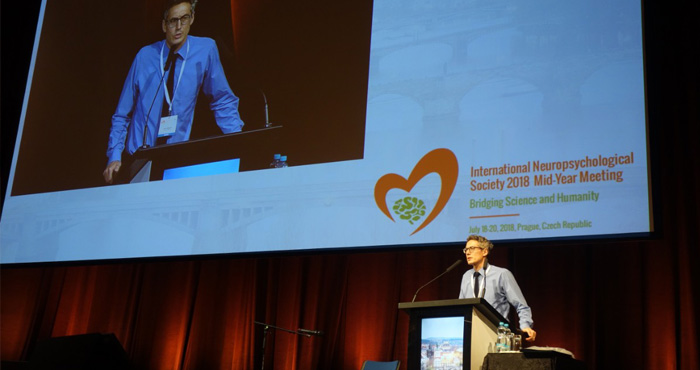
The International Neuropsychological Society’s 2018 mid-year meeting in Prague, Czech Republic, from 18 to 20 July, brought researchers and clinicians together to connect scientific advances with humane patient care. Cognitive phenotypes in spinocerebellar ataxia offer a clear example of why this matters: the same genetic diagnosis can be associated with different combinations of executive, attentional, language, visuospatial, memory and affective changes.
The INS 2018 site provided registration information alongside its programme, poster listings, continuing education workshops, venue details, public transport guidance and photo gallery. Its combination of neuroscience, cultural considerations and clinical practice still offers Australian readers a useful framework for understanding complex presentations, supporting families and building appropriate services.
Why cognitive profiles differ
Spinocerebellar ataxia comprises a group of inherited, progressive disorders rather than one disease. Genotype, lesion distribution, disease stage and medication exposure can shape neuropsychological findings, so cognitive phenotypes should be described carefully rather than inferred from a gait examination alone.
Some patients show slowed processing, working-memory difficulty, reduced verbal fluency or executive dysfunction; others have prominent visuospatial, language, verbal learning or recall problems. Features consistent with cerebellar cognitive affective syndrome may coexist with depression, anxiety, fatigue and medication effects. These possibilities require testing rather than assumption, particularly because mood and fatigue can influence test performance.
Assessment in Australian neurological practice
A careful assessment combines cognitive, neurological, functional and psychosocial information. Serial testing can clarify change, while qualitative observations and everyday examples may be as informative as a scaled score. Australian clinicians must also account for education, first language, reading difficulty and sensory limitations when interpreting performance.
In Melbourne, patients may be assessed through public neurology or memory services, or referred to a private neuropsychologist in a consulting room. Medicare provides rebates for eligible GP-referred neuropsychological assessments, but waiting lists, out-of-pocket costs and availability differ. Clear explanations of referral pathways and assessment limits help patients interpret their results without confusing a diagnosis with a complete account of their needs.
Culture, language and communication
Cultural interpretation is part of clinical reasoning, not an optional addition. A patient may describe difficulties as “a bit foggy” or “not quite right”, while Australian understatement can make severity difficult to gauge. Asking about specific situations at home or work is more informative than treating reassurance as evidence of intact cognition.
For Aboriginal and Torres Strait Islander patients and people from multilingual backgrounds, professional interpreters and appropriately adapted assessment are essential. In the Northern Territory, telehealth supported by Aboriginal health services can improve access, but bandwidth, interpreter availability and local clinical support still determine what is feasible. Culturally safe assessment also requires attention to community, language and disability expectations rather than treating any difference as cognitive impairment.
Rehabilitation with medical and psychological safety
Exercise and rehabilitation can support balance, strength, confidence and mood, but plans should account for falls, fatigue, pain and autonomic or respiratory symptoms. A resource on elite athlete bronchoconstriction guidance underlines the value of investigating exercise-related breathing problems, although elite-sport advice is not an ataxia-specific protocol.
Occupational therapy, physiotherapy, speech pathology and psychological care work best when goals are shared. A patient who is slowing down may need a home safety review, communication strategies and fatigue management rather than an instruction to “push through” a decline. Rehabilitation outcomes should therefore reflect daily functioning, participation and quality of life, not simply performance on a physical test.
Navigating services and funding in Australia
Funding and service pathways are fragmented. People under 65 who meet eligibility criteria may seek support through the National Disability Insurance Scheme, while older adults may approach aged-care providers. Private allied health and Medicare-referred assessment can supplement public services, making it important for clinicians to distinguish available funding from services actually accessible in a patient’s area.
Telehealth has expanded access in regional and remote communities, including parts of the Northern Territory, but it does not remove the need for physical examination, suitable equipment or local supports. A video consultation should not automatically be presented as equivalent to a comprehensive in-person evaluation when motor, vision or hearing needs make that unreliable. Some assessments may require a staged approach combining remote and face-to-face components.
Collaboration across disciplines and borders
The Prague meeting’s emphasis on bridging science and clinical practice remains relevant to a field where one discipline rarely holds all the answers. Researchers can identify reliable patterns, while clinicians report the changes that matter in daily life. Bringing these perspectives together supports earlier referral, better measurement and more realistic care plans.
The INS 2018 archive’s professional networking insights complements that message. For Australian neuropsychologists, neurologists and allied health teams, continuing education and cross-disciplinary contacts can help translate new findings into usable protocols without losing sight of the person receiving care or the families supporting them.
Clinical priorities for sustained care
A disciplined service should move from broad screening towards tailored assessment while remaining alert to modifiable contributors such as mood, sleep, medication and sensory impairment. The following priorities translate the meeting’s clinical lessons into Australian practice:
- Establish baseline cognitive and functional findings, with repeat assessment when progression is suspected.
- Separate motor slowing from executive, language, memory and visuospatial changes.
- Use Australian norm references where suitable and document cultural, language and educational influences.
- Screen for depression, anxiety, fatigue and medication effects alongside neurological symptoms.
- Coordinate physiotherapy, occupational therapy, speech pathology and psychological support around shared goals.
- Explain public, private and funded pathways early, including Medicare, NDIS and aged-care options.
- Share findings with patients and families in accessible language, with consent respected throughout.
These priorities make the clinical consequences clearer: a cognitive phenotype becomes useful when it improves recognition of impairment, communication with families, access to rehabilitation and the patient’s own goals. The INS 2018 emphasis on humane care remains the essential measure of a sound assessment.
General Information
Important information about the meetingIndustry
Support and exhibition opportunitiesCzech Republic
Beautiful country situated in the very heart of EuropeContact
How can we help you?
Prague Congress Centre (KCP)
5.května 65140 21 Prague 4
Czech Republic
Phone: +420 261 171 111
Website: www.kcp.cz