



Neuropsychological profiles across frontotemporal dementia variants
Frontotemporal dementia (FTD) is a group of progressive neurological disorders in which changes in behaviour, language, social judgement and executive control can appear before obvious memory loss. A useful clinical profile therefore extends beyond a single score: it connects test performance with relationships, work history, cultural context and everyday decision-making. Learn more about リウマチ患者の胸水貯留の診断アプローチ.
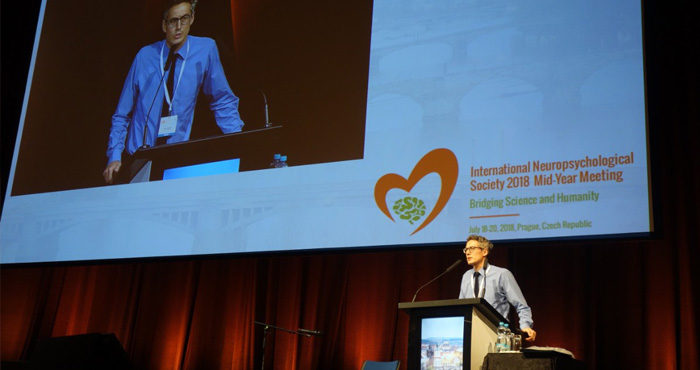
The 2018 International Neuropsychological Society meeting in Prague highlighted the value of linking neuroscience with humane patient care. That approach remains relevant for Australian clinicians, families and support services assessing people across metropolitan clinics, regional hospitals and remote communities.
The clinical picture behind the scores
FTD usually reflects degeneration in the frontal and anterior temporal lobes, although the pattern varies considerably. Some people become disinhibited or apathetic, while others lose word meaning, speech fluency or the ability to recognise familiar faces and objects.
Early episodic memory may remain relatively strong, which can make the condition easy to mistake for a psychiatric disorder, relationship problem or ordinary stress. A careful history often reveals a gradual loss of empathy, flexibility, self-monitoring or social understanding that standard memory screening does not capture.
Behavioural variant frontotemporal dementia
Behavioural variant FTD, often abbreviated bvFTD, can involve impulsivity, tactless remarks, repetitive routines, overeating or reduced personal care. A person may appear to understand a situation intellectually but fail to respond with the expected emotional significance.
Neuropsychological testing commonly identifies impaired inhibition, set-shifting, planning and theory of mind. Yet a normal result on a brief executive task does not exclude bvFTD. Some patients compensate in quiet testing rooms, while their difficulties become obvious during family conflict, financial decisions or workplace demands.
Semantic and language-led presentations
Semantic variant primary progressive aphasia involves a progressive loss of word meaning. People may speak fluently but use vague terms, ask the meaning of familiar words or fail to recognise well-known people, animals and objects. Reading comprehension can deteriorate in parallel with spoken language.
Non-fluent or agrammatic presentations are marked by effortful speech, simplified grammar and difficulty producing motor speech sequences. Neuropsychological profiles should distinguish language formulation from general intelligence, hearing, literacy and English-language experience, particularly in multilingual Australian families.
Comparing profiles without oversimplifying
A profile is most informative when it shows both impaired and preserved abilities. Strong visual construction, delayed recall or conversational fluency can coexist with serious problems in judgement, word knowledge or social cognition. These contrasts help families understand why a person may complete a puzzle but cannot manage a safe shopping trip.
Body representation and identity can also be clinically complex. Reading about body integrity dysphoria can broaden thinking about how neurological and psychological experiences affect self-perception, although it is a distinct condition from FTD.
Patterns worth separating
Two compact checklists can support a more disciplined formulation.
Features that may point towards a behavioural presentation:
- Loss of empathy or social restraint
- Repetitive, ritualised or reward-seeking behaviour
- Reduced initiative and poor self-monitoring
- Executive dysfunction with relatively spared memory
Features that may suggest a language-led presentation:
- Progressive word-finding or naming difficulty
- Loss of knowledge about familiar people and objects
- Effortful grammar or disrupted speech production
- Increasing reliance on gestures, description or communication aids
Assessment in Australian practice
Australian assessment needs to account for Medicare referral pathways, public waiting lists and the cost of private neuropsychology. A GP may coordinate referrals to a memory clinic, neurologist, speech pathologist and occupational therapist, while family observations provide essential evidence when insight is limited.
Cultural safety matters in Aboriginal and Torres Strait Islander communities, where standard norms, language differences and the effects of educational access can influence test results. In regional Queensland, Western Australia or the Northern Territory, telehealth and visiting services may be important, but technology cannot replace local knowledge or a culturally appropriate history.
Clinicians also need to consider bilingualism, migration, low literacy and English as an additional language. An interpreter, translated carer interview or adapted task may produce a more valid picture than simply applying metropolitan norms. In everyday Australian speech, a family member might say someone is “not themselves” or “doing odd stuff”; those observations deserve structured follow-up rather than dismissal.
From diagnosis to practical support
Management focuses on safety, communication and quality of life because there is no single treatment that reverses the underlying degeneration. Occupational therapy can address driving, cooking, online banking and community access. Speech pathology may support conversation, written prompts and alternative communication, while carers benefit from predictable routines and clear boundaries.
Differential diagnosis also remains important. Medical illness, medication effects, mood disorders and systemic conditions can mimic or worsen cognitive change. When broader health concerns arise, clinicians may consult resources such as this pleural effusion approach as part of investigating conditions that could affect cognition or overall functioning.
The most useful formulation combines anatomical knowledge with the person’s life story. Whether assessment occurs at a Sydney clinic, a rural health service or through a multidisciplinary team in Melbourne, recognising the specific variant helps professionals plan care that is safer, kinder and more realistic.
General Information
Important information about the meetingIndustry
Support and exhibition opportunitiesCzech Republic
Beautiful country situated in the very heart of EuropeContact
How can we help you?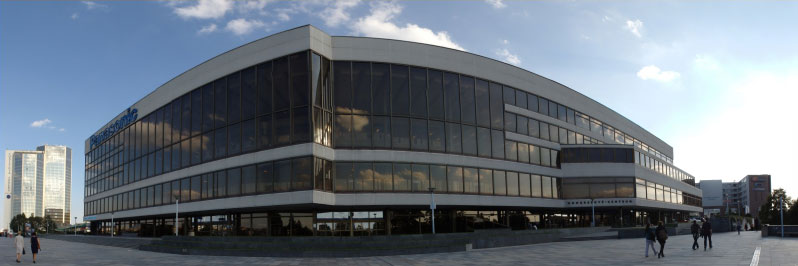
Prague Congress Centre (KCP)
5.května 65140 21 Prague 4
Czech Republic
Phone: +420 261 171 111
Website: www.kcp.cz