




How the Hippocampus Powers Spatial Navigation and Wayfinding
When you emerge from a tram stop in Melbourne's labyrinthine laneways, your brain begins a subtle calculation. Within seconds, it weighs the angle of the street, the café you passed moments ago, and the faint slope toward the Yarra River. This seemingly effortless act of wayfinding is one of the most sophisticated computations the human mind performs, and at its core lies a small, seahorse-shaped structure deep within the medial temporal lobe. The hippocampus has long fascinated neuroscientists because it sits at the intersection of memory, imagination, and spatial orientation.
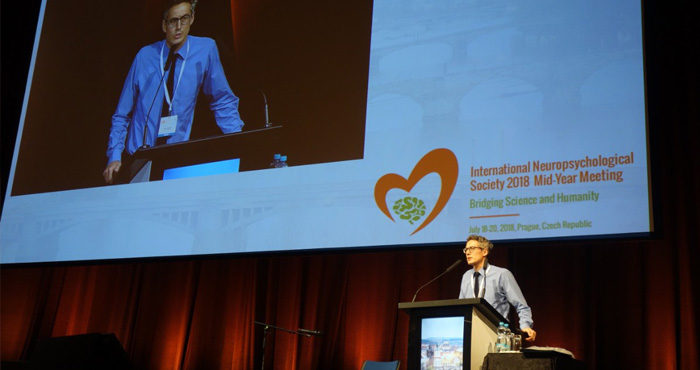
Research presented at gatherings such as the International Neuropsychological Society mid-year meeting has repeatedly highlighted how this region constructs cognitive maps. These internal representations allow us to navigate complex environments, remember where we parked the car at Westfield Bondi Junction, or recall the layout of a friend's home in Brisbane after one visit. Beyond simply recording routes, the hippocampus encodes relationships between landmarks, distances, and directions, producing a flexible framework that can be updated as environments shift.
Understanding this system matters because navigational difficulties often emerge as early warning signs of neurological conditions. In Australia, where vast distances separate towns and where ageing populations are growing across regions from Adelaide to Cairns, recognising subtle navigational decline can be clinically meaningful. Spatial disorientation is, for instance, one of the earliest behavioural changes observed in Alzheimer's disease, frequently appearing before more familiar memory symptoms become obvious.
Place cells and the brain's inner compass
The discovery of place cells in the 1970s transformed our view of the hippocampus. These specialised neurons fire when an animal occupies a specific location, effectively tagging coordinates within a mental map. When a rat explores a maze, distinct populations of place cells activate at distinct corners and corridors. In humans, functional imaging has shown that similar activity patterns emerge when we mentally replay a familiar route through Sydney's CBD or imagine walking along Perth's Cottesloe Beach.
Alongside place cells, grid cells in the entorhinal cortex provide a metric scaffold. They activate in a hexagonal pattern, allowing the brain to estimate distances and angles with remarkable precision. Together, these cell types form what researchers often call the brain's GPS, though the system is far richer than any commercial device. It weaves together sensory information, past rewards, and accumulated experience into a unified sense of place.
From rodent mazes to Australian streets
Laboratory studies using virtual environments have revealed that human navigation recruits many of the same hippocampal circuits. Participants asked to learn the layout of simulated towns show increased activity in the hippocampus during encoding, and this activity predicts later performance on hidden-object tasks. Real-world research in Australian cities has extended these findings. Studies tracking older residents in Hobart, for example, have found that lifelong engagement with complex environments correlates with preserved hippocampal volume in later life.
Cultural practices shape how people rely on hippocampal navigation. Many Indigenous Australians traverse Country using songlines and oral maps that encode vast distances through story and song. These traditions engage auditory and narrative memory alongside spatial processing, offering a different but complementary pathway to wayfinding than the visual street-grid strategies used in European-style cities like Melbourne or Adelaide.
When the map fades cognitive decline and dementia
Damage to the hippocampus produces some of the most striking navigation deficits in neurology. Patients with early Alzheimer's disease frequently lose the ability to draw accurate maps of their neighbourhood or to retrace a route through a familiar shopping centre. Neuroimaging studies suggest that hippocampal atrophy precedes widespread cortical degeneration, which is why spatial testing can flag disease years before standard memory assessments.
Clinicians interested in these advances can read further about emerging diagnostic tools, which explore biomarkers and digital assessments discussed at recent neuropsychology gatherings. Such tools are particularly relevant for Australian clinics in regional areas, where specialist access is limited and early detection offers the greatest benefit for patients and families.
Practical strategies for supporting spatial memory
Researchers have identified several lifestyle factors that appear to protect hippocampal function. Aerobic exercise, particularly brisk walking along coastal paths like Sydney's coastal walkways or Brisbane's riverwalks, is associated with increased hippocampal volume in older adults. Social engagement, lifelong education, and good sleep hygiene also contribute to cognitive resilience across the lifespan.
Helpful everyday habits that may support navigation skills:
- Pause before entering an unfamiliar building and mentally note three landmarks near the entrance.
- Vary your commute occasionally rather than relying on a single automatic route.
- Practise sketching simple maps of familiar places from memory each week.
Environments that may pose greater navigational demands:
- Large open-plan shopping centres such as those in Parramatta or Chadstone.
- Multi-level hospital campuses with repeating corridors.
- Suburban cul-de-sac developments where landmarks are sparse and repetitive.
Comparing healthy and impaired hippocampal navigation
| Aspect | Healthy hippocampal function | Impaired hippocampal function |
|---|---|---|
| Route learning | Builds flexible cognitive maps quickly | Relies on rigid turn sequences, struggles with shortcuts |
| Landmark memory | Encodes salient visual and emotional cues | Confuses similar-looking locations |
| Spatial reasoning | Imagines novel paths between known points | Cannot mentally detour around obstacles |
| Real-world impact | Confident wayfinding in Melbourne laneways | Gets lost in familiar suburban streets |
Continued research, including collaborations across the Asia Pacific region such as regional health forums, is helping refine our understanding of how environment, culture, and biology converge within the hippocampus. As Australian neuroscience continues to mature, so does recognition of the quiet cartographer working behind every step we take.
General Information
Important information about the meetingIndustry
Support and exhibition opportunitiesCzech Republic
Beautiful country situated in the very heart of EuropeContact
How can we help you?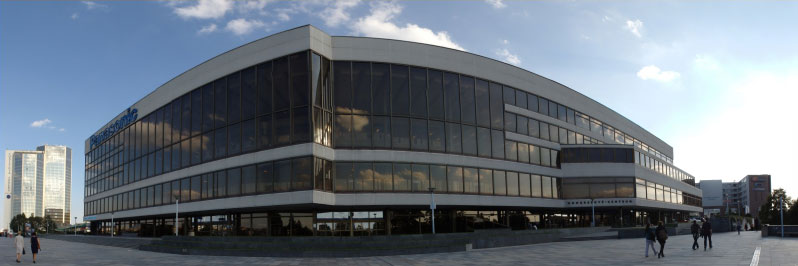
Prague Congress Centre (KCP)
5.května 65140 21 Prague 4
Czech Republic
Phone: +420 261 171 111
Website: www.kcp.cz