



Pediatric Brain Injury and Long-Term School Outcomes
A knock to the head during a Saturday arvo footy match, a fall from a backyard trampoline, or a bicycle crash on the way to school - in Australia, these everyday incidents send thousands of children to emergency departments each year. Paediatric traumatic brain injury remains the leading cause of acquired disability in childhood, and the academic consequences can stretch well beyond the hospital discharge summary.
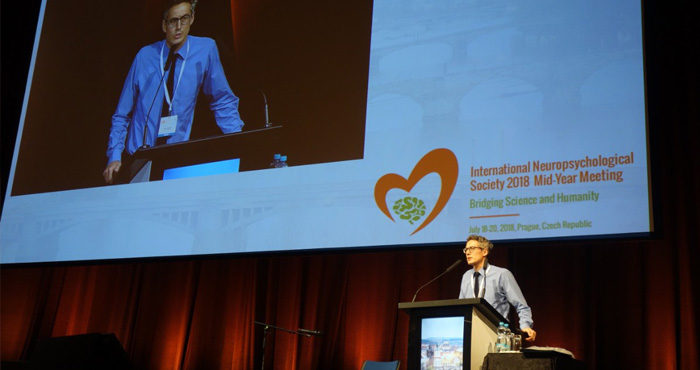
Families, classroom teachers, and clinicians all ask the same question once the immediate crisis settles: how will this injury affect schooling? The honest answer is that outcomes vary widely, shaped by injury severity, age at insult, family resources, and the quality of post-injury support. Australian researchers have been active contributors to this field, with findings shared at international gatherings such as Hotel Coronet during the INS 2018 meeting in Prague.
What Counts as Paediatric Traumatic Brain Injury
Traumatic brain injury in children is usually classified as mild, moderate, or severe based on the Glasgow Coma Scale score, duration of loss of consciousness, and post-traumatic amnesia. Concussion sits at the mild end of the spectrum, and in Australia these injuries draw particular attention because of contact sports. The AFL has tightened its concussion protocols in recent seasons, and Rugby Australia mandates stand-down periods for junior players, recognising that even a single knock can affect a developing brain.
Most children who sustain a mild concussion recover within two to four weeks. Moderate and severe injuries are less common but account for most long-term disability. A child intubated in intensive care, weeks in rehabilitation, returning home with fatigue and slowed thinking faces a very different school journey than a teammate who sat out one training session.
The Australian School Context
Australian schools offer a familiar but demanding framework for measuring progress. Children sit NAPLAN tests in Years 3, 5, 7, and 9, covering reading, writing, numeracy, and spelling. Senior secondary brings state-based credentials - the HSC in New South Wales, the VCE in Victoria, and the QCE in Queensland - all feeding into an ATAR that shapes university access.
For a student recovering from a brain injury, these high-stakes assessments create both pressure and a useful yardstick. Work from the Melbourne Children's Lifecourse Study and the Murdoch Children's Research Institute has shown children with moderate to severe TBI often show measurable dips on standardised reading and maths tasks years after the injury. Teachers in regional towns, where rehabilitation may mean a five-hour drive to Brisbane or Melbourne, see this gap firsthand.
The Cognitive Triad and Classroom Impact
The academic effects of paediatric TBI are not random. Three cognitive domains drive most difficulty: attention, working memory, and processing speed. A child may understand every word of a passage yet take so long to decode it that they cannot finish the exam. Another may follow the teacher's explanation but forget the instructions by the time they reach their desk. Recent work on memory systems, including spatial navigation research presented at INS 2018, has clarified why these domains are so vulnerable after diffuse injury.
| Domain | Pre-injury performance | Post-injury pattern | Classroom manifestation |
|---|---|---|---|
| Attention | Sustained focus for 30–45 min | Fluctuates, fatigues quickly | Loses thread of instructions |
| Working memory | Holds multi-step tasks | Reduced capacity, drops steps | Struggles with mental arithmetic |
| Processing speed | Keeps pace with peers | Marked slowing | Cannot finish timed assessments |
| Learning efficiency | New concepts after 3–4 exposures | Needs 8–12 exposures | Falls behind cumulative syllabus |
These patterns are recognisable to clinicians across Australia; the numbers are illustrative and recovery is shaped by family, school, and therapy supports.
Social and Emotional Ripples
Beyond the cognitive triad, social and emotional changes quietly reshape a child's school experience. Irritability, anxiety, and flattened affect can follow frontal-lobe injury, pushing peers away. In Australia, where mateship and team belonging carry real weight, losing that social circle can be as damaging as any academic deficit.
Teachers frequently notice previously confident students become reluctant to volunteer, avoid group work, or report somatic symptoms before school. Psychologists in hospital liaison teams - embedded across major paediatric services, including the Royal Children's Hospital Melbourne and Queensland Children's Hospital - work with schools to set up graduated return plans and brief staff on what behaviours signal overload.
Family Resources, NDIS, and Rural Realities
Support after paediatric TBI depends heavily on family access. The National Disability Insurance Scheme has been transformative for many Australian households, funding occupational therapy, speech pathology, and educational psychology otherwise beyond reach. Yet families in remote parts of the Northern Territory, western Queensland, or the Kimberley still face long waitlists and limited providers.
Distance education through Schools of the Air offers one workaround, but it suits ongoing isolation rather than intermittent recovery. Parents often become case managers, juggling telehealth appointments between school pick-ups. Stronger links between tertiary paediatric centres, the NDIS, and regional education departments remain a stated priority of the Australasian Society for the Study of Brain Impairment.
Returning to School and What Helps
Return-to-school evidence is now reasonably clear: a staged, individualised plan, written before the child returns, beats a sudden full re-entry. Australian clinical guidelines recommend symptom-limited attendance initially, rest breaks built into the timetable, modified assessment conditions, and a named school contact who can adjust the plan weekly.
For older students, documenting recovery milestones can become part of a portfolio that schools and tertiary institutions review. Teachers sometimes suggest students maintain a portfolio website that captures their learning journey, particularly when extended absences would otherwise leave gaps in the formal record.
Follow-up matters as much as the first weeks back. Repeat cognitive screening at three, six, and twelve months helps families and schools catch emerging difficulties, particularly when children move from primary to secondary school or sit their first NAPLAN after the injury.
General Information
Important information about the meetingIndustry
Support and exhibition opportunitiesCzech Republic
Beautiful country situated in the very heart of EuropeContact
How can we help you?
Prague Congress Centre (KCP)
5.května 65140 21 Prague 4
Czech Republic
Phone: +420 261 171 111
Website: www.kcp.cz