



The Hippocampus, Culture, and How People Find Their Way
The hippocampus is central to the brain’s ability to construct and use spatial representations. It helps people remember locations, distinguish routes, connect landmarks with events, and update mental maps when surroundings change. Yet navigation is never purely biological: people learn environments through language, customs, transportation systems, architecture, and daily routines.
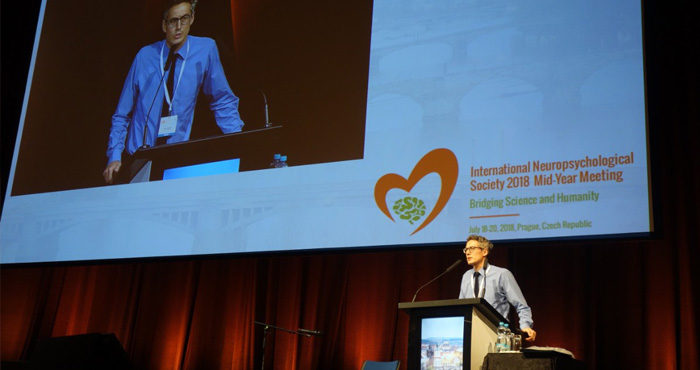
This perspective reflects the spirit of the International Neuropsychological Society’s 2018 mid-year meeting in Prague, where neuroscience was considered alongside clinical practice and humane patient care. Understanding spatial memory across cultures requires researchers to connect laboratory findings with the lived environments in which navigation actually occurs.
The question is therefore broader than how the hippocampus encodes space. It also concerns which spaces are familiar, which cues are trusted, how people describe routes, and how clinicians interpret performance when a test was designed around one cultural model of navigation.
The Hippocampus And Cognitive Maps
Place cells in the hippocampus become active in relation to specific locations, while grid cells in connected regions help organize movement through space. Together with head-direction and boundary-sensitive systems, these networks support an internal map that can guide behavior even when a person cannot see the destination directly.
The hippocampus also links spatial information to context. A landmark is easier to remember when it is associated with an event, a goal, or an emotional experience. This explains why navigation can decline when hippocampal networks are damaged: a person may recognize individual objects yet struggle to understand how those objects relate to one another.
Spatial memory is dynamic rather than fixed. Successful navigation involves selecting relevant cues, ignoring distractions, estimating distance, and shifting between routes. Cultural experience can influence each of these processes without changing the fundamental role of hippocampal circuitry.
Culture Shapes Navigation Strategies
People raised in dense urban neighborhoods may rely heavily on street grids, public signs, and transit connections. Those who move through rural landscapes may attend more closely to terrain, natural boundaries, and changing environmental features. Such habits can affect which details are encoded and how a route is later recalled.
Language also matters. Some communities commonly describe direction using left and right, while others favor cardinal directions or landscape-based terms. These linguistic practices can encourage different attentional strategies, making spatial orientation appear more intuitive in one setting than another.
Gender roles, mobility patterns, education, and access to technology add further layers. A person who routinely navigates public transportation may develop a rich network-based representation of a city, while smartphone dependence may reduce the need to maintain detailed internal maps. Neither pattern should be mistaken for a universal measure of hippocampal ability.
Measuring Spatial Memory Fairly
Common experiments use virtual mazes, landmark-learning tasks, route recall, or object-location tests. These methods can reveal important relationships between hippocampal volume, functional connectivity, and navigation accuracy, but they may also carry assumptions about visual experience, technology, literacy, and familiarity with game-like interfaces.
A culturally responsive assessment compares strategies as well as scores. Does a participant form a survey map, memorize a sequence of turns, follow prominent landmarks, or use verbal rules? Qualitative observations can be particularly useful when errors are ambiguous; a workshop on test errors offers a helpful framework for examining what performance actually represents.
Researchers should also distinguish unfamiliarity from impairment. A virtual environment modeled on a Western city may disadvantage someone accustomed to different spatial layouts, while a task involving cardinal directions may be easier for participants whose everyday language uses them. Translation, piloting, and local consultation are essential parts of sound neuropsychological research.
| Dimension | Possible influence on navigation | Research consideration |
|---|---|---|
| Environmental design | Grids, landmarks, paths, and boundaries guide attention | Use settings that reflect varied communities |
| Language | Directional vocabulary shapes spatial descriptions | Record verbal strategies, not only accuracy |
| Daily mobility | Walking, driving, and transit build different route knowledge | Ask about real-world navigation habits |
| Technology use | GPS can support travel while reducing active map-building | Measure dependence on digital guidance |
| Clinical status | Hippocampal injury may disrupt context and route learning | Compare scores with observed strategies |
From Brain Systems To Clinical Care
Hippocampal dysfunction is associated with difficulties in episodic memory and orientation, especially in conditions such as Alzheimer’s disease, temporal lobe epilepsy, and some forms of brain injury. Patients may become lost, repeat routes, or fail to learn new environments even when other cognitive abilities seem relatively preserved.
Cultural context affects how these problems appear in daily life. A patient who lives in a compact neighborhood may compensate through familiar landmarks, while someone who regularly travels between distant locations may face greater functional risk. Clinicians should ask about meaningful routines rather than relying exclusively on abstract laboratory tasks.
Rehabilitation can use preserved abilities to support impaired ones. Clear landmarks, personalized route practice, verbal descriptions, visual maps, and carefully structured repetition may all help. Effective intervention begins with the person’s actual environment and values, not with assumptions about what navigation ought to look like.
Ethics In Cross-Cultural Neuropsychology
Cross-cultural neuroscience carries an ethical responsibility to avoid turning difference into deficit. A lower score may reflect language mismatch, unequal educational opportunity, unfamiliar testing conventions, or a task that does not resemble the participant’s everyday experience. Interpretation should therefore include social and cultural background.
Consent and communication are equally important. Participants should understand how recordings, brain images, and behavioral data will be used, especially when research crosses national or linguistic boundaries. The discussion of ethical challenges in cross-cultural neuropsychology underscores why scientific validity and respect for communities must develop together.
Researchers should share findings in accessible ways and avoid presenting one population as the default standard. Partnerships with local clinicians, translators, educators, and community representatives can improve recruitment, task design, and the practical value of results.
Priorities For Future Studies
A stronger research agenda can connect cellular neuroscience with real-world navigation while preserving cultural nuance. Useful priorities include:
- Validate spatial-memory tasks in multiple languages and environmental settings.
- Compare route-based, landmark-based, and map-based strategies rather than focusing only on total scores.
- Combine virtual reality, neuroimaging, wearable tracking, and participant interviews.
- Include older adults and clinical groups whose navigation difficulties affect independence.
- Report cultural variables transparently so findings can be replicated and interpreted responsibly.
The hippocampus provides a shared biological foundation for spatial learning, but experience determines how that foundation is used. Future work should bring laboratory precision into conversation with the diverse ways people inhabit cities, villages, homes, and digital spaces.
Researchers, clinicians, and educators can advance this field by designing culturally grounded studies and translating their findings into practical support for patients. That work keeps the science of navigation connected to the people whose lives give it meaning.
General Information
Important information about the meetingIndustry
Support and exhibition opportunitiesCzech Republic
Beautiful country situated in the very heart of EuropeContact
How can we help you?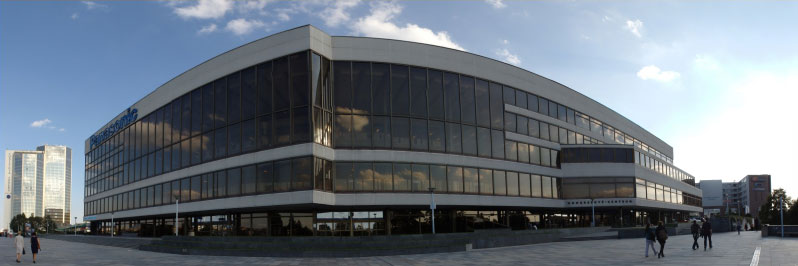
Prague Congress Centre (KCP)
5.května 65140 21 Prague 4
Czech Republic
Phone: +420 261 171 111
Website: www.kcp.cz