



Diagnosing Dementia Subtypes in Multilingual Patients Across Clinical Settings
Differential diagnosis of dementia becomes markedly more complex when patients use two or more languages in daily life. Standard neuropsychological batteries were largely standardised on monolingual English-speaking cohorts, leaving clinicians without clear benchmarks for culturally and linguistically diverse populations. Symptom profiles that would normally point clearly to one subtype often blur when bilingual switching, varying literacy, and educational disparities are factored in.
Australia hosts one of the most multilingual societies in the world, with roughly one in three residents speaking a language other than English at home. Suburbs in Sydney, Melbourne, Brisbane, and Perth routinely accommodate Mandarin, Cantonese, Vietnamese, Greek, Arabic, Italian, and Hindi speakers, often across three or four generations of the same family. This demographic reality means Australian neuropsychologists encounter multilingual patients far more frequently than their European counterparts, and the country's National Disability Insurance Scheme, alongside the Aged Care Act, increasingly funds culturally responsive cognitive assessments.
When a patient alternates between languages, the clinical picture changes in subtle but consequential ways. Word-finding pauses, translation efforts, and code-switching can all mask or mimic the aphasia of early Alzheimer's disease, the disinhibition of frontotemporal dementia, or the fluctuating attention of Lewy body dementia. Sound differential diagnosis therefore requires more than translated test forms; it demands an understanding of how language itself shapes cognition.
This article examines the diagnostic considerations clinicians face when working with multilingual adults, with particular attention to the Australian context. It outlines subtype-specific red flags, adapted assessment strategies, and emerging tools that promise more ecologically valid evaluations for patients whose lives span several languages.
Linguistic History as a Diagnostic Foundation
A careful language history is the starting point for any differential diagnosis. Clinicians should document the age of acquisition for each language, the contexts in which the patient currently uses them, and the relative proficiency in reading, writing, listening, and speaking. In Australian memory clinics, intake forms now routinely include questions about country of birth, year of arrival, languages used at home, and preferred language for clinical interviews, reflecting guidance from the Australian Institute of Health and Welfare on culturally appropriate care.
Premorbid language dominance strongly influences which deficits will be most visible. A Greek-English bilingual who read newspapers only in Greek throughout life may show disproportionate impairment on English naming tasks even when the underlying pathology is mild. Conversely, the same patient may appear linguistically intact when assessed in Greek, potentially delaying recognition of semantic variant frontotemporal dementia.
Educational history and literacy in each language must also be considered. Years of formal schooling, quality of instruction, and habitual reading practices can vary widely within a single family. Without these contextual data, low scores on verbal memory tests may be wrongly attributed to neurodegeneration rather than to lifelong differences in exposure to formal English.
Adapting Neuropsychological Batteries for Bilingual Speakers
Standard batteries such as the Addenbrooke's Cognitive Examination and the Montreal Cognitive Assessment have been translated and normed for many languages, yet direct translations often fail to capture dialectal variation or literacy differences. Australian clinicians frequently combine the Rowland Universal Dementia Assessment Scale with language-specific naming tests, drawing on resources developed by the Multicultural Health Communication Service in New South Wales.
Bilingual testing strategies include assessing the same patient in two languages on separate days, comparing performance across modalities, and using tests of translation ability as a marker of executive control. The Cognitive Assessment for Dementia in Bilingual Populations, developed in Melbourne, provides one framework for systematically capturing these comparisons.
Where formal bilingual instruments are unavailable, interpreters trained in cognitive assessment can bridge gaps, provided they understand the distinction between translation and interpretation in clinical contexts. Australia's Translating and Interpreting Service offers dedicated medical interpreters in over 150 languages, and several state health services have developed specialised dementia assessment protocols for use with interpreters.
Distinguishing Alzheimer's Disease from Vascular Dementia
| Feature | Alzheimer's Disease | Vascular Dementia | Lewy Body Dementia | Frontotemporal Dementia |
|---|---|---|---|---|
| Episodic memory | Early, prominent impairment | Variable, often stepwise | Fluctuating | Relatively preserved early |
| Language | Progressive anomia | Patchy deficits | Mild word-finding pauses | Marked agrammatism or semantic loss |
| Executive function | Late decline | Early, prominent | Early with fluctuations | Early, often with disinhibition |
| Behaviour | Apathy, later disinhibition | Depression, emotional lability | Visual hallucinations, REM sleep behaviour | Disinhibition, apathy, compulsivity |
| Motor | Late gait changes | Focal neurological signs | Parkinsonism, rigidity | Often spared early |
| Neuroimaging | Medial temporal atrophy | White matter lesions, infarcts | Occipital hypometabolism | Frontal or anterior temporal atrophy |
Alzheimer's disease in multilingual patients typically emerges as a gradual erosion of vocabulary in the dominant language, followed by the second language as the disease spreads. Vascular dementia, by contrast, often presents with stepwise deterioration that may be language-independent, though executive dysfunction can masquerade as translation difficulty. In both cases, neuroimaging combined with a careful vascular risk profile remains the most reliable differentiator.
Recognising Frontotemporal Dementia Across Languages
The behavioural and language variants of frontotemporal dementia present distinctive challenges in multilingual patients. Disinhibition, loss of empathy, and dietary changes may be culturally filtered, leading family members from Vietnamese, Arabic, or Southern European backgrounds to interpret them as stress, depression, or simply signs of ageing. Clinicians working in Melbourne's large Greek community, for instance, have reported delays of two to three years between first symptoms and specialist referral.
The semantic variant offers a particular diagnostic window. Patients lose knowledge of words and objects irrespective of the language in which they were first learned, which can appear as a sudden inability to name household items in either tongue. The non-fluent variant, in contrast, often disrupts the language acquired later in life more dramatically, producing a striking asymmetry between two languages that relatives may notice well before general cognitive decline becomes obvious.
Lewy Body Dementia and Fluctuating Cognition
Fluctuating cognition, visual hallucinations, and parkinsonism form the clinical triad of Lewy body dementia, and each can be obscured in multilingual presentations. Day-to-day variation in alertness may be misattributed to fatigue from switching between languages or to disrupted sleep patterns common in shift workers, a profession over-represented in Australia's migrant communities.
Visuospatial deficits, often more revealing than memory problems in Lewy body dementia, respond poorly to verbal translation. Tests such as clock drawing, copying intersecting pentagons, or the Rey Complex Figure must be administered with culturally neutral stimuli and with awareness that some patients may never have used an analogue clock. Innovative tools, including those exploring using virtual reality for ecological assessment of memory, offer promising alternatives to paper-based tasks by embedding cognitive demands within simulated everyday environments.
Innovation in Ecological Assessment
Ecological validity has long been a limitation of standard neuropsychological testing. A patient who performs normally on a clinic-based word list may still struggle to follow a conversation in a noisy café or to remember a medication schedule across two languages spoken at home. Australian researchers at Macquarie University and the Florey Institute have been at the forefront of developing immersive scenarios that capture these real-world demands.
Virtual reality kitchen tasks, simulated bus journeys, and grocery-shopping apps that prompt in either language can reveal deficits invisible to traditional tests. When combined with eye-tracking and physiological monitoring, these platforms also detect the visual misperceptions and attentional fluctuations that distinguish Lewy body dementia from other subtypes.
Practice Guidance for Australian Clinicians
Effective differential diagnosis in multilingual patients rests on three pillars: thorough language history, culturally adapted batteries, and willingness to use interpreters and bilingual assessors as core clinical partners. Australian practitioners should routinely consult the Cognitive Decline Partnership Centre's resources and consider referral to one of the state's memory clinics with culturally specific expertise.
Documentation should specify the language of testing, the interpreter's qualifications, and any observed asymmetries between languages. Reassessment at six to twelve month intervals, ideally in the same language combination, allows clinicians to track progressive decline rather than mistaking variability for impairment. With thoughtful adaptation, multilingual patients can receive diagnoses that are both accurate and equitable.
General Information
Important information about the meetingIndustry
Support and exhibition opportunitiesCzech Republic
Beautiful country situated in the very heart of EuropeContact
How can we help you?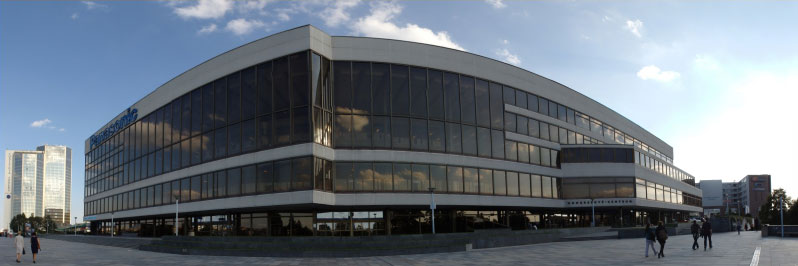
Prague Congress Centre (KCP)
5.května 65140 21 Prague 4
Czech Republic
Phone: +420 261 171 111
Website: www.kcp.cz