



Reading comprehension and hemispheric asymmetry after acquired brain injury
When someone sustains an acquired brain injury, whether from stroke, trauma, or tumour, the ability to read can unravel in surprising ways. Reading draws on visual analysis, phonological processing, semantic access, working memory, and the construction of meaning across sentences. Researchers and clinicians attending sessions in Prague recognised that damage to one hemisphere often produces very different reading profiles than damage to the other, and that understanding laterality is essential for meaningful rehabilitation.
In Australia, where the National Disability Insurance Scheme funds ongoing therapy for many adults with brain injury, speech pathologists navigate these laterality questions in everyday practice. Clinicians in Melbourne, Sydney, and regional Queensland regularly assess clients whose reading has changed after a cerebrovascular event, adapting therapy to the lesion profile and the demands of work, study, or community life.
The dual-hemisphere architecture of reading
Skilled reading emerges from a division of labour between the two hemispheres. The left hemisphere, in most right-handed readers, hosts the perisylvian language network that supports phonological recoding and lexical access. The right hemisphere contributes broader contextual integration, supporting inference, metaphor, humour, and the cohesion devices that hold a paragraph together. Comprehension depends on rapid communication across the corpus callosum.
When this balance is disrupted by focal injury, consequences extend beyond decoding single words. A lesion in the left middle cerebral artery territory may strip away the phonological scaffolding, while a right-hemisphere lesion can leave decoding intact yet erase the reader's sense of where a text is going. Both patterns appear on inpatient rehabilitation wards in hospitals like the Royal Prince Alfred or the Austin, where multidisciplinary teams routinely screen reading as part of cognitive-communication assessment.
Left-hemisphere lesions and word-level breakdown
Damage to the left hemisphere's posterior language zones commonly produces acquired alexias that mirror developmental dyslexia. Patients may lose the ability to read familiar words by sight, struggle with non-words, or show effects of imageability and concreteness on single-word performance. In chronic aphasia, reading aloud often recovers less well than spoken naming, and sentence-level comprehension may hinge on residual grammatical processing.
Assessment in Australian clinics typically combines the Comprehensive Aphasia Test with locally developed probes that include Australian English vocabulary. Speech pathologists note that items containing local terms like "arvo" or "brekkie" sometimes yield different error patterns than standard American or British items, which affects test interpretation. For clinicians building a career in this area, reflections from early-career-tips-from-ins-2018-mentors offer a useful starting point.
Right-hemisphere damage and the loss of coherence
Right-hemisphere damage rarely destroys the mechanics of reading, but it often dismantles the reader's grasp of discourse. Patients with right middle cerebral artery strokes frequently exhibit poor inference generation, impaired comprehension of non-literal language, and difficulty tracking the gist of a narrative. Some also show neglect dyslexia, ignoring the left side of a page or the left halves of individual words.
These deficits matter greatly in everyday Australian life, where reading involves Centrelink paperwork, NDIS plans, medication instructions, and workplace safety documents. A person who can decode every word yet cannot identify the main point of a JobSeeker email may be unfairly judged as confused or uncooperative. Therapy often targets macrostructure processing, teaching patients to identify topic sentences, signal words, and the underlying schema of common text types.
Bilateral injury and compensatory pathways
Severe traumatic brain injuries, such as those from motor vehicle accidents on rural highways, frequently produce diffuse damage affecting both hemispheres. Reading profiles are heterogeneous: some individuals show a mixed phonological-semantic deficit, while others rely on right-hemisphere strategies that were previously supplementary. Neuroimaging in Australian trauma centres often reveals frontal and temporal involvement alongside posterior lesions, complicating any simple laterality model.
Rehabilitation teams emphasise functional reading goals tailored to each environment. A patient in the Northern Territory receiving therapy via telehealth from a Darwin-based team may work on reading maps, weather alerts, or community notices that carry genuine weight in local life. Compensatory approaches, including text-to-speech software, simplified formatting, and supported reading practice, often yield gains even when formal decoding remains impaired.
Clinical assessment in real-world settings
Assessment of reading after acquired brain injury extends beyond standardised word lists. Speech pathologists in hospital and community settings combine standardised tools with dynamic assessment, observing how a patient approaches a newspaper article, a recipe, or a workplace safety procedure. The aim is to understand both the cognitive mechanisms that are intact and the contexts in which they break down.
In private practice across Brisbane and Perth, clinicians are increasingly asked for reports that satisfy NDIS evidence requirements, linking reading difficulties to functional participation goals. This has sharpened interest in ecologically valid assessment, including authentic texts drawn from local contexts. Researchers have also begun examining how early life stress shapes later cognitive recovery, with the impact of childhood adversity on adult executive functioning providing relevant background for understanding resilience and vulnerability.
Therapy approaches and evidence-based practice
Therapy for reading comprehension after acquired brain injury draws on cognitive-linguistic treatment, strategy instruction, and assistive technology. For left-hemisphere lesions with phonological deficits, treatments targeting letter-to-sound mapping and oral reading remain central, even when comprehension of spoken language is relatively preserved. For right-hemisphere deficits, clinicians focus on discourse-level interventions, including inference training, summarisation practice, and explicit instruction in expository text structure.
Group therapy programs in outpatient services across Adelaide and Hobart allow patients to practise these skills with peers, building confidence as well as competence. Australian researchers have contributed influential trials in this space, and the INS community continues to share protocols across borders. As evidence accumulates, the field moves toward more individualised, laterality-informed models of care that honour the complexity of reading and the lived realities of those recovering from brain injury.
General Information
Important information about the meetingIndustry
Support and exhibition opportunitiesCzech Republic
Beautiful country situated in the very heart of EuropeContact
How can we help you?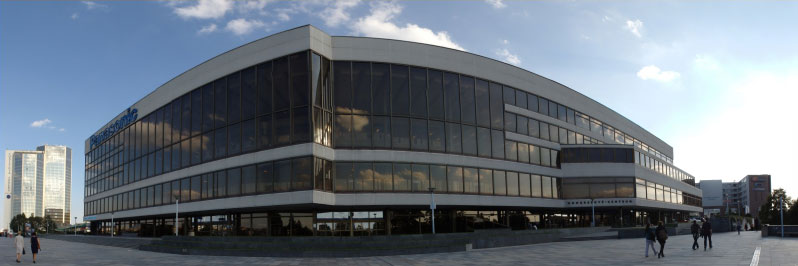
Prague Congress Centre (KCP)
5.května 65140 21 Prague 4
Czech Republic
Phone: +420 261 171 111
Website: www.kcp.cz