



Making Interpreter-Mediated Neuropsychological Testing More Reliable
Neuropsychological assessment depends on precise communication. A patient must understand instructions, describe symptoms, recall experiences and respond to tasks in ways that reflect cognitive functioning rather than uncertainty about English. When an interpreter is involved, language becomes part of the testing environment and requires deliberate management.
Interpreter-mediated testing is common in multicultural health systems, including Australia. Patients in Sydney, Melbourne and Brisbane may speak languages other than English at home, while regional services can support communities with fewer local clinicians and interpreters. The need is especially important when assessment informs rehabilitation, disability support, education or capacity decisions.
The central issue is validity. A translated instruction may change its difficulty, an interpreter may unintentionally explain an unfamiliar concept, and culturally specific examples may carry a different meaning. These influences do not make assessment impossible, but they require clinicians to document limitations and interpret scores carefully.
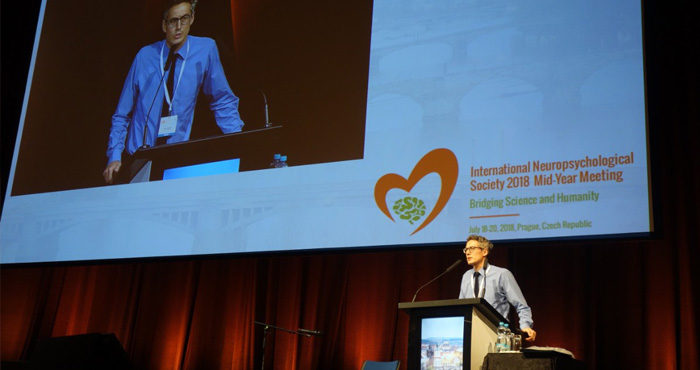
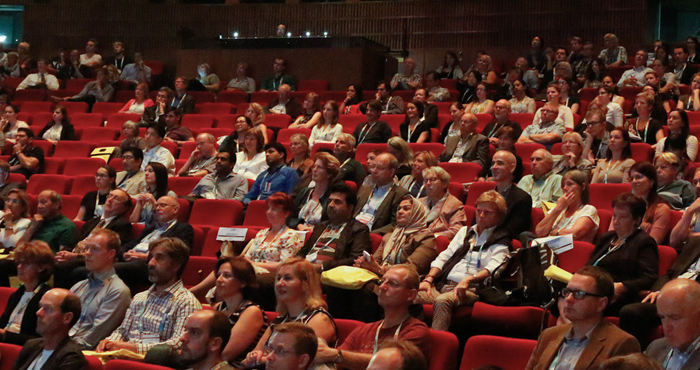
The scientific and clinical discussions associated with the INS 2018 meeting in Prague remain relevant: advances in neuroscience must be matched by humane care, cultural awareness and sound clinical judgement. Interpreter use is a practical setting where those principles meet.
Establishing The Interpreter’s Role
Before testing begins, the clinician should explain that the interpreter is responsible for accurate, complete translation rather than coaching, summarising or correcting the patient. The interpreter should translate in the first person where practical, preserve the patient’s tone and report uncertainty when a term has no direct equivalent.
A short briefing can cover confidentiality, turn-taking, technical vocabulary and the need to translate every utterance. Family members may offer valuable support, but they are generally unsuitable as the sole interpreter for formal assessment because they may filter sensitive information or answer on the patient’s behalf. A qualified interpreter, preferably with health experience, provides a safer foundation.
Choosing Appropriate Assessment Measures
Tests developed and normed in English-speaking populations may not transfer cleanly across languages. Verbal memory, naming, reading, fluency and comprehension measures are particularly sensitive to vocabulary, schooling, literacy and cultural exposure. A low score may reflect limited English proficiency rather than impairment.
Clinicians should consider whether translated or language-specific tools exist, whether norms match the patient’s background and whether non-verbal measures can answer part of the referral question. Non-verbal tasks are not culture-free, however. Familiarity with visual conventions, timed testing and formal examinations can influence performance.
Managing The Testing Process
Instructions should be delivered in short segments, with the interpreter translating each segment before the patient responds. The clinician should avoid speaking in long paragraphs or using idioms, jokes and figurative expressions. Checking whether the patient understood the task is useful, but repeated teaching can alter standardised administration.
Careful scheduling also matters. A complex assessment can be tiring for the patient, interpreter and examiner, particularly when every exchange passes through two languages. Practical guidance on a daily schedule can help teams divide sessions, allow breaks and avoid rushing the most demanding tasks.
Recording Language And Cultural Factors
The report should identify the patient’s preferred language, languages used at home and school, literacy history, migration background where clinically relevant, and the interpreter’s qualifications. It should state which measures were translated, adapted or administered in English, and whether any instructions required explanation beyond standard wording.
Observations are valuable when they are specific. A report might note that the patient needed repetition after translated instructions, used a different culturally familiar strategy, or gave responses that were difficult to interpret because an idiom had no equivalent. Such information is more useful than a general statement that “language was a barrier”.
Applying Australian Practice Standards
In Australia, clinicians commonly arrange interpreters through public health services, private providers or language agencies, with NAATI credentialling serving as an important indicator of professional competence. Availability varies by location and language. A metropolitan clinic in Melbourne may have several options, while a regional Queensland service may need to book an interpreter well in advance or use video interpreting.
Cultural safety also requires attention to Aboriginal and Torres Strait Islander patients. English may be an additional language, and standard written or formal testing procedures may not reflect communication preferences, educational history or community context. An Aboriginal health worker, cultural consultant or appropriately trained interpreter may help the team understand these factors without treating culture as a deficit.
Interpreting Results Responsibly
Scores obtained through an interpreter should not be presented with false precision. The clinician can describe the pattern of strengths and weaknesses, compare findings with developmental and educational history, and explain how language may have affected validity. Functional information from family, school, work and treating professionals can provide essential context.
When an assessment informs NDIS documentation, return-to-work planning, guardianship or rehabilitation, transparent limitations protect the patient and the referring service. Recommendations may include further testing in the strongest language, assessment by a bilingual clinician, repeated evaluation after language support, or reliance on functional evidence rather than a single numerical score.
Interpreter-mediated assessment is therefore a clinical partnership rather than a simple word-for-word conversion. With careful preparation, culturally responsive communication and honest interpretation of evidence, neuropsychologists can make decisions that are both scientifically defensible and respectful of the person being assessed.
General Information
Important information about the meetingIndustry
Support and exhibition opportunitiesCzech Republic
Beautiful country situated in the very heart of EuropeContact
How can we help you?
Prague Congress Centre (KCP)
5.května 65140 21 Prague 4
Czech Republic
Phone: +420 261 171 111
Website: www.kcp.cz