




Chronic traumatic encephalopathy through a neuropsychological lens
Repeated head impacts can leave a complicated clinical legacy. Chronic traumatic encephalopathy (CTE) is associated with progressive changes in the brain found after death, yet its symptoms during life can overlap with depression, post-traumatic stress, sleep disorders, substance use, ageing, and other neurological conditions. This makes careful neuropsychological reasoning essential.
The subject matters in Australia, where Australian rules football, rugby league, rugby union and combat sports involve substantial exposure to concussion and repeated impacts. It also reaches beyond elite competition: community clubs, school sport, occupational accidents and military service can all form part of a person’s injury history.
What the diagnosis can and cannot show
CTE is a neuropathological diagnosis, meaning that definitive confirmation traditionally depends on examining brain tissue after death. Researchers are working towards reliable clinical criteria, biomarkers and imaging methods, but no single cognitive test, scan or symptom pattern can currently establish the condition in a living person.
This distinction protects patients from premature labelling. Memory lapses, slowed processing, irritability or reduced impulse control may be real and disabling without proving CTE. A neuropsychologist therefore considers the complete presentation, including the timing of symptoms, functional decline, medical history, mood, sleep, medication, alcohol use and the effects of previous concussion.
Repeated impacts and cognitive change
The risk profile is shaped by cumulative exposure rather than one dramatic incident alone. Frequency, intensity, age at first exposure, recovery periods and the presence of diagnosed concussions may all be relevant. Some people with repeated impacts remain cognitively well, while others experience difficulties that reflect several interacting causes.
Assessment commonly examines attention, processing speed, learning and memory, language, executive functions and social cognition. Tests are interpreted against education, occupation, premorbid ability and cultural background. A former AFL player in Melbourne may show a different functional pattern from a retired rugby participant in Sydney, even when both report “brain fog”.
Building a clinically useful assessment
A strong evaluation begins with a detailed timeline. It may include sporting records, hospital notes, family observations, school or employment changes, falls, headaches, sleep quality and emotional changes. Collateral information from a partner or adult child is particularly valuable when insight or memory has declined.
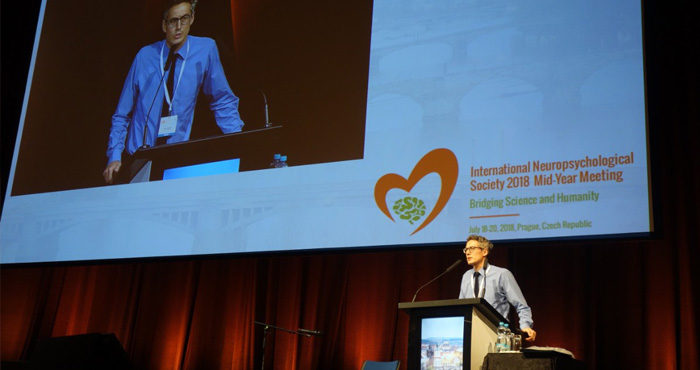
Neuropsychological findings should be integrated with neurological examination and, when appropriate, imaging or blood tests that investigate alternative explanations. The Prague meeting programme reflected the field’s interest in connecting neuroscience with humane clinical care, a principle that remains important when evidence is incomplete and families are seeking clear answers.
Cultural and personal context
Performance on cognitive tests is influenced by language, literacy, migration history, educational opportunity and familiarity with formal testing. Interpreters may be needed, but translated words alone do not solve every problem. Norms must be relevant, instructions must be culturally understandable, and the clinician must distinguish a language difference from a cognitive impairment.
These considerations apply in Australian clinics serving multilingual communities in Western Sydney, Melbourne and Perth. They also matter for Aboriginal and Torres Strait Islander patients, whose assessment may require culturally safe practice, community consultation and attention to the limitations of mainstream norms. A culturally responsive approach improves both accuracy and trust.
Supporting people while evidence develops
Treatment focuses on the person’s current needs rather than an unproven label. Sleep management, psychological therapy, physical activity within medical guidance, hearing correction, medication review and strategies for organisation can improve everyday function. Families may benefit from education about communication, routines, financial safeguards and warning signs that require urgent help.
In Australia, access may involve a general practitioner, a private neuropsychologist, a public hospital, Medicare-supported services or workers compensation systems. Costs and waiting times vary, and assessment for a retired athlete may be funded differently from care after a workplace injury. Clear reports should explain practical limitations and supports rather than simply listing test scores.
Research, ethics and future directions
Research into CTE is advancing through longitudinal cohorts, digital cognitive measures, blood-based markers and studies of former athletes. Researchers must still address selection bias, inconsistent exposure histories and the risk that public attention will turn uncertain findings into certainty. Participation should include clear consent, privacy protections and sensitive communication about family implications.
The same ethical care is needed when evaluating refugees and asylum seekers who may have experienced head injury alongside displacement, violence, sleep disruption or trauma. Guidance on the assessment of displaced people is relevant because cognitive symptoms cannot be interpreted apart from safety, language and migration experiences. Neuropsychology is most useful when scientific caution is matched by respect for the individual’s story.
General Information
Important information about the meetingIndustry
Support and exhibition opportunitiesCzech Republic
Beautiful country situated in the very heart of EuropeContact
How can we help you?
Prague Congress Centre (KCP)
5.května 65140 21 Prague 4
Czech Republic
Phone: +420 261 171 111
Website: www.kcp.cz