


Social cognition deficits in premanifest Huntington’s disease
Huntington’s disease is often encountered through involuntary movement, yet its earliest effects can be social. In the premanifest phase, people may struggle to read facial emotion, infer another person’s intention or respond empathically while still managing work and daily life. These abilities form social cognition: the mental processes used to understand other people and oneself. Learn more about リウマチ性疾患の画像診断 単純x線における関節裂隙狭小化の早期発見法.
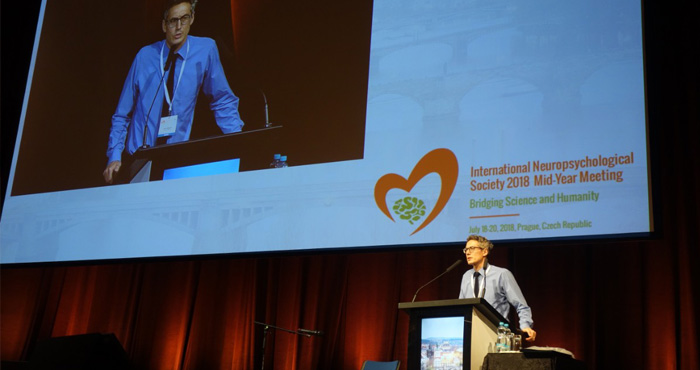
The International Neuropsychological Society’s 2018 mid-year meeting in Prague paired scientific advances with humane clinical practice. The premanifest stage of Huntington’s disease shows why that bridge matters. A missed change in interpersonal sensitivity may be read as indifference, while laboratory findings can support early care for someone whose motor symptoms remain mild or absent.
This article examines subtle deficits, their assessment and a careful response to family concern. Australian conditions matter because specialist access, disability funding, telehealth and culturally safe care vary across cities and regions.
Why social change may precede movement
Premanifest Huntington’s disease describes a person carrying a pathogenic HTT variant before motor onset, although subtle mood or cognitive signs may precede chorea by years. CAG expansion length influences, but does not determine, symptom timing. Striatal and frontal network changes can disrupt social updating and the linking of reward to action.
Social cognition includes theory of mind, emotion recognition, mentalising, empathy, turn-taking and judgements of trust. In prodromal Huntington’s disease, someone may notice that a friend is upset yet struggle to respond appropriately. Depression, anxiety, poor sleep, medication effects, alcohol and life transitions must be considered; repeated measures help establish whether change is neurological.
Assessing early brain and behaviour changes
Assessment combines interviews, questionnaires and tasks on emotion recognition, ambiguous situations and social rules. Eye-tracking and brain imaging may add information, but clinical context remains essential. Reasoning, processing speed, inhibition and apathy also need mapping because they can constrain social performance.
Finding abnormalities before obvious impairment is familiar beyond neuroscience. In rheumatology, early joint-space imaging illustrates how plain radiographs can reveal disease-related narrowing before function is extensively affected. The neurological parallel is not radiological diagnosis, but the need to compare early markers with a clear baseline. As premanifest participants differ, longitudinal patterns across testing, family reports and daily function matter more than one weak signal.
Connecting laboratory findings with daily life
Everyday dysfunction often matters more than a laboratory discrepancy. Difficulty recognising sarcasm, following a conversation or understanding why someone withdrew can affect friendships, work and intimate relationships. Partners may describe the change as “not being themselves” before identifying a neurological cause.
Experimental tasks can reveal altered reward and risk processing. Betting-style paradigms test whether choices become detached from social context or driven by expected payoff, a concern examined in risk-sensitive craps decisions. Results require adjustment for motor ability, language, education and mood, then should be linked to missed workplace cues, family conflict or reduced participation. Australian life adds long-distance travel, multilingual families and online communication to the social context.
Recognising subtle changes in Australian clinics
Memory clinics in Melbourne, Sydney, Brisbane and other capitals coordinate neurology, neuropsychology, psychiatry, genetics and allied health. Private practices fill gaps, but waiting times and fees vary. General practitioners can arrange referrals, while Medicare rebates and bulk-billing influence the cost of initial assessment.
Clues that merit careful discussion include:
- A change from usual family, friendship or community participation
- Reduced confidence interpreting emotion, sarcasm or another person’s viewpoint
- Less spontaneous empathy or reduced reciprocity in close relationships
- Altered punctuality, impulsivity or choices despite stable work performance
These clues are non-specific and cannot diagnose Huntington’s disease. For Aboriginal and Torres Strait Islander clients, clinicians should avoid treating culturally normative communication styles as deficits and involve community-controlled services where available. Professional interpreters are preferable to relatives in discussions involving language.
Supporting families through practical steps
A useful response begins with explanation rather than alarm. Families can record examples, preserve privacy and ask how social cognition differs from mood, fatigue and motor symptoms. Predictive genetic testing should follow counselling, with age-appropriate consent and discussion of family, work and insurance implications.
Practical steps include:
- Establishing a baseline covering social function, mood and community participation
- Tracking dated changes across several settings
- Asking about occupational therapy, driving, communication or workplace adjustment
- Prioritising support according to the person’s own goals
If impairment affects daily life, the National Disability Insurance Scheme may fund assistance, support workers or community participation. State and territory health services, HD Australia and Carers Australia can provide peer support and referrals. Employers and vocational providers may add workplace adjustments, while telehealth connects rural and remote families to specialists without displacing local routines and community connections.
Building a humane pathway through genetic risk
A staged plan is preferable. Establish baseline social and emotional function, repeat assessment at meaningful intervals, and review sooner if family observations change. Reviews should cover mood, sleep, medication, cognition, motor signs and social circumstances, with referrals to speech pathology, occupational therapy or mental-health support when needed.
Results should be communicated plainly. Prediction is probabilistic, particularly before motor onset, and no score determines a person’s future. A useful report explains what changed, how certain the evidence is and which supports could help now. Better science should make care more humane, opening earlier conversations while preserving each family’s autonomy.
General Information
Important information about the meetingIndustry
Support and exhibition opportunitiesCzech Republic
Beautiful country situated in the very heart of EuropeContact
How can we help you?
Prague Congress Centre (KCP)
5.května 65140 21 Prague 4
Czech Republic
Phone: +420 261 171 111
Website: www.kcp.cz