


Advanced neuroimaging correlates of working memory in healthy aging
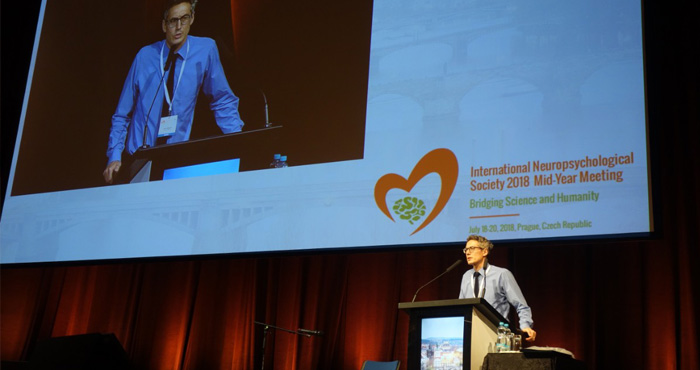
At the INS 2018 mid-year meeting in Prague, held from 18 to 20 July, neuroscientists and clinicians gathered around a shared aim: linking careful measurement to practical care. Advanced neuroimaging correlates of working memory in healthy aging sat at that intersection, connecting laboratory tasks with the realities of attention, planning and everyday independence.
Working memory temporarily holds and manipulates information, such as remembering a route while revising it. Functional MRI tracks blood-oxygen changes during tasks, EEG records rapid electrical activity, and diffusion MRI maps white-matter pathways. Together, these methods help separate changes in network strategy and structure from measurement artefacts.
For Australians, the work has particular value because ageing occurs across different education, cultural and health settings. The useful question is not whether an older brain is simply “less active”, but which processes support preserved cognition, what can be modified, and how findings can be communicated without alarm.
Reading the brain’s working-memory network
Functional MRI commonly uses n-back, delayed recall and complex span tasks. A consistent age-related pattern involves altered engagement of frontoparietal control systems, including dorsolateral prefrontal and posterior parietal cortex. Some older adults show less task-related modulation; others recruit additional areas, suggesting compensatory effort rather than uniform deterioration.
This variability makes advanced correlates more informative than a group average. Researchers examine whether frontoparietal connectivity predicts performance, whether the default-mode network is appropriately restrained, and whether activation differences align with slower responses or fewer strategy shifts. Reliable behavioural change is essential because a visually striking BOLD signal can still reflect head motion, attention lapses or task misunderstanding.
Combining complementary imaging methods
EEG offers millisecond resolution and separates neural timing from spatial activation. Simultaneous EEG–fMRI can test whether reduced prefrontal synchrony accompanies weaker control, while transcranial magnetic stimulation probes whether specific nodes are causally involved. Structural MRI adds cortical thickness and white-matter integrity; perfusion imaging and PET examine neurovascular coupling, although radiation and availability limit some protocols.
Combining modalities also exposes confounds. Cardiovascular stiffness, medication, sleep and vascular disease affect coupling between neural activity and blood-oxygen signals, so physiological recording and vascular screening matter. Australian studies should report motion, blood pressure, handedness and task comprehension, and test whether findings survive alternative preprocessing choices rather than relying on one attractive statistical map.
Healthy ageing is not a single pattern
Crystallised knowledge, vocabulary and semantic memory often remain strong even when fluid processing, rapid updating or divided attention becomes less efficient. Cognitive reserve, shaped by education, occupation, bilingual experience and demanding social roles, may help older adults use alternate networks. Brain structure and vascular ageing matter too, so chronological age cannot substitute for a multidimensional assessment.
Australian evidence benefits from reflecting this diversity. In Melbourne and Sydney, many participants come from culturally and linguistically diverse communities and may conduct daily life across two languages; testing should not mistake bilingual strategy switching for impairment. Physical activity, social engagement, hearing care and blood-pressure management are more defensible targets than claims that a particular scan can prescribe a lifestyle.
Designing studies for Australian communities
Recruitment must confront historical underrepresentation. Older Aboriginal and Torres Strait Islander participants should be involved in governance, interpretation and dissemination, with appropriate consent and data sovereignty. Community-led partnerships can make research questions relevant, such as whether digital tools fit cultural routines, while avoiding the assumption that standard Western memory tasks have the same meaning in every household.
Access creates another practical issue. Medicare generally does not fund scans undertaken solely for research, so studies need clear pathways for clinical follow-up and supported travel. Melbourne’s tram network and Sydney’s rail system simplify urban appointments, but people in regional, rural and remote Australia may need reimbursement, home visits or telehealth; a protocol designed only around a university hospital can exclude them.
Turning imaging results into humane care
Imaging is most useful when paired with repeated cognitive testing, medical history and the participant’s own goals. A changed connection may explain why someone struggles to hold several phone numbers, but it cannot by itself diagnose mild cognitive impairment. Clinicians should describe findings in plain Australian English, distinguish capacity from performance and consider fatigue, grief, low vision or medication effects that can resemble memory weakness.
The commercial market for medicines and supplements adds another layer. The TGA regulates many therapeutic goods, yet overseas listings may be confusing; an online page offering Clomid access information cannot support brain-health claims. People should check ingredients, indication and Australian approval with a GP and pharmacist, while researchers resist promoting products that have not passed relevant clinical trials.
What the Prague meeting left for clinicians
INS 2018 placed brain science within a wider conversation about culture, neuroscience and patient care. Its workshops, posters and continuing education discussions reflected the need to interpret activation and connectivity alongside real behaviour. The message for clinical practice was methodological humility: use stronger experimental controls, report null findings and avoid turning a group-level correlation into a personal prognostic label.
Even conference travel had a restorative dimension. A short walk through the Prague garden guide could complement dense poster sessions, helping delegates return to unfamiliar tasks with a steadier attention budget. As working-memory models become more precise through fMRI, EEG and network analysis, their value will be judged by whether they help older Australians retain independence and receive appropriate care, rather than by the complexity of the images alone.
General Information
Important information about the meetingIndustry
Support and exhibition opportunitiesCzech Republic
Beautiful country situated in the very heart of EuropeContact
How can we help you?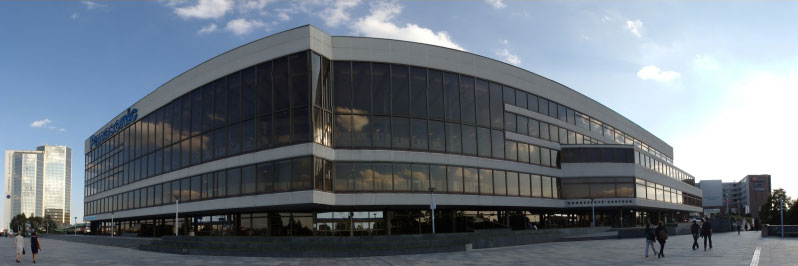
Prague Congress Centre (KCP)
5.května 65140 21 Prague 4
Czech Republic
Phone: +420 261 171 111
Website: www.kcp.cz