



Developing Culturally Fair Neuropsychological Tests: Workshop Report
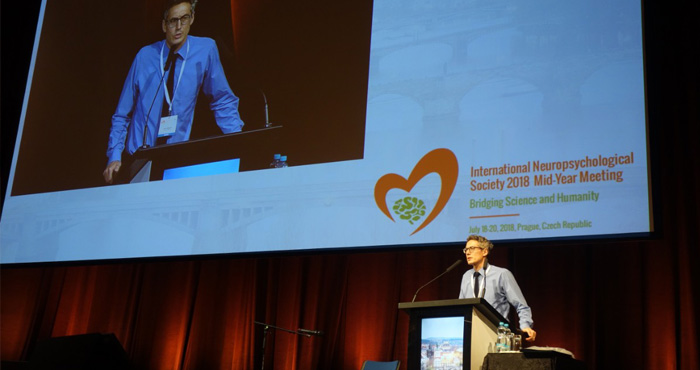
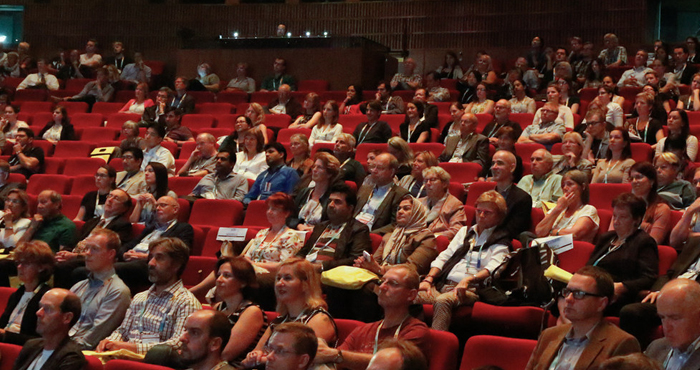
When the International Neuropsychological Society convened in Prague from 18 to 20 July 2018, one of the busiest rooms belonged to a workshop on cultural fairness in neuropsychological assessment. Clinicians, researchers and trainees spent three days on a simple question: whose assumptions does a test make, and what happens to a score when the person in the chair does not share them? Learn more about Reservation Holiday Inn.
The concern is practical. Norming samples built in one country, one education system and one language generate percentiles that look precise while quietly misreading a child, a recent migrant or a rural patient. A score can only be as fair as the reference group standing behind it. Learn more about Barany2022.com.
This report follows the workshop material into Australian settings: multidisciplinary clinics in Melbourne and Sydney, public hospital services in Perth, Aboriginal community-controlled organisations in the Northern Territory, and schools where more than 300 languages are spoken. Learn more about Hotel Vysehrad Res.
The question behind the workshop
Participants catalogued how tests carry cultural assumptions. Word generation rewards "football" for children raised on AFL or NRL but not for a migrant child who knows only soccer; naming tasks rely on household and neighbourhood experience; classroom strategies differ in bilingual settings. Even digit span and visual matrices shift when schooling quality, nutrition and health care vary.
The group framed fairness as construct validity across cultures rather than a translation problem, since a measure of executive function should behave similarly in Adelaide and Addis Ababa. Test bias also differs from examiner bias, as an assessor's expectations, accent and humour can depress performance regardless of the instrument.
What delegates tested in Prague
Day two was hands-on. Small groups administered sample items to each other, compared two language versions of the same task and worked through cases supplied by colleagues working with refugee and Indigenous populations. Attendees recorded where items failed and why, building a shared database of culturally loaded prompts.
Delegates arranging their stay could compare the Holiday Inn reservation details with other options published for Prague, though the value of the day came from having colleagues in the room. Consensus formed around documentation: adaptation decisions, pilot data and translation history belong in the published record, not a drawer.
Translation without losing the construct
Three approaches were weighed. Translation preserves wording but may not preserve cognitive demand; adaptation localises stimulus content but risks comparing non-equivalent versions; a locally developed measure starts from the construct and builds items for its intended population. Bilingual back-translation was treated as a floor rather than a guarantee, with pilot testing needed to confirm functional equivalence.
The Australian football example recurred, alongside naming tasks assuming a kitchen full of packaged goods and reading passages tracking a national curriculum. Tests can be unfair in both directions, familiar to one group and alien to another.
Further reading on the psychometric and interpretive issues raised in the session is available in the Barany 2022 resource, which pairs method with worked clinical examples.
Australian clinics, schools and everyday realities
Australia complicates the picture. Sydney and Melbourne services see patients speaking Mandarin, Cantonese, Arabic, Hindi or Vietnamese, while Adelaide and Melbourne still host Greek and Italian communities several generations from the language of the clinic. Interpreters are routine in paediatric work, yet their presence changes administration and what children report about effort and family support.
Schooling histories vary sharply. The NSW HSC, Victorian VCE and Queensland pathways sit alongside national NAPLAN testing, and newly arrived children may have no equivalent experience in any local system. An examiner needs to know whether weak written comprehension reflects dyslexia, unfamiliar vocabulary or limited schooling rather than memory.
Aboriginal and Torres Strait Islander children add another layer, with remote services facing workforce turnover, long travel distances and thin assessment access. Community-controlled organisations argue for assessment built with families and Elders, and the Royal Commission into Aboriginal and Torres Strait Islander Children in Custody has sharpened expectations about cultural safety.
Legislation, standards and professional duty
Australian practice runs through several statutory layers. The National Disability Insurance Scheme funds paediatric assessments, Medicare subsidises clinical services, and guardianship and mental health acts differ across states, affecting consent and capacity documentation. Reports travelling beyond the clinic must satisfy privacy obligations under Commonwealth and state health records legislation, a point delegates raised for telehealth testing.
Professional standards add constraints. State registration bodies and the Australian Psychological Society's code require qualified supervision for test administration, and interpretation must avoid importing cultural stereotypes into formulation. A manual prescribing a single normative group does not meet the standard of care for a patient from another background.
Carrying the work into practice
Delegates sketched a workflow that survives a busy service: establish the patient's cultural and educational context before testing; use a professional interpreter and record who interpreted; select norms matching language and schooling; supplement scores with qualitative observation; state confidence in the report rather than presenting percentiles as fact.
| Aspect | Standard norm-referenced practice | Culturally responsive practice |
|---|---|---|
| Norming sample | One national or regional reference group | Norms matched to language, schooling and community |
| Instructions | Administered verbatim from the manual | Interpreted and checked with bilingual colleagues |
| Cultural content | Unmodified items, culturally loaded prompts | Item review and adaptation supported by pilot data |
| Scoring | Percentile ranks presented as fixed | Scores reported with ranges and contextual caveats |
| Interpretation | Culture treated as background detail | Cultural and educational history documented and discussed |
Lessons that outlast the meeting
The durable message was that cultural fairness is not a property a test has or lacks. It is a chain of decisions: who was sampled, who translated, who piloted the task, who interpreted the result. Each link can be checked and strengthened.
The mid-year programme, poster listings and photographs remain available for anyone revisiting the sessions, and delegates seeking practical information can consult the Vysehrad hotel options for the Prague venues. What participants left with was a shared standard: report the context, or do not report the score.
General Information
Important information about the meetingIndustry
Support and exhibition opportunitiesCzech Republic
Beautiful country situated in the very heart of EuropeContact
How can we help you?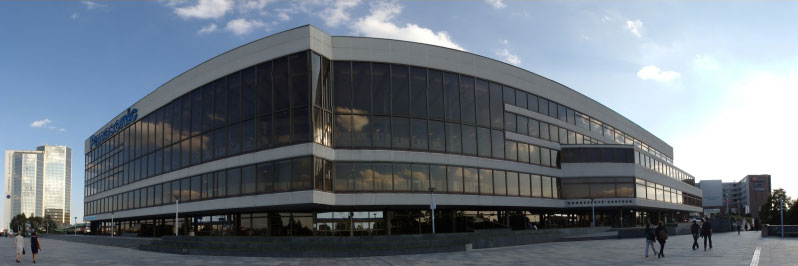
Prague Congress Centre (KCP)
5.května 65140 21 Prague 4
Czech Republic
Phone: +420 261 171 111
Website: www.kcp.cz