


Dual-task gait as an early signal of cognitive decline
Neuropsychologists usually assess memory, language, and attention at a desk or table. Movement provides a complementary window. The use of dual-task performance to detect cognitive decline in gait examines whether walking changes when a person must also process information, revealing divided-attention difficulties that ordinary mobility tests may miss.
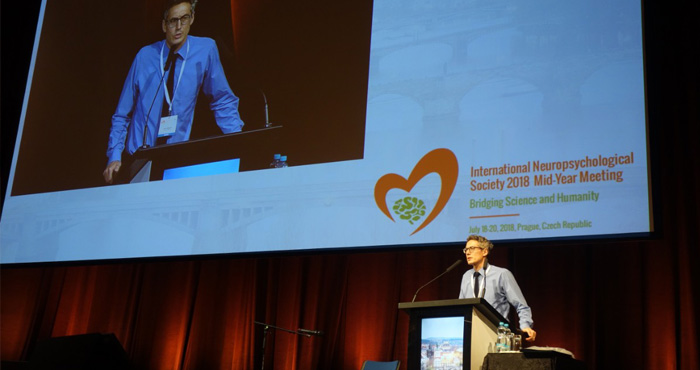
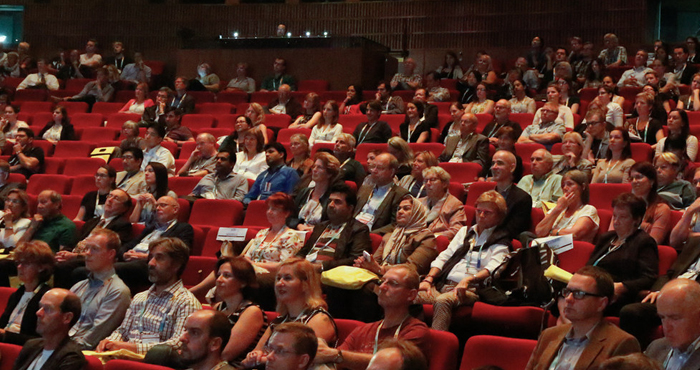
The INS 2018 mid-year meeting in Prague, Czech Republic, held from 18 to 20 July 2018, brought together science and clinical practice with a focus on bridging scientific advances and humane patient care. That combination remains relevant: useful screening should respect the person being tested, connect evidence with everyday function, and avoid turning a simple gait observation into a verdict.
Walking as a window on cognition
Walking recruits motor planning, balance, visual processing, and executive control. When a person divides attention between a path and a spoken task, the brain must allocate limited resources across both. This motor-cognitive interference is often more apparent than a slower ordinary walk, especially in people with mild cognitive impairment or early dementia.
Useful gait markers include speed, cadence, step length, step-width variability, and timing. A divided-attention task may reduce speed, shorten steps, or increase variability as someone gives up an automatic movement strategy. The pattern can reveal reduced cognitive reserve, but it also shows why a change in walking cannot be labelled as dementia on its own.
Building a reliable dual-task protocol
A sound protocol starts with a comfortable walking pace over a familiar flat route, followed by the same route while the person performs a cognitive task. Repeat the conditions, allow practice, and record with a stopwatch, motion capture, or validated wearable. Keep the environment quiet so hearing, vision, and balance are not unintentionally overloaded.
The secondary task matters. Serial subtraction probes working memory, verbal fluency probes language and switching, while an n-back task places greater demands on updating and executive control. Each should be calibrated to the person’s education and language, with the cognitive task completed alone first; this reduces task failure unrelated to gait.
Interpreting change without overdiagnosis
A common outcome is dual-task cost, calculated as single-task speed minus dual-task speed, divided by single-task speed and multiplied by 100. The resulting percentage estimates the extra motor cost of dividing attention. It works best when the same person, task, route, and device are used at baseline and follow-up.
Interpretation needs clinical context. Pain, unsuitable footwear, poor vision, sedating medicines, fatigue, depression, and conditions such as Parkinson’s disease or stroke can all alter gait. A large one-off difference may reflect these factors, whereas a persistent or progressive change across visits is more informative. Comprehensive assessment should combine history, examination, and neuropsychological testing.
Australian conditions that shape testing
Australian testing conditions add practical texture. A short walk from a Melbourne consulting room to a tram stop may involve crowds, slopes, and noisy traffic; Sydney footpaths can be uneven, while hot and humid conditions change endurance. Indoor lanes provide consistency, but real-world routes capture the situations in which people actually walk. Rural and remote patients may face travel distances of hundreds of kilometres for specialist review.
Language and culture also shape the test. Australia has many communities speaking languages other than English, so interpreters and appropriately adapted cognitive tasks are essential. For Aboriginal and Torres Strait Islander clients, co-design with local health services and careful review of family and community goals can prevent normative gait data from being misapplied. Patients often grasp the exercise more readily when clinicians describe it as juggling two jobs rather than using technical jargon.
Connecting results to clinical care
A dual-task result is most useful when it changes care. It may support falls prevention, prompt review of medicines or mood, or trigger a memory assessment after an unexpected decline. Physiotherapists can use it to guide task-specific training, while occupational therapists may compare performance with meal preparation, shopping, or managing public transport.
Australia’s health market is mixed: a GP can refer a person to a public memory clinic or neurologist, while private neuropsychology is often self-funded or supported by private insurance. Clear communication about what the test can and cannot establish reduces confusion and unnecessary expenditure. Telehealth supports follow-up in regional areas, although walking safely and measuring gait consistently still require a suitable local space and supervision.
Research priorities and shared learning
Research should report the individual and combined effects on gait, not only whether performance worsened. Trials need longitudinal follow-up, transparent task instructions, and cohorts that reflect Australia’s cultural and geographic diversity. Masked assessors can reduce expectation bias, while responsive gait measures may prove more sensitive than walking speed alone in a short clinic corridor.
Work on oral and vascular health shared through PER-IADR 2020 reinforces the value of multidisciplinary assessment, although observed associations should not be treated as proof of cause. For neuropsychology, the parallel is straightforward: cognition, mobility, medication, mood, and vascular risk should be considered together rather than forced into a single diagnostic label.
A humane pathway from movement to memory
Implementation must remain humane. Explain the task in plain language, demonstrate it, permit rest, and involve a caregiver when the person consents. Record distress or an inability to continue, because safety and comfort are part of valid measurement. The meeting’s related events archive also provides context for the broader international conversations surrounding the INS programme.
Dual-task gait analysis can act as an early signal and a guide to deeper assessment, not as a stand-alone diagnosis. Its strongest role is to connect observable change with cognition, function, and the support available to each person. Standardised methods and careful follow-up preserve both the scientific value of the test and the dignity of the person walking.
General Information
Important information about the meetingIndustry
Support and exhibition opportunitiesCzech Republic
Beautiful country situated in the very heart of EuropeContact
How can we help you?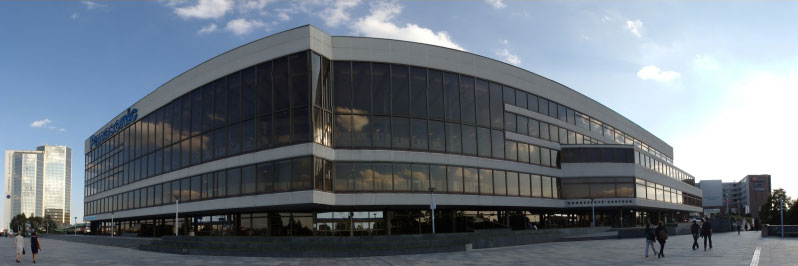
Prague Congress Centre (KCP)
5.května 65140 21 Prague 4
Czech Republic
Phone: +420 261 171 111
Website: www.kcp.cz