



Cognitive reserve after traumatic brain injury
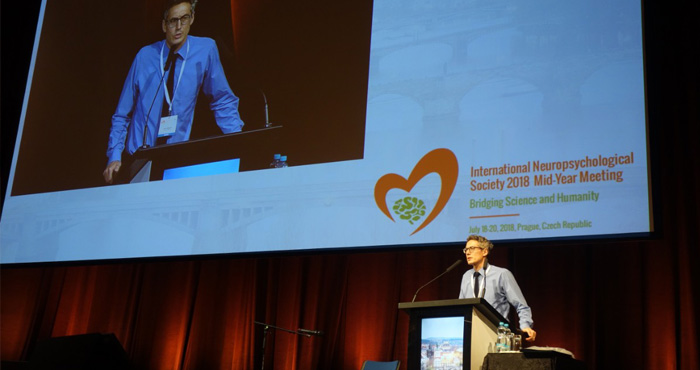
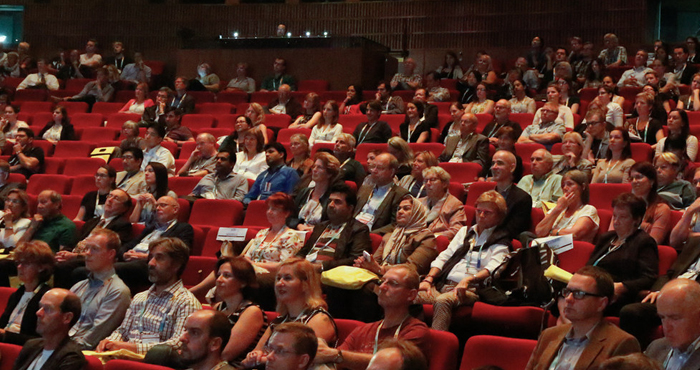
At the INS 2018 mid-year meeting in Prague, researchers and clinicians considered how scientific advances can improve humane care after traumatic brain injury. Cognitive reserve may help explain why people with similar injuries have different outcomes, while raising a difficult causal question.
Reserve is the brain’s capacity to cope with neuropathological burden through education, occupation, language, and lifelong learning. After injury, it may support skill preservation, adaptation, and daily participation. It is an interaction between brain, person, and environment, not a single test score.
For Australian clinicians, this matters across metropolitan hospitals, regional rehabilitation services, and remote communities. Driving, work, family support, and treatment access shape recovery alongside biology. Examining whether reserve is protective and actionable can improve prognosis and support.
Why cognitive reserve matters
Traumatic brain injury outcomes reflect more than lesion size. Memory, language, fatigue, impulsivity, and reduced stamina may coexist with retained education, occupational expertise, social networks, or bilingual skills. Such resources can support compensation and rehabilitation.
Reserve is neither an innate shield nor fixed. It develops through learning and participation, changes across the lifespan, and may strengthen through meaningful activity. Education, demanding trades, community leadership, music, and cultural or family engagement can contribute in different ways.
The practical question is whether baseline reserve changes the post-injury trajectory, or whether people with more resources simply receive better care and opportunities. The answer matters for prognosis and rehabilitation design.
Protective signal or epiphenomenon
Observational studies often link higher education, occupational complexity, and other reserve proxies with better outcomes. One interpretation is greater neural resilience, allowing performance to remain stable despite injury. Reserve might also buffer age or injury severity.
The epiphenomenal interpretation is important: reserve may be a marker rather than a mechanism. Education and employment are associated with health, income, housing, health literacy, and rehabilitation access. Premorbid function and socioeconomic position can influence both injury risk and recovery, so an association may reflect confounding.
Models should test whether reserve changes the effect of injury, rather than simply add it as another predictor. The meeting abstract archive offers a starting point for comparing designs and outcomes, especially where reserve and recovery are defined differently.
Measuring reserve without oversimplifying
No single score captures reserve. Education and occupational history are useful proxies but also encode social opportunity. Reasoning, memory, or vocabulary tests add information, yet language, fatigue, education, and injury can alter their meaning.
Assessment should distinguish premorbid capacity from current performance. Informants, records, and functional observation can clarify history. For people from multilingual backgrounds, testing in a second language may underestimate ability and distort estimates.
Measurement should be longitudinal. Baseline profiling, repeated functional goals, and structured review of participation reveal change more clearly than a one-off test. Clinicians can then test whether rehabilitation supports new learning and role resumption.
Recovery pathways in Australia
Australian services mix public hospitals, Medicare-funded care, private rehabilitation, workers’ compensation schemes, and the National Disability Insurance Scheme. Eligibility and funding vary by state, insurer, disability criteria, and service type, making coordinated planning essential.
Daily life adds context. A commuter navigating Melbourne trams, a worker travelling across Sydney, or a family managing long distances in regional or remote Australia may need different supports for driving, work, study, or community life. State and territory road rules and medical fitness assessments affect return to drive.
Privacy and communication matter too. The Australian Privacy Principles set a national benchmark for personal health information, while many public services also follow state or territory privacy regimes. Interpreters and culturally safe communication are essential in many communities. A plan that ignores language, family duties, transport, or financial stress may fail in daily life.
Clinical and research priorities
Clinicians and researchers can use reserve as a hypothesis without turning it into a label. The following priorities translate a complex concept into actions that can be tested in routine care and Australian studies.
Assessment must connect past resources with present participation, while support should build new skills and roles. Progress is more meaningful when it is visible in daily life.
Assessment priorities
- Establish premorbid education, work, language, and leisure history.
- Pair cognitive testing with real-world functional goals.
- Record fatigue, mood, pain, and medication effects.
- Revisit estimates as recovery and participation change.
Support priorities
- Build rehabilitation around valued roles and supported learning.
- Involve families and interpreters with informed consent.
- Coordinate driving, work, and transport planning.
- Track outcomes beyond standardized cognitive scores.
These steps do not prove that reserve is protective, but they make causal questions easier to study and care more responsive to the person.
Turning evidence into better outcomes
A stronger evidence base needs longitudinal cohorts, consistent reserve measures, and trials testing whether support can build resilience. Studies should separate injury severity, age, premorbid function, and socioeconomic conditions, and include regional and remote settings.
Meetings can advance collaboration, but access should not depend on physical travel. For colleagues unable to attend in person, virtual congress networking offers practical ideas for discussion across time zones. Connectivity can link Australian clinicians with international cohorts and shared protocols.
Reserve remains a plausible protective influence whose causal status is unsettled. Its immediate value is to prompt better assessment of what a person brings to recovery, identify remaining barriers, and select supports that restore valued roles.
General Information
Important information about the meetingIndustry
Support and exhibition opportunitiesCzech Republic
Beautiful country situated in the very heart of EuropeContact
How can we help you?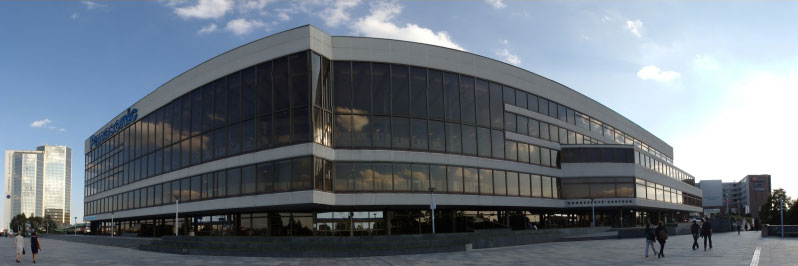
Prague Congress Centre (KCP)
5.května 65140 21 Prague 4
Czech Republic
Phone: +420 261 171 111
Website: www.kcp.cz