


How the basal ganglia shape procedural learning
Procedural learning is the gradual acquisition of skills through practice, feedback and repetition. It supports activities such as typing, cycling, playing an instrument and following a familiar workplace routine. Unlike explicit memory, which depends heavily on recalling facts and events, procedural memory can become efficient without conscious verbal explanation. Learn more about リウマチ性疾患の心血管イベントリスクと炎症コントロールの関連.
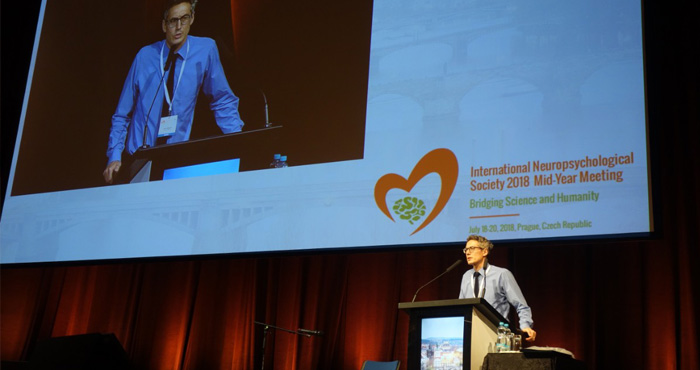
The basal ganglia help the brain select useful actions, strengthen successful responses and suppress competing movements. Their contribution is especially relevant to neuropsychology because changes in these circuits can affect motor control, habit formation, reward learning and everyday independence. The subject also reflects the scientific and clinical themes preserved through the INS 2018 meeting archive.
| Learning feature | Main basal ganglia contribution | Practical example |
|---|---|---|
| Action selection | Chooses a response from competing possibilities | Selecting the correct key on a keyboard |
| Reinforcement | Increases behaviours followed by favourable outcomes | Repeating an efficient rehabilitation exercise |
| Habit formation | Shifts control towards automatic routines | Driving a familiar route |
| Error adjustment | Updates performance after feedback | Correcting a tennis serve |
| Cognitive flexibility | Helps replace an outdated response | Changing a workplace procedure |
The circuitry behind skilled behaviour
The basal ganglia include the striatum, globus pallidus, subthalamic nucleus and substantia nigra. These structures communicate with the motor, prefrontal and limbic regions of the cortex through cortico-striato-thalamo-cortical loops. This arrangement allows movement, motivation and decision-making to influence one another.
The striatum receives information about the current context, the intended action and its likely value. Direct and indirect pathways then help facilitate a selected behaviour while limiting alternatives. Dopamine from the substantia nigra pars compacta adjusts this process, especially when an outcome is better or worse than expected.
Dopamine and reinforcement
Dopamine does not simply create pleasure. In procedural learning, it can signal a prediction error: the difference between an expected result and the result that actually occurs. A successful movement, timely reward or encouraging clinical response can strengthen the neural pattern associated with that action.
This mechanism helps explain why immediate feedback is often valuable during skill training. In an Australian rehabilitation clinic, a therapist might use visible progress markers to reinforce a patient’s repeated practice. For people using the National Disability Insurance Scheme, structured goals and observable functional gains can make this learning process easier to monitor across therapy sessions.
From deliberate practice to habit
New skills initially require attention and conscious control. With repetition, performance may become faster and less dependent on working memory. Basal ganglia circuits contribute to this transition by linking environmental cues with efficient action sequences.
Habit learning can be helpful when a routine is safe and appropriate, yet it can become inflexible. Someone recovering from a stroke may repeatedly use a compensatory movement even after a more effective pattern has been taught. Treatment therefore needs enough repetition to establish a new response while preserving the ability to adapt when circumstances change.
What neurological disorders reveal
Parkinson’s disease demonstrates how reduced dopamine availability can impair movement initiation, sequencing and reinforcement learning. People may need more repetitions, stronger external cues or additional time to acquire a motor routine. Huntington’s disease, involving degeneration within striatal networks, can disrupt both motor control and the ability to learn action patterns.
Research into autoimmune and inflammatory conditions also highlights the importance of considering whole-body health when interpreting cognitive and motor performance. Findings on inflammation and vascular risk are relevant to a broader clinical perspective: brain-based learning cannot always be separated from vascular, metabolic or immune factors.
Measuring procedural learning
Neuropsychologists may assess procedural learning with mirror tracing, rotary pursuit, serial reaction-time tasks or probabilistic classification activities. These tasks vary in their demands. Some emphasise motor sequencing, while others examine gradual learning from feedback without conscious awareness of the underlying rule.
Interpretation requires care because poor performance may reflect fatigue, tremor, depression, medication effects or reduced comprehension rather than a primary procedural-memory deficit. Australian assessment settings may also involve culturally and linguistically diverse clients, so instructions, norms and communication style should be considered alongside the test score.
Culture, context and clinical care
A learned routine is shaped by the environment in which it is practised. Someone in Sydney may rely on Opal transport habits, while a person in Melbourne may learn a different sequence for navigating trams, platforms and pedestrian crossings. These everyday examples show how procedural knowledge is embedded in local cues rather than stored as an abstract skill alone.
Clinical programmes should therefore resemble the person’s real routines where possible. A rural Australian patient may need telehealth-supported practice for tasks completed at home, while an urban patient may benefit from community-based training in busy streets or shopping centres. Practical relevance can improve motivation and help a newly learned action transfer beyond the therapy room.
Translating neuroscience into practice
Effective training usually combines repetition, meaningful goals, graduated difficulty and timely feedback. Spaced practice may protect attention and reduce fatigue, while external cues such as rhythm, visual targets or verbal prompts can support action initiation. Once performance improves, cues should be reduced carefully so that the skill becomes more independent.
The basal ganglia are therefore best understood as part of a distributed learning system rather than an isolated habit centre. Their interaction with the cortex, cerebellum, dopamine pathways and emotional circuits explains why procedural learning changes with reward, context, disease and practice. This integrated view can guide rehabilitation, workplace skill training and humane neuropsychological care.
General Information
Important information about the meetingIndustry
Support and exhibition opportunitiesCzech Republic
Beautiful country situated in the very heart of EuropeContact
How can we help you?
Prague Congress Centre (KCP)
5.května 65140 21 Prague 4
Czech Republic
Phone: +420 261 171 111
Website: www.kcp.cz