


Parietal networks and visuoconstructive abilities
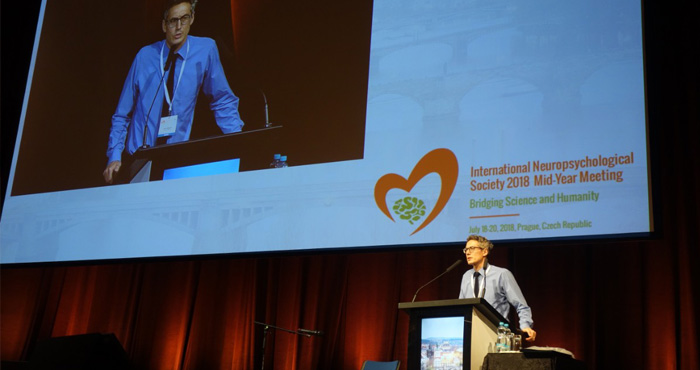
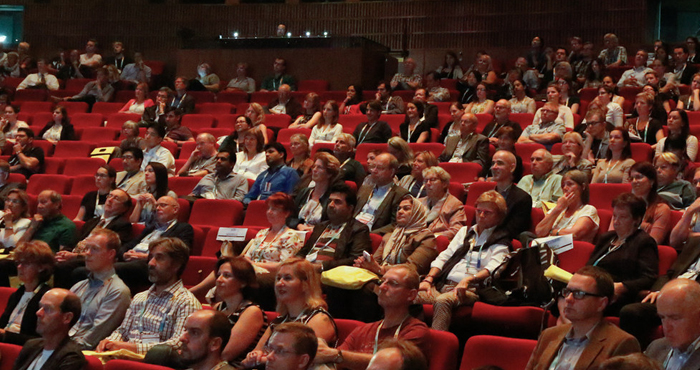
At the INS 2018 mid-year meeting in Prague from 18–20 July 2018, researchers and clinicians examined how scientific advances can improve humane care. The role of the parietal lobe in visuoconstructive abilities connected laboratory findings with copying, drawing, object assembly and navigation. Learn more about 基礎理学療法研究における動物モデルの意義.
For Australian patients, these abilities shape schoolwork, employment, rehabilitation and independence. A clear brain scan does not guarantee that someone can plan a kitchen renovation, follow a recipe or find a station, so assessment must connect parietal function with health, culture, language and personal priorities.
Anatomy behind visual organisation
The parietal cortex is a network rather than a single centre. The superior and inferior parietal lobules, intraparietal sulcus, postcentral gyrus, precuneus and temporoparietal junction each contribute to different stages of visual processing.
Visuoconstruction recruits spatial attention, visual working memory, sensory integration and motor planning. Dorsal pathways carry information about location and action, allowing the brain to combine separate elements into a coherent spatial whole.
Tests of block design, complex-figure copying and clock drawing tap overlapping processes. Their difficulty lies in deciding whether a weakness reflects basic perception, attention, sequencing, executive control or motor execution.
Constructional praxis after parietal injury
Parietal damage can disrupt constructional praxis, the ability to organise visual parts into a meaningful arrangement. A patient might omit elements, distort proportions, rotate pieces or approach the task through trial and error despite intact vision and hand strength.
Common patterns depend on lesion location and side. Right inferior parietal injury may accompany left hemispatial neglect, dressing apraxia or denial of weakness; left-sided involvement can be associated with impaired spatial reasoning, finger agnosia or Gerstmann-type difficulties.
Recovery also changes the clinical picture. Stroke, tumour treatment, seizures and delirium can affect performance at different rates, so serial assessment and observation of everyday behaviour often clarify more than a single score.
Assessment across brain, person and context
Neuropsychological assessment combines standardised measures with a careful history. A low block-design score can reflect parietal dysfunction, but it may also arise from limited education, an unfamiliar task, language difference, depression or poor vision.
Tasks and functions
- Copying and production: complex figures, clock drawing and block design.
- Spatial processing: line orientation, object-space relations and neglect.
- Executive control: working memory, planning and error monitoring.
- Everyday relevance: dressing, route finding, handwriting and unfamiliar layouts.
Clinical checks
- Establish education, language background and familiarity with the materials.
- Use a professional interpreter and allow additional time when needed.
- Consider fatigue, pain, hearing, mood, sleep and medication.
- Compare results with prior records and observed daily functioning.
A useful formulation links the lesion, the cognitive mechanism and the activity that has become difficult. It identifies what the patient can do, which environmental supports help and which strengths can be built into rehabilitation.
Experimental models and rehabilitation research
Controlled lesions and behavioural tasks can isolate components of spatial processing that are difficult to observe in routine clinics. Animal studies also permit investigation of recovery mechanisms, plasticity and the timing of intervention after injury.
A review of animal models in rehabilitation explains why carefully selected models remain useful for testing rehabilitation strategies. Translation still requires caution: behaviour in an animal model is not a direct substitute for a person’s experience or goals.
Clinical research should therefore pair laboratory findings with patient-defined outcomes. Measures of transfer to daily life are more informative than claiming that a circuit or task alone predicts functional recovery.
Australian pathways and cultural context
Australia’s assessment services are concentrated in cities such as Melbourne, Sydney, Brisbane and Perth, while many clients live far from metropolitan hospitals. Telehealth, outreach clinics and fly-in, fly-out services help narrow distance, but they cannot remove the effects of local service shortages.
Funding and referral pathways shape access. Care may involve a general practitioner referral under Medicare, private health insurance, a public hospital memory clinic, an aged-care provider or an NDIS plan for eligible participants. Clinicians may hear families use everyday terms such as “memory clinic” and “rehab”, so findings should be explained in plain language.
Culturally safe assessment is essential in multicultural cities and regional communities. For Aboriginal and Torres Strait Islander clients, clinicians should work with local health services, consider community and language context, and avoid treating unfamiliar visual materials as proof of impairment. Interpreters may be needed where English is not the client’s first language.
Alcohol presents another overlapping mechanism of change. The clinical account of alcohol-related brain damage is relevant to memory and executive services, because slowed processing, impaired judgement and visuospatial difficulties can converge with depression, sleep problems and medication effects.
Turning evidence into patient partnership
Humane care begins with the activity that matters to the patient: making a meal, using public transport, returning to study or drawing with a grandchild. Therapy can then target visual strategies, environmental adaptation and supported practice rather than relying on test performance alone.
Multidisciplinary teams may combine neuropsychology, occupational therapy, physiotherapy, speech pathology and social work. In Melbourne, for example, negotiating a tram route can become a meaningful rehabilitation task; in a rural town, the same goal may involve a longer and less familiar journey.
The INS 2018 meeting connected neuroscience with clinical practice and culture because each layer changes the meaning of a finding. The parietal lobe helps organise perception into action, while patient partnership determines what that capacity can become in daily life.
General Information
Important information about the meetingIndustry
Support and exhibition opportunitiesCzech Republic
Beautiful country situated in the very heart of EuropeContact
How can we help you?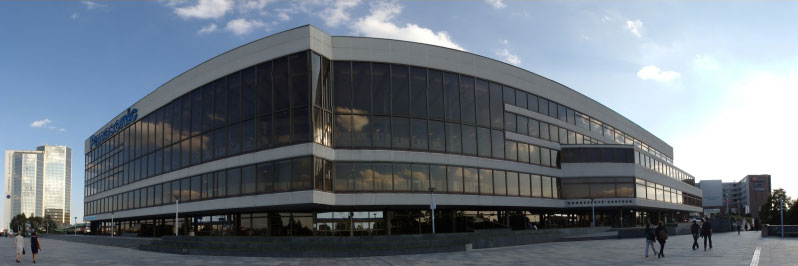
Prague Congress Centre (KCP)
5.května 65140 21 Prague 4
Czech Republic
Phone: +420 261 171 111
Website: www.kcp.cz