




Cognitive Function In Unilateral Spatial Neglect: Longitudinal Outcomes
Unilateral spatial neglect is a disorder of attention and spatial awareness that commonly follows right-hemisphere stroke, although left-sided brain injury can produce similar difficulties. A person may ignore objects, sounds or body parts on one side, particularly when distracted, fatigued or moving through a busy environment. The problem is not simply a visual field loss; it can affect attention, awareness, memory, planning and safe everyday behaviour.
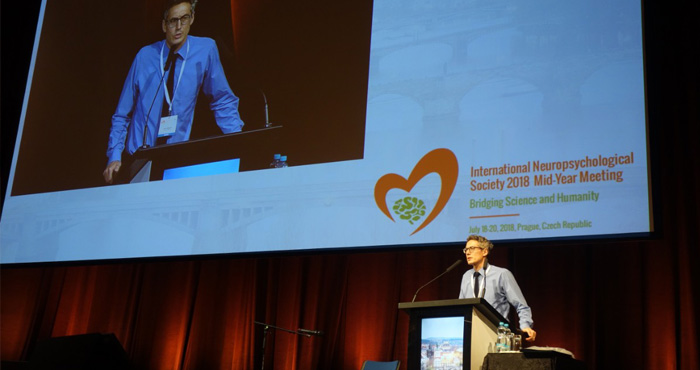
Longitudinal research is valuable because early performance does not always predict later independence. Recovery may occur quickly during the first weeks, then continue more gradually through rehabilitation and community participation. The International Neuropsychological Society’s 2018 meeting in Prague reflected this connection between neuroscience, clinical practice and humane care, which remains central to understanding cognitive function in unilateral spatial neglect.
What Unilateral Spatial Neglect Changes
Neglect can disrupt visual search, reading, writing, navigation and self-care. A person might eat food from only one side of a plate, leave the left sleeve undressed or collide with doorframes. They may also fail to recognise the difficulty, a feature known as anosognosia, which can complicate therapy and increase safety risks.
Cognitive effects often extend beyond spatial attention. Patients may show slower processing, reduced working memory, impaired executive control and difficulty shifting attention between tasks. These changes can resemble other acquired or developmental attention disorders, so clinicians benefit from a broad differential assessment, including perspectives outlined in lifespan ADHD research.
Why Longitudinal Follow-Up Matters
A single cancellation task or drawing test provides only a snapshot. Repeated assessment can show whether neglect is resolving, becoming less obvious under structured conditions or persisting during real-world multitasking. A patient may improve on paper-based measures yet continue to miss cyclists, kerbs or approaching pedestrians.
Long-term outcomes are shaped by lesion location, stroke severity, motor impairment, mood, fatigue and rehabilitation intensity. Family reports and occupational therapy observations can reveal changes that standard scores miss. Follow-up should therefore include formal testing, functional observation and the patient’s own goals.
How Cognitive Domains Recover
Selective attention may improve as the brain reallocates processing resources, while alerting and sustained attention can remain vulnerable. Executive functions are particularly important: planning a shopping trip, checking traffic in Melbourne or preparing medication all require monitoring across space and time.
Memory complaints may reflect poor attention at the time information is learned rather than a primary storage deficit. Language, praxis and visual perception should also be examined. Progress is often uneven, with gains in structured clinic tasks appearing before reliable transfer to home, work or community settings.
Assessment In Australian Practice
Australian clinicians may combine cancellation tests, line bisection, drawing, reading tasks and behavioural observation with tools such as the Catherine Bergego Scale. Assessment should consider familiar settings, including crowded Sydney shopping centres, Brisbane public transport or navigating a suburban footpath while carrying a phone and reusable shopping bag.
Driving assessment requires particular caution. A person who appears improved in a quiet clinic may still overlook vehicles at a roundabout or fail to scan adequately at an intersection. Under the Disability Discrimination Act 1992, reasonable access and participation matter, while transport and return-to-driving decisions must still meet relevant state or territory safety requirements.
Cultural and communication factors also influence results. Interpreters, family consultation and culturally appropriate explanations can improve engagement. Telehealth may support rural follow-up, but clinicians must account for screen size, camera position and the reduced ability to observe whole-body navigation.
Practical Signs And Supports
Families and support workers can record functional changes between appointments. Useful observations include:
- Missing food, clothing or objects on one side
- Bumping into furniture or people
- Losing place while reading messages or forms
- Becoming unsafe when tired or distracted
Rehabilitation strategies should be tailored rather than applied mechanically. Helpful approaches may include:
- Scanning from the affected side using an anchor
- Reducing visual clutter during new tasks
- Pairing verbal instructions with meaningful movement
- Practising in supermarkets, kitchens and public spaces
Everyday Australian routines can guide therapy. A patient might practise scanning before crossing a road, locating products in a Coles or Woolworths aisle, or reading a Myki, Opal or go card display. Access to funded supports through the National Disability Insurance Scheme may vary according to eligibility and plan goals, so documentation should link cognitive findings to concrete participation needs.
Comparing Outcomes Over Time
The table below illustrates how different measures can produce different pictures of recovery. Improved accuracy does not always mean restored independence, particularly when fatigue, speed and environmental complexity remain significant.
| Domain | Early presentation | Later improvement | Ongoing clinical concern |
|---|---|---|---|
| Visual search | Misses items on the neglected side | Finds targets with prompts | Omissions in crowded settings |
| Reading | Skips words or lines | Uses a scanning anchor | Loses place when tired |
| Personal care | Leaves one side undressed | Completes routine with checking | Requires supervision under time pressure |
| Mobility | Collides with obstacles | Navigates familiar routes | Risks at crossings and busy stations |
| Awareness | Underestimates difficulties | Accepts feedback | Overconfidence during dual tasks |
| Executive control | Struggles to shift attention | Manages one task at a time | Breakdowns during shopping or travel |
Recovery should be judged by meaningful participation as well as test scores. Australian outcome studies and clinical services can strengthen this approach by tracking return to family roles, employment, driving, public transport and independent decision-making. Specialist vestibular and neuropsychological resources, including Barany Society materials, can also help clinicians consider related perceptual and balance factors when spatial symptoms persist.
General Information
Important information about the meetingIndustry
Support and exhibition opportunitiesCzech Republic
Beautiful country situated in the very heart of EuropeContact
How can we help you?
Prague Congress Centre (KCP)
5.května 65140 21 Prague 4
Czech Republic
Phone: +420 261 171 111
Website: www.kcp.cz