



MoCA accuracy across Australia’s multilingual communities
The 30-point Montreal Cognitive Assessment (MoCA) is a brief cognitive screen, not a stand-alone diagnosis. Sensitivity and specificity of MoCA in diverse linguistic groups are local, validation-dependent estimates shaped by language, education, cultural familiarity and the reference assessment used to define impairment.
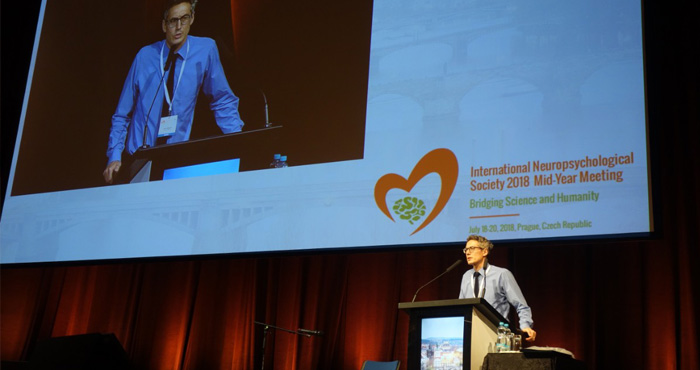
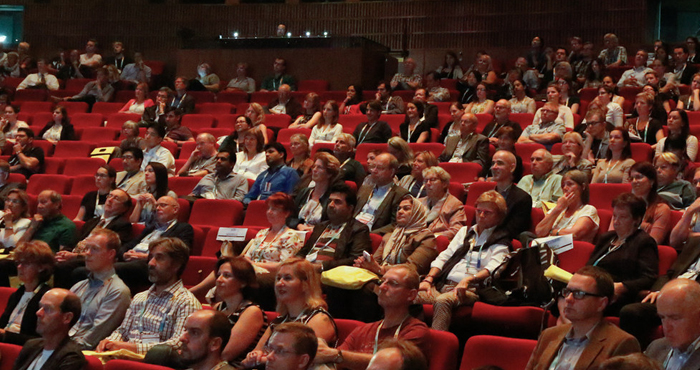
Delegates at the International Neuropsychological Society’s mid-year meeting in Prague, held from 18 to 20 July 2018, examined how scientific advances can support humane care. The Prague 2018 meeting programme remains a useful record of its focus on clinical practice.
Language, education and test performance
A translation can preserve the wording while leaving oral instructions, naming norms, phonemic fluency, literacy demands or recall strategies unfamiliar. Performance must therefore be compared with matched local validation data rather than assumed equivalent from a translated form.
| Context | Sensitivity risk | Specificity risk | Practical interpretation |
|---|---|---|---|
| Limited English proficiency | Verbal tasks may be missed | Apparent impairment may be over-detected | Use interpreter-supported administration and local cutoffs |
| Low formal schooling | Unfamiliar tasks may reduce detection | Education effects may inflate positive findings | Consider education and occupational history |
| Hearing or vision loss | Instructions or visual items may be missed | Sensory limitation may cause false positives | Record sensory status and adapt testing |
| Cultural unfamiliarity | Different strategies may depress scores | Biased items may create false positives | Prioritise locally validated adaptations |
| Unvalidated cutoff | Detection may be inaccurate | False positives or negatives may increase | Report sensitivity, specificity and confidence intervals |
These risks do not predict every result. Bilingualism, high education and strong clinical care can produce strong performance, while neurological disease remains visible. The purpose is to identify when measurement requires a qualified caveat, not to attribute difficulty to ethnicity.
Reading sensitivity and specificity
Sensitivity is the proportion of people with the target condition who screen positive; specificity is the proportion without it who screen negative. A tool can miss impairment in one group while falsely labelling another, so pooled accuracy can conceal inequity.
Useful estimates identify the reference standard, sample, age range, education, language proficiency, severity distribution and cutoff. Confidence intervals matter: a point estimate from a small clinic sample cannot support confident population claims, especially where impairment prevalence is low.
What the MoCA actually captures
The MoCA samples attention, naming, verbal fluency, visuospatial ability, memory and executive function. Several tasks invoke language directly, while remembering an unfamiliar task sequence and producing words depend on educational and cultural experience.
Consequently, a total score is not language-free. Low scores can trigger useful further assessment, but borderline results often require language and educational context, longitudinal change, functional evidence and sometimes a bilingual neuropsychological evaluation.
Cultural validity beyond translation
Cultural validity asks whether the construct is measured comparably, not merely whether words were translated. Test equivalence requires comparable item difficulty, measurement invariance and reference to meaningful daily occupations across communities.
An adapted version may change stimuli or administration while preserving cognitive demands. That adaptation should be tested against local performance; changing an animal, occupation or object without validation can conceal, rather than remove, cultural bias.
Australian assessment pathways
In Sydney and Melbourne, patients commonly navigate public hospitals, GP referrals, bilingual health workers and a large private neuropsychology market. A GP referral can open Medicare-supported diagnostic pathways, while private fees, interpreter costs and waiting times shape access.
The National Disability Insurance Scheme may fund functional-capacity assessments where an individual’s disability support plan requires them; these are not identical to diagnostic services. Aged-care providers work under the Aged Care Act 2024 and quality standards, linking cognitive findings with safety and independence.
Private providers must handle health information under the Privacy Act 1988, while public health services also follow relevant state and territory records legislation. Clear consent and information governance matter when translated data, recordings or interpreter notes enter the record.
Interpreters and accessible administration
A professional interpreter should be used when instructions or responses require linguistic mediation, with the language of testing and interpreter role documented. Family members can support rapport but may distort questions, cue responses or create confidentiality concerns.
Accessibility also includes hearing aids, good lighting, large print, extra time and a quiet room. Telehealth, now routine across metropolitan and regional Australia, can improve access but requires stable broadband, suitable camera views and trained interpreters; it does not solve non-verbal test bias.
Continuing education listings such as the archive’s related meeting resources can help teams refine interpreter procedures, choose appropriate outcomes and identify when referral for comprehensive assessment is warranted.
Evidence standards and professional resources
Validation studies should report subgroup coverage, translated-form provenance, adapted procedures and clinically meaningful cutoffs. Reporting overall accuracy alone can make a tool appear equitable when one language group bears more false positives or misses.
The Barcelona 2022 programme illustrates the value of international evidence sharing. For Australian clinicians, local validation remains essential before MoCA results are used to allocate services, assess functional capacity or support high-stakes clinical decisions.
General Information
Important information about the meetingIndustry
Support and exhibition opportunitiesCzech Republic
Beautiful country situated in the very heart of EuropeContact
How can we help you?
Prague Congress Centre (KCP)
5.května 65140 21 Prague 4
Czech Republic
Phone: +420 261 171 111
Website: www.kcp.cz