




Executive Dysfunction in ALS: A Practical Clinical Assessment
Executive dysfunction in amyotrophic lateral sclerosis can weaken planning, inhibition, set shifting, working memory and self-monitoring, sometimes before memory loss becomes obvious. Yet fatigue, respiratory discomfort, pain, low mood and motor slowing can all depress test performance. Assessment therefore needs to separate cognitive change from the physical burden of ALS.
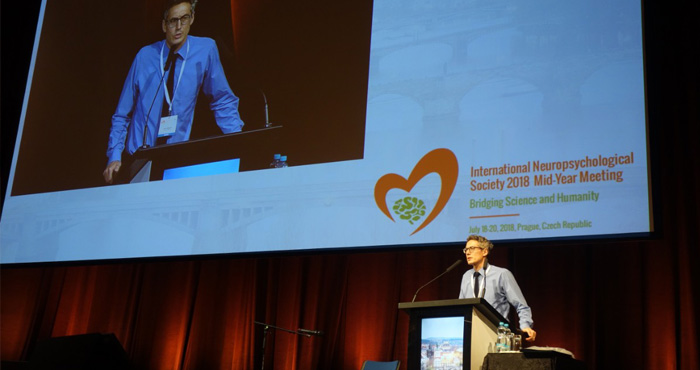
At the International Neuropsychological Society’s 2018 mid-year meeting in Prague, delegates examined how scientific advances can support humane clinical care. For Australian clinicians, that exchange remains relevant: teams in Melbourne, Sydney, Perth and Brisbane routinely combine hospital, disability, private and telehealth services when evaluating complex change.
Why ALS complicates executive assessment
Executive findings become meaningful only when linked to daily decisions. A structured battery should sample several domains, while interviews and collateral information establish whether an error changes behaviour at home.
| Executive domain | Clinical question | Assessment caution |
|---|---|---|
| Inhibition | Can the patient stop or suppress an automatic response? | Motor slowing and fatigue may mimic disinhibition |
| Working memory | Can information be held and updated? | Separate verbal, auditory and visual demands |
| Planning | Can several steps be organised and completed? | Fatigue may reduce persistence before planning fails |
| Cognitive flexibility | Can behaviour change in response to feedback? | Depression and perseveration can look similar |
| Self-monitoring | Does the patient recognise mistakes and consequences? | Reduced insight may limit accurate self-report |
The central confound is motor efficiency. A slow response may reflect hand weakness, aphasia, fatigue or reduced engagement rather than executive impairment. Document these factors, allow rest, and compare verbal, visual and externally supported tasks before assigning a cognitive explanation.
Selecting valid and practical measures
ALS-sensitive instruments provide a useful foundation. The Edinburgh Cognitive and Functional Assessment includes caregiver-rated functional and behavioural measures, while the ALS Cognitive Function Scale can screen broader cognitive change. Brief global tools may identify concern but cannot replace a domain-level profile.
For executive function, select measures that can be adapted to speech, vision and hand function. Digit span, verbal fluency, Stroop, Trail Making, card sorting and switching tasks may each contribute, provided scoring records motor demands, education, language and fatigue. Testing at a favourable time and repeating selected items can help clarify stability.
Interviewing patients and collateral informants
Interview the patient and a trusted informant separately. Ask about medication management, cooking, shopping, appointments, bill-paying, driving and social withdrawal. Apathy, disinhibition, loss of insight and reduced initiative should be dated against illness milestones rather than treated as isolated symptoms.
A relevant INS resource is its workshop on qualitative error analysis. Examining why each response failed, rather than merely counting errors, can reveal perseveration, poor monitoring, language confusion or fatigue. This prevents a single score from carrying more meaning than it should.
Culturally safe assessment matters in Australia. Explore language history, schooling, community and family roles, and use an accredited interpreter where needed. For Aboriginal and Torres Strait Islander patients, invite culturally appropriate support without allowing family members to answer for the patient.
Secure records under the federal Privacy Act 1988 and applicable state health-records laws, such as Victoria’s Health Records Act 2001. Explain who will receive assessment information and obtain consent before contacting collateral informants.
Connecting findings to everyday Australian life
In Australian cities, functional impact is often exposed by ordinary routines. Managing a crowded Sydney train, a Melbourne tram interchange or a Perth bus route can test planning and self-monitoring as much as a formal task does. Ask about actual routes, travel times and what happens when fatigue worsens.
Driving deserves specific consideration because executive slowing can affect hazard response, while weakness or fatigue may affect control. Under state road rules and Austroads guidance, refer for an on-road or driving assessment when judgement, insight or reaction planning has changed, and document the recommendation clearly.
Funding shapes access. Australians may receive NDIS support for eligible disability-related needs, access public multidisciplinary services, or pay privately for neuropsychology; Medicare usually covers the general-practice component rather than the full cognitive assessment. Telehealth can assist regional patients, but fatigue, hearing and connection quality should be recorded.
Building equitable recommendations
A useful clinical plan starts with the patient’s priorities and then translates findings into supports, safeguards and review points.
- Define functional concerns before testing and ask which decisions matter most.
- Pair ALS-sensitive measures with tasks adapted for speech, vision and hand function.
- Record fatigue, mood, medication, pain and motor status during assessment.
- Obtain independent collateral information and analyse the pattern of errors.
- Check cultural, language, educational and community influences on performance.
- Reassess longitudinally and address driving, capacity, swallowing and care needs promptly.
Recommendations should be concrete: medication prompts, simplified routines, transport support, communication strategies or respite for carers. Explain uncertainty without blaming the patient, preserve dignity, and involve the neurologist, speech pathologist, occupational therapist and supports coordinator where appropriate.
Using INS resources for continued learning
The INS 2018 programme in Prague ran from 18 to 20 July, with posters, continuing-education workshops, venue guidance and photo resources alongside the scientific sessions. Delegates seeking accommodation could review the Hotel Coronet page, while the site also provided public-transport information for the city.
Its multidisciplinary theme still shapes good ALS assessment. Combining neuropsychology with neurology, speech pathology, occupational therapy, social work and the patient’s household produces a more accurate account than any battery alone. The goal is not a label in isolation, but safer choices, better communication and support that reflects the person’s priorities.
General Information
Important information about the meetingIndustry
Support and exhibition opportunitiesCzech Republic
Beautiful country situated in the very heart of EuropeContact
How can we help you?
Prague Congress Centre (KCP)
5.května 65140 21 Prague 4
Czech Republic
Phone: +420 261 171 111
Website: www.kcp.cz