




Apraxia and daily living: from assessment to action
Apraxia is an acquired impairment in planning and sequencing learned, purposeful movement. It can make familiar actions—using a fork, brushing teeth or preparing tea—seem unfamiliar despite relatively intact strength and sensation. Its effect on activities of daily living varies with the person, the task and the setting.
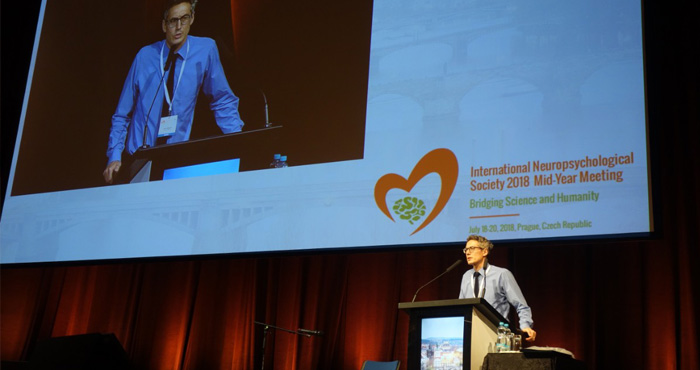
The International Neuropsychological Society’s 2018 mid-year meeting in Prague paired scientific advances with humane care, cultural understanding and clinical practice. For Australian clinicians and families, the practical task is to connect assessment findings with meaningful home routines while respecting language, culture, fatigue and personal goals.
What apraxia changes in everyday activity
Apraxia is not simply weakness. A person may move an arm normally yet struggle to gesture on command, imitate a novel action or organise objects into a sensible sequence. Co-occurring aphasia, neglect, pain or medication effects can complicate the picture.
Instrumental activities of daily living—cooking, shopping, managing medication and completing household routines—often reveal the practical effects. A toothbrush may be positioned incorrectly, a toast-making step omitted, or a familiar remote handled oddly. Spills, delays and safety risks can follow.
Frustration and reduced confidence can matter as much as the physical error. Repeated failure may lead to avoidance or conflict, so assessment should track performance, safety, willingness and the person’s sense of agency.
Assessing skills in real routines
Assessment works best when structured testing is combined with a meaningful task. Occupational therapists may examine imitation, tool use and sequences, while a neuropsychologist considers memory, language and executive skills. Carers and support workers describe what happens during an ordinary morning.
No clinic fully reproduces home. Lighting, familiar equipment, fatigue, hearing and other people can change performance. Making tea at a kitchen bench may be easier than preparing it in a clinic, while confidence at home can conceal a timed-test safety problem.
Conference work can sharpen this mixed-method approach. The INS 2018 poster programme included assessment and rehabilitation studies, providing useful precedents for Australia, where public hospitals, GP referrals through Medicare and private allied-health clinics shape access.
Translating therapy into daily action
Treatment is usually task-specific rather than a generic exercise. Useful strategies include breaking a task into steps, fading verbal or visual prompts, practising realistic sequences and using teach-back. Environmental changes, such as a large-handled cup or consistent storage for cutlery, can reduce planning demand.
Set goals in daily terms: preparing breakfast, finding the medication chart or completing a safe shower routine. A speech pathologist may address language; an occupational therapist can modify equipment and hand positioning; a physiotherapist can address movement that interferes with the plan.
Document where a task broke down, which cue helped and how long it took. Such notes show whether a strategy is being learned, becoming automatic or merely increasing the burden on the support person.
Supporting families at home
Australian families often use plain phrases: putting the kettle on, sorting the recycling, doing the shopping or catching the shopping list. Ask what these mean to the person, because routines and step order differ across households, generations and cultural backgrounds.
Support should preserve effort without turning every moment into a test. Practise the same sequence in the same place, give one cue at a time and allow for fatigue. For medication, cooking or stairs, agree on safety thresholds, who to contact and how every support worker will follow the plan.
Cultural and service contexts across Australia
Aboriginal and Torres Strait Islander clients may value family-led decision-making, kin relationships and community connection as well as individual preferences. Ask who should be involved rather than assuming a standard family structure. Indigenous health workers and culturally safe services can make assessment feel less alien.
Professional interpreters can be essential when aphasia or another language issue is present. The related meeting programme links scientific sessions with clinical and cultural discussions, offering a useful reminder that communication access is part of treatment quality.
Service routes differ by age and location. The NDIS supports eligible people under 65, while older people may enter services through My Aged Care and an Aged Care Assessment Team. In rural and remote areas, telehealth can connect families with specialist occupational therapy and neuropsychology, although connectivity and local workforce capacity still affect care.
Practical planning for daily support
A usable plan should specify the desired outcome, safest sequence, prompts and circumstances in which to stop.
At home
- Keep prompts beside the task and fade them as performance improves.
- Practise one familiar routine at the same time each day.
- Review fatigue, spills, falls and skipped steps without blame.
Clinical teams should align their notes and avoid setting competing goals, especially across GP, occupational therapy, speech pathology, physiotherapy, NDIS and aged-care services.
Across services
- Record baseline performance in the person’s usual setting.
- Combine functional goals with medication, mood and vision review.
- Include interpreters, family and cultural supports in planning.
- Share strategies across home, clinic, NDIS and aged-care services.
Comparing assessment and intervention choices
Assessment and intervention should be selected around the person’s daily priorities, safety and available support. A deficit score alone cannot show whether a routine is workable, meaningful or sustainable.
Combining direct observation, family knowledge and targeted practice offers the clearest picture. When cognition, language, sensation, mood and medication effects change together, coordinated review is more useful than a single-discipline plan.
| Approach | What it contributes | Main limitation |
|---|---|---|
| Structured apraxia assessment | Establishes a baseline across imitation, tool use and sequencing | May underrepresent success in familiar settings |
| Naturalistic task analysis | Shows where a real routine breaks down and which cues help | Requires the appropriate time, equipment and observer |
| Carer and participant interview | Captures priorities, habits, fatigue and cultural context | Depends on recall and shared interpretation |
| Multidisciplinary intervention review | Integrates motor, language, mood, medication and environmental needs | Requires communication and follow-up across services |
General Information
Important information about the meetingIndustry
Support and exhibition opportunitiesCzech Republic
Beautiful country situated in the very heart of EuropeContact
How can we help you?
Prague Congress Centre (KCP)
5.května 65140 21 Prague 4
Czech Republic
Phone: +420 261 171 111
Website: www.kcp.cz