





Supporting a child’s return to school after brain injury
Paediatric traumatic brain injury can interrupt learning, friendships and a child’s sense of self. Returning to school is more than resuming lessons: it is a staged rehabilitation process shaped by fatigue, headaches, attention, memory, language, emotional regulation and classroom demands. Progress varies widely, so plans should reflect the young person rather than a generic recovery timetable.
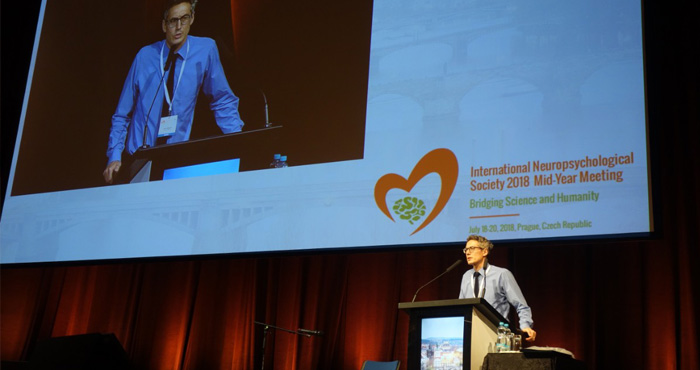
Held in Prague from 18–20 July 2018, INS 2018 connected advances in neuropsychology with humane clinical practice and cultural considerations. The lessons remain relevant in Australia, where education systems, health funding and family routines differ from those elsewhere. Effective plans align medical recovery, teaching adjustments and the child’s goals while preserving ordinary school life.
Planning a staged return
Before attendance increases, the student should receive medical clearance and an individualised return-to-school plan developed with family and treating clinicians. Neuropsychological assessment can clarify the learning profile and needed supports; it should not determine a fixed return date. Injury severity, age, premorbid learning, language, sleep and mood all influence the pace.
Delegates attending INS 2018 could consult Prague hotel information for Corinthia, reflecting the practical side of a research meeting. For schools, the equivalent is a named case coordinator, usually the learning support team, with paediatric, speech pathology, occupational therapy and psychology input where needed.
A staged start might involve two or three half-days, alternating school and rest, before adding hours. Full-time attendance is not the sole measure of success. Sustainable participation, reduced symptoms and renewed social contact matter more than matching a pre-injury timetable.
Creating a predictable school support plan
The first meeting should establish how the child will be welcomed back. Staff and peers need plain language about visible supports without turning a medical condition into a public identity. Arrange a quiet arrival route, identify a calm adult and explain classroom changes so uncertainty and teasing do not add load.
In Sydney, Melbourne, Brisbane, Perth and Adelaide, enrolment catchments, public transport and after-school care shape the practical return. Travel may itself provoke fatigue or dizziness, so route length, transfer times and peak-hour crowds belong in the plan alongside classroom hours.
Record goals in an individual learning plan or the relevant state or territory tool, using observable targets such as using a checklist, completing a 15-minute task or asking for help. Attach concrete supports: a daily schedule, reduced initial demands, planned rest, extra processing time and a review date. Include the student in decisions according to age and ability.
Adjusting instruction and assessment
Instruction should be predictable and explicit. Present one step at a time, allow processing time and check understanding through demonstration rather than yes/no questioning. Chunk written work, repeat key directions, use retrieval practice and provide notes or assistive technology when memory or handwriting is affected. Repeated “I missed that” may reflect the lesson, not effort.
Assessment accommodations protect the validity of learning tests. Options include extra time, oral responses, rest breaks, reduced copying demands, a scribe or a separate setting. Apply reasonable adjustments when a student shows difficulty, even if formal testing has not occurred; unsupported performance is a poor estimate of potential.
Manage cognitive load by shortening demanding tasks, staggering deadlines and avoiding simultaneous catch-up and new content where possible. Replace missed sport with low-stakes activity only after clinical advice, and do not use physical rest as punishment. Flexible catch-up should follow compulsory-attendance requirements, not punitive absence processes.
Navigating Australian systems and safeguards
Clinical care in Australia combines public and private pathways. A general practitioner or paediatrician may refer through Medicare, while the NDIS can fund eligible early intervention and disability supports for some children. Private allied-health practices and telehealth fill gaps, although waiting lists can delay implementation, making written interim strategies valuable.
Federal law shapes delivery. The Disability Standards for Education 2005 require reasonable adjustments, while the Privacy Act 1988 and Australian Privacy Principles govern covered health and education information. State and territory education Acts, attendance rules and child-safety laws add further duties. Obtain informed consent, share only relevant information and maintain an agreed contact list.
Ask which routines determine whether the plan works: uniform, sun hat and water bottle; car, bus or walking drop-off; and exposure to school zones, traffic and long bus rides. Where relevant, involve family-approved cultural supports and, for Aboriginal and Torres Strait Islander children, chosen community connections, while checking that the child wants this involvement.
Reviewing progress and longer-term support
Monitor learning and recovery rather than test scores alone. At agreed intervals, track attendance, workload completion, sleep, headaches, dizziness, fatigue, distress and peer connection using brief ratings from the young person, family and teachers. Escalate promptly if symptoms worsen, seizures occur, cognition changes sharply or participation becomes unsustainable.
Long-term review needs care when mood, sleep or attention changes. A paper on bipolar disorder cognitive profiles illustrates how distinct neuropsychological profiles can shape intervention, reinforcing that poor school performance should not automatically be attributed to the original injury. Differential review may need paediatric or psychiatric input.
International meetings can help practitioners build referral and research networks. A guide to Ulaanbaatar networking strategies shows how purposeful peer contact can create durable collaboration; the same principle applies to hospital, school and community teams. As students progress, preserve peer relationships and prepare gradually for secondary education, workplace skills and the loss of a built-in support team.
The most credible outcome is not simply a child sitting in a classroom. It is sustainable learning, a sense of belonging and a support system calibrated to changing needs.
General Information
Important information about the meetingIndustry
Support and exhibition opportunitiesCzech Republic
Beautiful country situated in the very heart of EuropeContact
How can we help you?
Prague Congress Centre (KCP)
5.května 65140 21 Prague 4
Czech Republic
Phone: +420 261 171 111
Website: www.kcp.cz