



Executive function tests for Czech populations
Executive function tests are often treated as culture-neutral tools, but planning, inhibition, flexibility and working memory can be shaped by language, schooling and familiar routines. Cultural adaptation of executive function tests for Czech populations asks whether the constructs retain the same meaning and whether scores reflect performance in daily life.
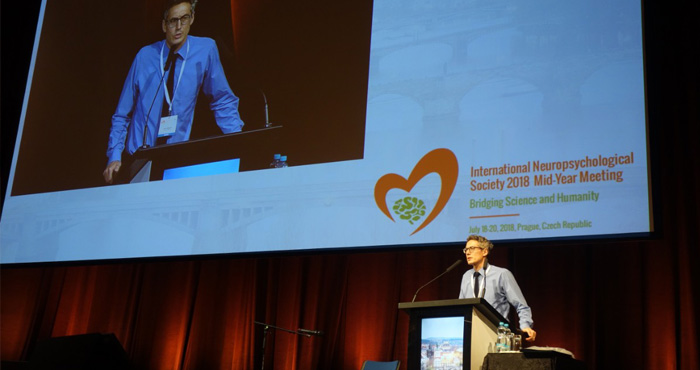
INS 2018, held in Prague from 18 to 20 July 2018, connected scientific advances with humane clinical care. The task is not to discard standardized testing, but to avoid interpreting cultural and linguistic differences as executive deficits.
For Australian readers, local clinics in Melbourne, Sydney, Brisbane and Perth also work with culturally diverse communities. Multilingual children, older adults with hearing difficulties and families from many migration pathways show why relying on imported norms cannot substitute for cultural validity.
Practical pressures include public and private assessment pathways, NDIS-funded work, and telehealth across regional and remote Australia. Clinicians often explain tasks in plain, direct Australian English, so wording, examiner behaviour and testing conditions belong in the adaptation alongside test norms.
Why translation is not enough
A forward translation with back-translation can identify literal mismatches, but it cannot establish construct equivalence. A sorting rule that seems obvious in one school system may be ambiguous in another, while time pressure, feedback and examiner reassurance can change strategy. Cognitive interviews should ask Czech speakers what the task required, which clues they used and how they understood corrections.
Testing should represent varied educational histories and regional experiences, including Bohemia, Moravia and Silesia, alongside appropriately consulted Roma communities, migrants and people using Czech as an additional language. Such variation is clinically meaningful when estimating prevalence, choosing comparisons and deciding whether a score reflects impairment rather than opportunity, language or familiarity.
Building a culturally responsive battery
A responsive battery may combine cancellation, set-shifting, fluency and working-memory tasks with observations from school, work or home. Test selection should match the referral question: a medication review may need sensitivity to fatigue, whereas an education assessment may require a carefully adapted behavioural checklist.
Czech morphology, word frequency and school conventions can influence verbal tasks, so local-language equivalents and parallel forms need separate evaluation. Digit and letter spans should not be treated as interchangeable. The battery should preserve the target construct while allowing reasonable cultural variation in response speed, persistence and help-seeking.
Piloting norms and testing fairness
Pilot studies should examine completion, internal consistency, item difficulty and common misunderstandings across age, education and language groups. Norms need transparent inclusion criteria and sufficient coverage of regions and education levels. Imported norms, even from neighbouring European countries, should not be presented as Czech standards without evidence.
Longitudinal or multigroup analyses can test whether items function similarly across groups, while confidence intervals and effect sizes prevent small discrepancies from becoming categorical labels. Relevant work from the meeting period remains available through the INS 2018 poster listings, offering context rather than a substitute for current evidence.
Lessons for Australian practice
None of the Czech norms should transfer directly to Australia. Australian referral pathways, language mix and educational history differ, and public or private assessment markets have their own documentation demands. The transferable lesson is methodological: use local comparison data, report accommodations and distinguish weak performance from weak measurement.
Particular care is needed when Aboriginal and Torres Strait Islander children and adults are underrepresented in existing norms. Community involvement should guide interpretation of unfamiliar tasks and the meaning of independence. For regional clients, telehealth may preserve access but can also change instructions, cueing and equipment familiarity, so equivalence must be checked rather than assumed.
Sharing evidence across borders
Collaboration between Czech neuropsychologists, psychometricians, linguists and community practitioners can make adaptation more transparent than a one-off translation project. Shared protocols, independent scoring and openly documented revisions allow Australian teams to compare methods without pretending their populations are identical.
Preliminary findings should be presented as preliminary, with sample limitations and subgroup results visible. Questions about the INS meeting, archived records or referrals to contributors can be directed through the conference contact page, while future programmes can provide venues for wider peer scrutiny.
Recommendations for responsible adoption
Responsible adoption depends on governance, testing and reporting. The following steps give clinical teams a practical sequence for deciding whether a Czech-adapted measure is ready for use.
- Form a working group that includes clinical neuropsychology, psychology, linguistics and community representation.
- Pilot instructions with people spanning education, age, region and language backgrounds.
- Establish Czech norms and publish their sampling limits alongside reliability and invariance results.
- Document permitted uses, accommodations, retest intervals and referral thresholds before procurement.
- Keep validation and revision cycles open after routine use begins.
A comparison of common decisions clarifies where cultural adaptation changes practice:
| Decision point | Standardised test used unchanged | Culturally adapted approach |
|---|---|---|
| Language | Literal translated wording | Forward translation plus cognitive debriefing |
| Norms | Imported reference group | Local stratified norms with stated limits |
| Administration | One script for everyone | Clarified instructions and justified accommodations |
| Interpretation | Raw score alone | Error pattern, context and confidence intervals |
International exchange can continue through the Bárány 2022 programme, where cross-cultural methods and clinical implications can be compared with peers. The defensible standard is a measure whose language, evidence and interpretation remain aligned, not simply a test labelled as culturally appropriate.
General Information
Important information about the meetingIndustry
Support and exhibition opportunitiesCzech Republic
Beautiful country situated in the very heart of EuropeContact
How can we help you?
Prague Congress Centre (KCP)
5.května 65140 21 Prague 4
Czech Republic
Phone: +420 261 171 111
Website: www.kcp.cz