




Resting state connectivity in Australian clinical practice
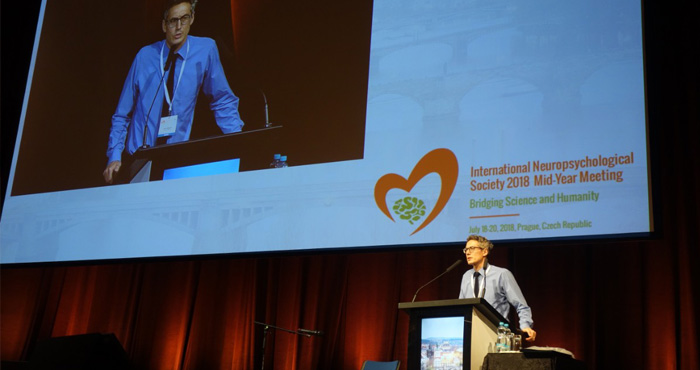
The INS 2018 mid-year meeting was held in Prague from 18–20 July 2018, bringing researchers and clinicians together around scientific advances, cultural context and humane patient care. Its programme, posters, workshops and practical information remain a useful setting for a continuing question: when can brain measures meaningfully inform treatment?
Resting state functional connectivity describes statistical relationships between spontaneous blood-oxygen-level-dependent signals in different brain regions while a person lies awake in a scanner, usually without a task. Networks such as the default mode, salience and frontoparietal systems are common frameworks, although boundaries depend on the analytical method.
Clinical interest spans presurgical mapping, epilepsy, mental illness and cognitive impairment. A connectivity pattern is not a diagnosis, however, and group-level differences do not automatically guide an individual patient. Reliable interpretation depends on data quality, suitable controls and transparent communication about uncertainty.
Australian services must adapt this work to a mixed market, urban travel, diverse populations and strict privacy expectations. Scientific value is inseparable from how scans are commissioned, interpreted, funded and discussed with patients and families.
What resting state connectivity measures
A resting scan asks the participant to remain still for several minutes while the MRI scanner records fluctuations over time. Correlation between two regions’ signals may indicate coordinated activity, but it does not prove a direct anatomical pathway. Instructions such as eyes open or closed can influence the pattern.
The archived INS 2018 speaker instructions offer a useful presentation standard: distinguish exploratory findings from validated uses, identify the comparator group and state the limits of clinical inference. Clear reporting is essential when complex methods are discussed with referring clinicians.
Data quality and interpretation
Head movement, breathing, heartbeat, scanner drift and medication can all affect apparent connectivity. Preprocessing reduces some artefacts but cannot remove every source of noise. Motion deserves particular attention because small systematic differences can create apparently significant network changes.
Protocols should standardise rest instructions, scan duration, relevant medication and caffeine timing where appropriate, and the handling of motion and physiological signals. Harmonised acquisition across public and private services in Melbourne, Brisbane and Sydney would improve multicentre comparability.
Clinical applications and boundaries
Presurgical mapping shows the balance between promise and restraint. Connectivity can inform a broader assessment of language, memory and network organisation, but it should complement direct cortical stimulation, neuropsychological testing and clinical history rather than replace them.
Resting studies may characterise altered network organisation in neurological or psychiatric conditions. For routine care, evidence, availability and reimbursement remain uneven. Services should define the clinical question before scanning and specify how unexpected findings will be communicated.
An Australian service pathway
A workable pathway connects hospital neuroradiology, neuropsychology, research imaging and rehabilitation while preserving patient choice. Two brief checklists can separate operational preparation from governance:
- Confirm the referral, scan purpose and expected turnaround
- Record medication, sleep, caffeine and movement factors
- Provide accessible booking and post-scan support
Local rules shape what is feasible. The Privacy Act 1988, Australian Privacy Principles and applicable state health-records laws may apply; the TGA regulates software with a medical-device intended purpose. Medicare generally does not fund a resting-state research scan as a stand-alone test, so public access depends on referral, triage or research funding.
Service planning should map dependencies rather than treat the scanner as a stand-alone asset. A Kazakhstan supply chain analysis of window accessories illustrates how upstream constraints affect downstream delivery, a lesson that applies to staffing, software support and scanner time. These dependencies call for a governance-focused checklist:
- Apply privacy principles and relevant state rules
- Complete informed consent and document clinical review plans
- Assess software status, costs, storage and follow-up
Patients in Sydney and Melbourne often combine scans with work, school drop-offs and Opal or Myki travel; telehealth review and a written summary can ease disruption. Brisbane services likewise need thoughtful transport, interpreter and follow-up arrangements for lengthy research blocks.
Culture, communication and humane care
Cultural interpretation is not an add-on to analysis. Resting scans can feel unfamiliar, and some communities have well-founded concerns about research or institutional authority. Local teams should involve interpreters and culturally safe workers early, including Aboriginal and Torres Strait Islander communities through appropriately governed partnerships.
Where relevant, data governance should align with the National Aboriginal and Torres Strait Islander Data Sovereignty Principles. Patients need plain-English information about what the scan can and cannot show, who sees the images, retention periods and any effect on care. Humane communication reduces alarm and false reassurance.
Building trustworthy clinical capability
Competence spans imaging physics, network analysis, neuropsychological interpretation and shared decision-making. Audit trails should preserve acquisition parameters, preprocessing choices, exclusions and reasons for review. Peer discussion is valuable when a pattern seems plausible but evidence for its meaning is weak.
A later INS resource on qualitative error analysis highlights a complementary skill: examining the qualitative errors behind quantitative scores. Resting-state work similarly benefits from considering task behaviour, fatigue, language, medication and the patient’s account alongside the image.
The strongest role for this network measure in Australian practice is a carefully bounded adjunct: a source of hypotheses about network organisation that strengthens, without displacing, direct assessment and dialogue with the person receiving care.
General Information
Important information about the meetingIndustry
Support and exhibition opportunitiesCzech Republic
Beautiful country situated in the very heart of EuropeContact
How can we help you?
Prague Congress Centre (KCP)
5.května 65140 21 Prague 4
Czech Republic
Phone: +420 261 171 111
Website: www.kcp.cz