


Cognitive flexibility and creativity in healthy older adults
Healthy ageing is not a uniform decline. Many older adults retain broad knowledge, vocabulary, social judgement and the capacity to invent, while speed, divided attention or willingness to switch may change. Cognitive flexibility refers to shifting rules or perspectives; creativity involves generating, evaluating and applying original ideas. They support one another, but neither should be mistaken for a clinical disorder.
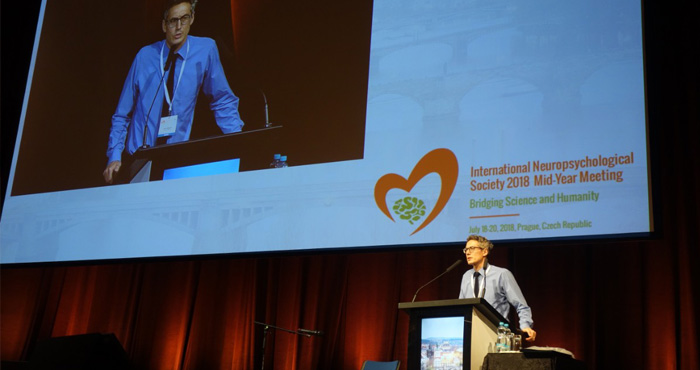
The INS 2018 meeting site records the mid-year meeting held in Prague from 18 to 20 July 2018. Its programme, posters and workshops reflected the meeting’s aim of connecting scientific advances with humane patient care, cultural context, neuroscience and clinical practice. That combination remains relevant to research on ageing: useful findings should improve everyday function without treating age-related differences as impairment.
For Australian researchers, this means attending to a culturally diverse population with different education pathways, languages, work histories and family roles. Healthy older adults are not a homogeneous group, and tests developed elsewhere may embed unfamiliar tasks or scoring assumptions. Local samples should therefore include varied ages, genders, socioeconomic backgrounds and urban and regional experiences.
Assessment should also separate change in performance from a stable difference. Repeated testing, education, language, sensory status, mood, sleep and medication effects can influence scores. A low result on one brief task is weak evidence of dementia, and a high score does not guarantee everyday resilience. Broader evidence is needed.
What healthy ageing can change
Flexibility and creativity should be evaluated separately as well as together. A person may switch between perspectives readily but need prompting to generate alternatives, whereas another may produce unusual ideas yet struggle to revise a familiar routine. Motivation, fatigue and task familiarity also shape performance.
| Dimension | Cognitive flexibility | Creativity |
|---|---|---|
| Core response | Switching rules or perspectives | Producing and valuing novel ideas |
| Typical task | Sort by changing criteria | Generate uses for an object |
| Healthy-ageing pattern | Often slower, with expertise compensating | Often preserved and sometimes enhanced by experience |
| Main enabler | Executive control and cognitive reserve | Knowledge, curiosity and psychological safety |
Age-related changes in processing speed and working memory can affect mental switching, while accumulated expertise may offset losses in some settings. Neural efficiency, sensory input and psychological safety all contribute. Creativity often draws on established knowledge rather than raw speed, so preserving its demands for time, privacy and permission to experiment is important.
Measuring both abilities fairly
Useful assessment combines switching tasks, such as alternating sorting rules, with divergent-thinking prompts, such as proposing new uses for a household object. Fluency, originality, flexibility and elaboration are judged separately because producing many responses differs from selecting unusual or useful ones. Brief measures can screen change, while observation of hobbies, work and social decisions reveals real-world relevance.
Clinical interpretation remains important. A discussion of cerebrospinal fluid biomarkers can clarify how laboratory evidence informs neuropsychological practice, but it is not a test of creativity and has no routine role in assessing healthy ageing. When change is unexpected, a GP may consider medical, neurological or psychiatric contributors before neuropsychological referral.
Creativity in Australian daily life
Daily environments can make flexibility visible without a testing booth. In Melbourne, short tram journeys, laneway galleries and café conversations create changing scenes that invite attention and perspective shifts. In Sydney, harbour foreshore walks and ferry routes combine novelty with regular social contact. The aim is not to prescribe novelty, but to notice which environments energise an older adult and which feel unsafe or inaccessible.
Community centres, libraries, churches and local Returned & Services League halls can become low-pressure settings for photography, storytelling, craft groups or peer exchange. Activities that connect generations are especially useful when an older adult’s expertise is treated as a resource. Bilingual participants may show strong verbal creativity even when speeded tasks understate it, making careful interpretation essential.
Health, nutrition and vitamin D
Good brain ageing depends on more than puzzle training. Regular physical activity, sleep, social engagement, hearing and vision care, mood, blood pressure and diabetes management all affect cognitive opportunity. Creative work can be enjoyable and socially rewarding, but demanding programmes should be adapted for mobility, stamina and sensory limitations rather than framed as a test of worth.
Nutrition and supplements deserve similarly measured claims. Australian chemistries and supermarkets carry vitamin D products, yet availability does not establish need or benefit. A review of vitamin D evidence for oesophageal health adds context without proving that supplementation improves cognition or creativity. Sunlight exposure, dietary intake, bone health, medication interactions and individual risk should guide decisions through qualified clinical advice.
Making findings clinically useful
Practical work begins with goals chosen by the older adult: maintaining an unfamiliar hobby, joining a discussion group, adapting to travel disruptions or learning a family recipe. Clinicians can use baseline observations and repeated measures to see whether strategy, confidence or everyday participation improves. Group programmes should offer choice and social contact, not compete participants against age-based norms.
The strongest translation combines careful neuropsychological assessment with curiosity, autonomy and cultural respect. It can reveal that apparent inflexibility reflects an inaccessible format, limited vision or anxiety rather than reduced ability. This approach honours the INS 2018 meeting’s central premise that scientific advances should serve humane patient care. Older adults can then contribute their judgement and imagination to research and community life, rather than merely being tested as recipients of care.
General Information
Important information about the meetingIndustry
Support and exhibition opportunitiesCzech Republic
Beautiful country situated in the very heart of EuropeContact
How can we help you?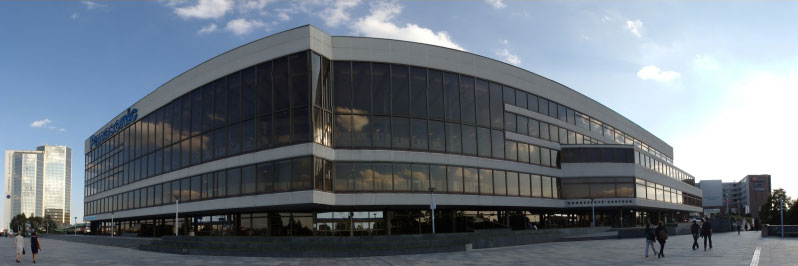
Prague Congress Centre (KCP)
5.května 65140 21 Prague 4
Czech Republic
Phone: +420 261 171 111
Website: www.kcp.cz