


The parietal cortex in number processing and calculation
The human brain's ability to understand numbers relies on a distributed network, with the parietal cortex at its core. Neuroimaging and patient studies have established the posterior parietal cortex as a domain-specific hub for quantity representation and arithmetic fact retrieval, reshaping clinical approaches to developmental dyscalculia and acquired calculation deficits.
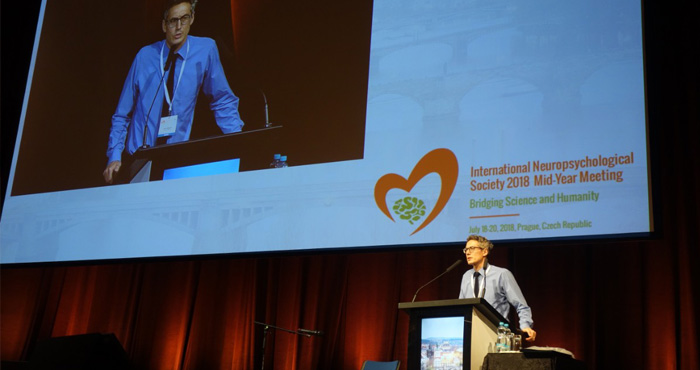
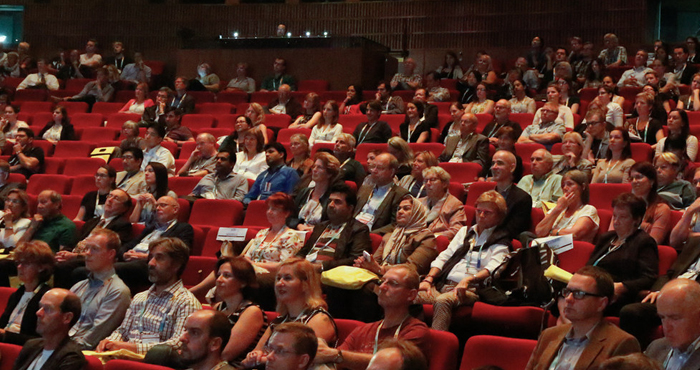
The International Neuropsychological Society's 2018 mid-year meeting in Prague gathered researchers, clinicians, and educators under the theme of bridging neuroscience with humane care. Sessions addressed basic numerical cognition alongside practical implications for patient wellbeing, cultural sensitivity, and educational policy.
Australian researchers have contributed substantially, with work from Macquarie University in Sydney and the University of Melbourne on finger gnosis and early numerical development. The Australian Catholic University has explored mathematical anxiety, while national priorities including the Australian Curriculum: Mathematics and NAPLAN shape competence measurement from Perth to Brisbane.
This article examines the neuroanatomical foundations, hemispheric contributions, developmental trajectories, cultural dimensions, and clinical applications of parietal function, with particular attention to Australian practice and the international community at INS 2018.
The neuroanatomical basis of numerical processing
The intraparietal sulcus is critical for representing approximate numerosity, showing consistent bilateral activation when participants compare quantities or perform arithmetic. This activation refines through primary school before stabilising in adolescence.
The angular gyrus supports arithmetic fact retrieval, while the supramarginal gyrus handles verbal number processing. Together with the intraparietal sulcus, these regions form the "number network" supporting everything from subitising to complex calculation.
Key regions in the parietal number network:
- Intraparietal sulcus: approximate quantity representation and magnitude comparison
- Angular gyrus: retrieval of learned arithmetic facts
- Supramarginal gyrus: verbal number processing and digit manipulation
Researchers at the Queensland Brain Institute in Brisbane have used diffusion tensor imaging to map white matter connections between parietal and frontal working memory areas, finding that connection strength predicts arithmetic fluency and could inform interventions in schools from Adelaide to Darwin.
Hemispheric asymmetry and calculation strategies
The number network is largely bilateral, but subtle hemispheric differences shape calculation. The left parietal cortex engages more during exact arithmetic and multiplication table retrieval, reflecting language-based memory connections. The right parietal cortex activates during approximate calculation and spatial-numerical processing like mental number rotation or number line estimation.
This asymmetry has clinical implications: left parietal damage often destroys access to specific arithmetic facts, while right parietal lesions may preserve fact retrieval but destroy estimation. Occupational therapists in Melbourne and Sydney routinely assess these lateralised functions when designing therapy for stroke survivors, building interventions around preserved skills.
Developmental dyscalculia in Australian classrooms
Developmental dyscalculia affects 3–6% of children worldwide, with Australian studies showing similar local rates. The condition associates strongly with atypical intraparietal function and finger gnosis deficits. The Australian Dyslexia and Specific Learning Difficulties Association in Sydney has advocated for routine numerical screening, and many schools in Melbourne and Brisbane now train number sense through visual and kinesthetic activities.
For First Nations students, culturally responsive intervention is essential. Aboriginal and Torres Strait Islander Education Workers across the Northern Territory and Western Australia note that standard numeracy assessments miss rich mathematical thinking in everyday cultural contexts, so effective programs integrate local knowledge with evidence-based cognitive training.
Cultural frameworks and Indigenous number systems
Numerical cognition is not culturally neutral. Research at the University of Adelaide and the Australian National University in Canberra has documented sophisticated Indigenous Australian counting systems and spatial-numerical concepts that differ from Western approaches, often emphasising relational rather than absolute quantity.
Cross-cultural neuroimaging shows the intraparietal sulcus responds to culturally specific numerical patterns. Adults with abacus-based traditions show enhanced parietal activation, while oral counting traditions develop different hemispheric recruitment. The INS 2018 meeting addressed these dimensions, recognising that humane care requires cultural humility and that dyscalculia criteria may need adjustment across contexts.
Clinical implications for geriatric and stroke care
Acquired calculation deficits frequently arise from stroke, traumatic brain injury, or neurodegeneration, with parietal lesions producing anarithmetia. Geriatric care at the Royal Melbourne Hospital and the Royal Prince Alfred Hospital in Sydney routinely includes neuropsychological calculation assessment.
Rehabilitation draws on neuroanatomical distinctions: drill-based practice rebuilds automaticity in left parietal damage, while visual number line activities help right parietal damage. Family education is crucial in explaining the neurological origins of these difficulties.
Components of a comprehensive calculation assessment:
- Evaluation of number comprehension and magnitude processing
- Testing of arithmetic fact retrieval and procedural calculation
- Assessment of estimation skills and mental computation
The parietal cortex's role in spatial attention means its dysfunction can affect post-operative recovery beyond calculation. Surgeons managing complex courses increasingly recognise neuropsychological input, and resources on managing surgical complications often intersect with cognitive monitoring.
Interdisciplinary connections and conference context
Effective care for numerical processing deficits requires collaboration between neuropsychologists, educators, occupational therapists, speech pathologists, and physicians. The INS 2018 mid-year meeting fostered this cross-pollination through workshops and symposia bringing together basic scientists and practitioners.
For Australian delegates, the conference offered opportunities to share local innovations in educational neuroscience. The meeting's emphasis on humane care resonated with Australian values around patient-centred practice and cultural safety in services for Aboriginal and Torres Strait Islander communities.
Sustained collaboration across disciplines will remain essential as numerical cognition research continues to evolve, and information about ins2018.org/sponsorship-and-exhibition opportunities reflects the broader community that makes these conversations possible.
General Information
Important information about the meetingIndustry
Support and exhibition opportunitiesCzech Republic
Beautiful country situated in the very heart of EuropeContact
How can we help you?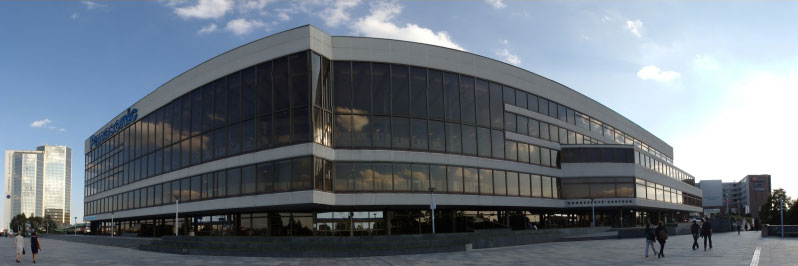
Prague Congress Centre (KCP)
5.května 65140 21 Prague 4
Czech Republic
Phone: +420 261 171 111
Website: www.kcp.cz