




When the Ringing Won't Stop: Attention and Executive Function in Tinnitus
For the roughly one in three Australians who experience tinnitus at some point in their lives, the persistent sound is rarely just an ear problem. Across clinics in Sydney, Melbourne, and Brisbane, audiologists and neurologists are increasingly recognising that the distress caused by ringing, buzzing, or hissing reflects deeper changes in how the brain allocates attention and manages cognitive control. The experience sits at the crossroads of audiology, psychology, and cognitive neuroscience.
Traditional models treated tinnitus as a peripheral auditory issue, a leftover signal from damaged hair cells in the cochlea. Contemporary research reframes it as a network disorder, with auditory cortex, prefrontal regions, and limbic structures all playing a part. The subjective loudness often bears little relation to measurable hearing thresholds, which suggests that top-down cognitive processes shape the percept as much as the bottom-up signal does.
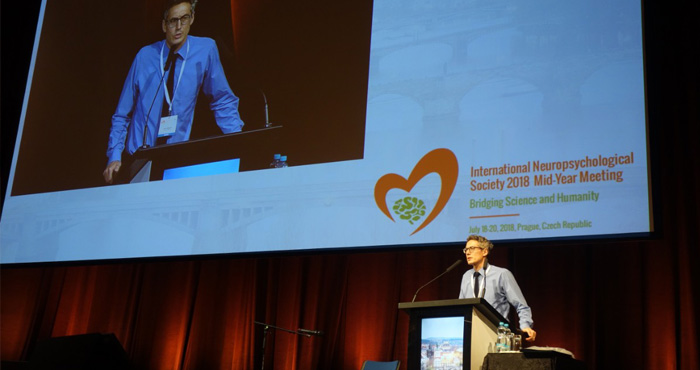
This shift has practical consequences for assessment and treatment. Where clinicians once focused almost entirely on the ear, multidisciplinary teams now screen for attention deficits, working memory problems, and executive dysfunction. The goal is to understand why two people with identical audiograms can report radically different levels of impairment, and to tailor therapy accordingly. The growing body of work in this field, much of which has been showcased through forums such as INS 2018, points toward more personalised, brain-based interventions.
The Cognitive Footprint of Chronic Tinnitus
Patients who seek help at Australian tinnitus clinics frequently describe more than sound. They report difficulty concentrating on conversations in busy cafés along George Street, losing track of paperwork at the office, and feeling mentally exhausted by the end of the day. These complaints are not incidental. Studies using neuropsychological batteries consistently show that people with bothersome tinnitus perform worse on tests of sustained attention, task switching, and selective filtering.
The pattern resembles what is seen in mild cognitive impairment and attention-deficit conditions, though usually to a lesser degree. Researchers interpret this as evidence that tinnitus competes for limited cognitive resources. The phantom sound occupies a slot in working memory, leaving less capacity for encoding new information or inhibiting irrelevant stimuli. For some individuals, this translates into measurable drops in productivity and increased fatigue during mentally demanding tasks.
Importantly, the cognitive footprint is not uniform. People whose tinnitus began after acoustic trauma, a common history among veterans and musicians performing in venues across Perth and Adelaide, often show different profiles from those whose tinnitus developed gradually with age. Recognising these subgroups is shaping how Australian researchers design both clinical trials and rehabilitation protocols.
Attention Networks Under Strain
Functional imaging work has identified three core attention networks: alerting, orienting, and executive control. In tinnitus, the alerting network often appears hyperactive, partly because the brain monitors the phantom sound as if it were a potential threat. This constant surveillance consumes metabolic resources, leaving fewer reserves for the orienting and control networks that allow people to focus on chosen tasks.
Clinicians at the Royal Brisbane and Women's Hospital have noted that patients frequently report being unable to tune out their tinnitus in quiet environments, a phenomenon linked to reduced efficiency in the executive control network. Some of the most interesting methodological advances in this area have come from optical imaging, and a recent piece on functional near-infrared spectroscopy outlines how this tool is being translated from the laboratory into everyday clinical settings.
The implications extend beyond the clinic. Workers in open-plan offices, a layout common in modern Australian workplaces, often find their tinnitus most intrusive during the afternoon when cognitive fatigue peaks. This observation has prompted interest in environmental modifications and scheduled breaks as low-cost adjuncts to formal therapy.
Executive Function, Memory, and Emotional Regulation
Executive function encompasses planning, inhibition, cognitive flexibility, and the updating of working memory. In tinnitus, deficits in these domains are closely tied to emotional regulation. When the prefrontal cortex struggles to suppress the tinnitus signal, the amygdala responds more strongly, heightening anxiety and frustration. Over time, this loop reinforces both the perceived loudness of the sound and the distress it causes.
Cognitive behavioural therapy remains the most accessible evidence-based treatment in Australia, and is partially subsidised through the Better Access initiative under Medicare. Therapists working with tinnitus patients often incorporate strategies drawn from executive function rehabilitation, including goal management training and mindfulness-based approaches. These methods aim to restore top-down control and break the cycle of involuntary attention to the sound.
Working memory training has shown mixed but promising results. Some Australian trials, coordinated through universities in Melbourne and Macquarie, have reported improvements in both cognitive performance and tinnitus bother following adaptive training protocols. The effect is thought to reflect increased efficiency in prefrontal circuits, although individual responses vary widely.
Research Findings and Related Clinical Insights
The methodological sophistication behind modern tinnitus research draws on advances from other medical fields. For instance, esophageal manometry findings demonstrate how objective physiological measurement can reshape clinical understanding, an approach mirrored in audiology where researchers now combine otoacoustic emissions, EEG, and behavioural testing to triangulate the source of phantom sounds.
Australian researchers have been at the forefront of longitudinal work tracking cognitive change in tinnitus patients over several years. Datasets from the Tasmanian Older Adult Cohort and the Sydney Memory and Ageing Study have allowed analysts to compare trajectories between those with and without tinnitus, controlling for hearing loss, vascular risk factors, and mood. Early findings suggest that bothersome tinnitus is associated with a slightly steeper decline in processing speed, though the causal direction remains debated.
The field continues to grapple with heterogeneity. Genetic factors, history of noise exposure, mental health, and socioeconomic circumstances all interact to shape outcomes. This complexity is one reason why large, multidisciplinary collaborations are gaining traction across the Asia-Pacific region, with Australian centres often serving as coordinating hubs.
Pathways Forward in Clinical Practice
For clinicians, the practical message is to look beyond the audiogram. Screening tools that assess attention and executive function, such as the Trail Making Test and digit span tasks, can be incorporated into routine tinnitus assessments without adding significant time or cost. Identifying cognitive vulnerabilities early allows for more targeted referrals, whether to neuropsychology, occupational therapy, or specialised mental health services.
Patients also benefit from psychoeducation that validates their cognitive complaints. Many arrive at clinics believing that their concentration difficulties are a personal failing, when in fact they reflect genuine, measurable changes in brain function. Framing the problem in neuropsychological terms often reduces self-blame and increases engagement with therapy.
Looking ahead, Australian researchers are exploring combination approaches that pair sound-based interventions with cognitive training and neuromodulation. Early trials using transcranial direct current stimulation have produced modest but encouraging results, and larger multicentre studies are now underway. The hope is that by addressing the cognitive and neural underpinnings of tinnitus, treatment outcomes will improve for the many Australians whose daily lives are shaped by this invisible condition. Further details about the broader scientific context can be found through the INS 2018 conference materials.
General Information
Important information about the meetingIndustry
Support and exhibition opportunitiesCzech Republic
Beautiful country situated in the very heart of EuropeContact
How can we help you?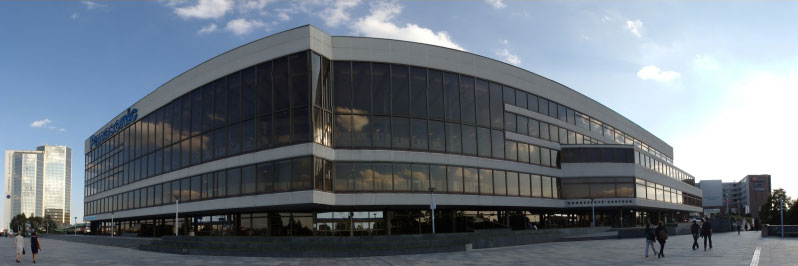
Prague Congress Centre (KCP)
5.května 65140 21 Prague 4
Czech Republic
Phone: +420 261 171 111
Website: www.kcp.cz