



Cognitive training across languages
Cross-language transfer of cognitive training effects asks whether someone who improves attention, working memory or executive strategy in one language can use that gain when instructions, conversation and daily life occur in another. The question matters wherever clinical tools, school programmes and digital exercises move across borders.
Bilingual adults are not simply carrying a mental routine from one language to another. They switch languages, recruit cognitive control, and rely on different words, scripts and cultural knowledge. Apparent transfer therefore reflects learning, language switching, strategy choice and assessment design.
Good outcomes also depend on whether the trained skill resembles everyday demands. A faster Stroop score may not improve medication management, while better planning could help a family clinician. Research must separate laboratory gains from practical benefit.
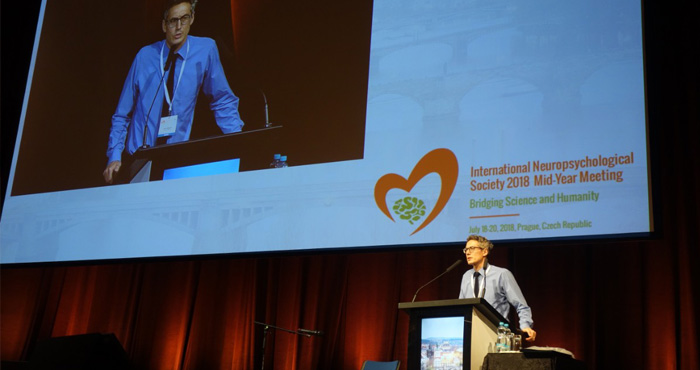
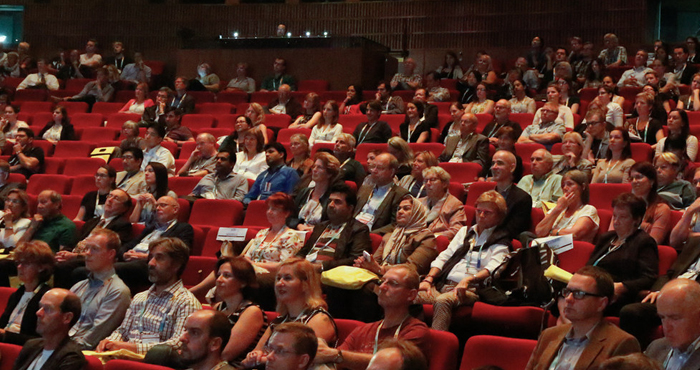
The 2018 Prague meeting framed this work as a bridge between neuroscience and humane care. Its programme, posters and workshops showed why scientific findings need cultural scrutiny, accessible assessment and careful clinical interpretation before entering routine practice.
What transfer actually tests
Transfer is usually described as near or far. Near transfer means performance on a new version of the trained task; far transfer means a change in an untrained activity, such as using a written memory strategy while following a complex recipe. Clinical value usually depends on the second kind.
Measurement also needs care. A test may look equivalent because its instructions were translated, yet difficulty can change when word length, reading demands or familiar examples differ. The INS 2018 official meeting site captured the meeting’s wider agenda: connecting scientific advances with patient care, cultural considerations and clinical practice.
Why bilingual brains adapt
Bilingual experience can support transfer because switching languages trains monitoring and inhibition, but it can also create interference. If an exercise is taught with English verbal labels, a participant may later retrieve the strategy more readily in English than in Arabic, Mandarin, Greek or another home language. That pattern does not necessarily mean the underlying executive skill failed to generalise.
Training effects can change through recompilation. The brain may preserve a general attentional rule while adapting its execution to the new language. Researchers should ask whether reduced performance reflects weaker proficiency, less practice, different cues or a genuine limit in strategy transfer.
Culture can change the task
Australian clinics in Sydney, Melbourne and other cities often work with people from culturally and linguistically diverse backgrounds. An interpreter can make instructions clear, but it does not automatically make a memory task equivalent: word familiarity, reading level, script direction and schooling may all affect baseline and follow-up performance.
Co-design with Aboriginal and Torres Strait Islander communities should go beyond translating items. Knowledge holders and local health workers can identify relevant goals, respectful language and outcomes that a Western cognitive battery may omit. Community governance and appropriate protocols matter before comparing groups or claiming that a training effect generalised.
Clinical care in Australia
Australian families may call a programme “brain training”, while clinicians use terms such as cognitive remediation or compensatory strategy training. That everyday wording can improve engagement, but it should not blur the evidence: attention drills, memory exercises and executive-function coaching have different mechanisms, doses and levels of support.
The market is mixed. Psychologists and allied health professionals may deliver training privately, with general practitioner referral and, for some people, support through a National Disability Insurance Scheme plan. Medicare does not automatically cover every standalone programme. Claims, rebates and eligibility should be checked rather than implied at booking.
Building studies that travel
For rural and remote participants, telehealth can reduce travel barriers, although connection quality and access to local support still shape adherence. A remotely delivered protocol should record the language of instruction, interpreter use, device access and any changes in setting because those factors can otherwise resemble cognitive change.
A strong trial pairs linguistically matched forms, baseline language assessment and an active control. Outcomes should include everyday function and persistence after exercises stop. Where an intervention relies on verbal strategies, researchers can test whether participants explain and apply them in each relevant language without changing the underlying skill being measured.
Lessons from international practice
The INS mid-year meeting in Prague, held from 18 to 20 July 2018, brought these issues into a shared scientific setting. Its practical guidance for Hotel Ankora offered a modest example of cross-context usability: venue instructions prepared for one setting must remain clear to visitors who bring different languages and expectations.
A gain may be real, selective or limited to the trained language; it becomes clinically useful only when the outcome, context and comparison are clear. These distinctions help researchers and clinicians avoid overstating generalisation.
| Design choice | Same-language evaluation | Cross-language evaluation | Practical implication |
|---|---|---|---|
| Test form | Identical or alternate form | Matched but linguistically non-identical | Normalise difficulty before attributing change |
| Main outcome | Trained task | Untrained daily task | Separate practice from functional transfer |
| Control | Active training control | Same control across language groups | Estimate expectancy and nonspecific support |
| Follow-up | Immediate | Delayed in both languages | Check durability and language breadth |
| Setting | Clinic or laboratory | Home or community | Document context and materials |
General Information
Important information about the meetingIndustry
Support and exhibition opportunitiesCzech Republic
Beautiful country situated in the very heart of EuropeContact
How can we help you?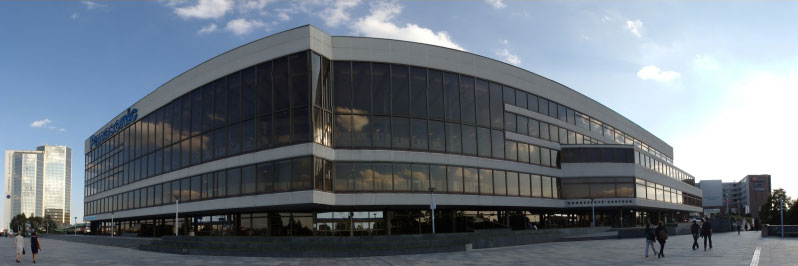
Prague Congress Centre (KCP)
5.května 65140 21 Prague 4
Czech Republic
Phone: +420 261 171 111
Website: www.kcp.cz