



Assessing Social Cognition in Dementia With Lewy Bodies
Dementia with Lewy bodies (DLB) is often recognised through fluctuating attention, visual hallucinations, parkinsonism and REM sleep behaviour disorder. Yet changes in social cognition can be equally disruptive. A person may misread facial expressions, lose the ability to infer another person’s intentions or respond in ways that seem unusually blunt, suspicious or emotionally flat.
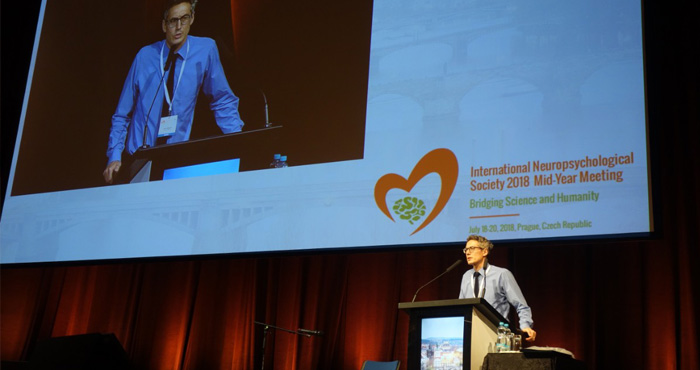
A sound assessment connects these behaviours with the wider neuropsychological profile. It also accounts for vision, hearing, medication effects, culture, language and the variable alertness that is characteristic of DLB. This approach reflects the clinical emphasis of the 2018 International Neuropsychological Society meeting in Prague: scientific advances are most useful when translated into humane, culturally responsive care.
| Assessment area | What it may reveal | Important DLB consideration |
|---|---|---|
| Emotion recognition | Difficulty identifying fear, anger, sadness or happiness | Visual-perceptual impairment may affect performance |
| Theory of mind | Problems understanding beliefs, intentions or sarcasm | Fluctuating attention can produce inconsistent results |
| Social perception | Misreading interpersonal cues and context | Parkinsonian slowing may resemble social disengagement |
| Empathy and behaviour | Reduced emotional responsiveness or tact | Carer observations are essential |
| Real-world functioning | Changes in conversation, judgement and relationships | Structured interviews add ecological validity |
What Social Cognition Involves
Social cognition includes the mental processes used to interpret other people and guide behaviour. It covers emotion recognition, social perception, attributional reasoning, empathy, mentalising and theory of mind. These abilities allow someone to understand that another person can hold a belief, intention or feeling different from their own.
In DLB, impairment may appear as trouble following a conversation, recognising emotional tone or judging whether a remark is appropriate. A patient might understand individual words but miss irony, become overwhelmed in a group or misinterpret a neutral expression as hostile. Such changes should be distinguished from depression, psychosis, hearing loss and ordinary interpersonal variation.
Why DLB Requires A Flexible Assessment
Cognitive fluctuations can substantially alter test results across the same day. A person may perform adequately in the morning and struggle later, particularly after poor sleep, medication changes or a visually demanding task. Assessment should therefore record alertness, motor symptoms, hallucinations and the timing of dopaminergic or anticholinergic medication.
Visual processing is another major confound. Tests using photographs of faces or complex scenes may measure visuoperceptual difficulty as much as social understanding. A brief sensory screen, large high-contrast materials, clear lighting and extra response time can make findings more interpretable. Hearing should also be checked; a practical hearing assessment resource may be relevant when conversational breakdown is part of the referral question.
Choosing Measures And Methods
A balanced battery can include facial emotion recognition, short theory-of-mind stories, interpretation of social situations and tasks involving sarcasm or faux pas. Performance-based measures should be paired with informant questionnaires and a detailed interview with a spouse, adult child or professional carer. The contrast between structured testing and everyday behaviour is often clinically informative.
In Australia, clinicians may need to consider whether a measure has suitable norms for the local population and whether its scenarios make sense in Sydney, Melbourne, Perth or a rural community. Expressions of politeness, eye contact and personal space vary across cultures. For Aboriginal and Torres Strait Islander clients, assessment should be culturally safe, linguistically appropriate and guided by community-informed practice rather than imposed assumptions about communication.
Interpreting Behaviour In Context
A low score does not automatically mean that a person lacks empathy or has lost interest in others. Slowed processing, visual hallucinations, anxiety and fear of making mistakes can all reduce apparent social engagement. Medication side effects, fatigue and environmental noise should be documented before drawing strong conclusions.
Carer reports can clarify whether changes are new, fluctuating or situation-specific. For example, a patient may cope during a quiet family lunch but become confused at a crowded shopping centre or an Australian Rules football match. Functional examples are especially valuable when planning support, including communication strategies, supervision and adjustments in residential aged care.
Cultural And Ethical Considerations
Social cognition measures often contain hidden cultural expectations. A story that treats direct eye contact as confidence, or assertive disagreement as normal, may not translate across communities. Australian services should avoid treating culturally shaped communication styles as evidence of disease and should use interpreters when required rather than relying on relatives to translate sensitive material.
Ethical practice also requires attention to autonomy and dignity. Neuropsychological findings may influence driving, financial management, guardianship or access to services, so reports should describe uncertainty and preserved abilities as carefully as impairment. Broader work on neuropsychological evaluation illustrates why context, rights and the person’s account matter when cognitive evidence has significant consequences.
From Assessment To Personalised Care
The most useful report links test findings to practical recommendations. If emotion recognition is weak, family members can use explicit verbal cues, calm facial expressions and one speaker at a time. If theory of mind is affected, sarcasm and indirect requests may need to be replaced with clear, concrete language. If fluctuations dominate, important discussions should be scheduled during the person’s most reliable period.
Australian clinicians also work within a mixed public, private and community-care market, with access varying between metropolitan hospitals, memory clinics and regional services. Conference programs and professional exhibitors can help practitioners identify assessment tools and training relevant to neuropsychology. The central aim remains consistent: describe the person’s social strengths and difficulties accurately, then use that knowledge to preserve relationships, participation and choice.
General Information
Important information about the meetingIndustry
Support and exhibition opportunitiesCzech Republic
Beautiful country situated in the very heart of EuropeContact
How can we help you?
Prague Congress Centre (KCP)
5.května 65140 21 Prague 4
Czech Republic
Phone: +420 261 171 111
Website: www.kcp.cz