



Functional Near-Infrared Spectroscopy in Neuropsychology
Since the pioneering work of Jobsis and colleagues, near-infrared light has been used to track cortical oxygenation, and modern functional Near-Infrared Spectroscopy has refined that approach into a flexible neuroimaging modality. Rather than recording the magnetic signature of neural activity like fMRI, the technique follows shifts in oxy- and deoxy-haemoglobin, providing a window into cortical hemodynamics during cognitive tasks and naturalistic behaviour.
For neuropsychologists, the appeal lies in portability and ecological validity. A participant can sit upright or chat with a clinician while the optode cap records data. That flexibility has helped the field move beyond the scanner into the consulting room and rehabilitation gym, where the actual questions about cognition usually live.
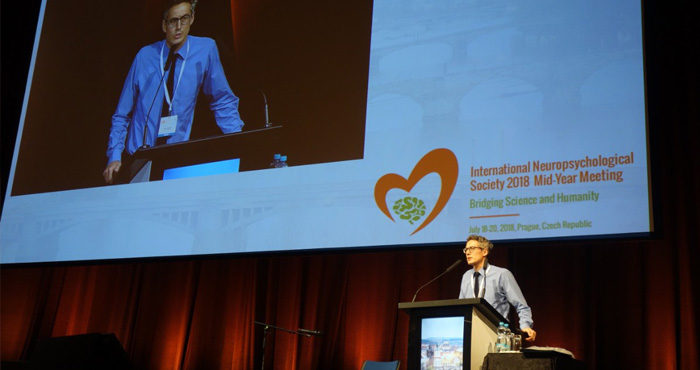
The Prague mid-year meeting of the International Neuropsychological Society reflected this shift, gathering researchers interested in tools that complement traditional assessment. Functional near-infrared spectroscopy sits comfortably in that conversation alongside EEG and structural imaging.
How fNIRS Captures Cortical Activity
A typical system uses a headband or cap fitted with light sources and detectors over the scalp. Near-infrared wavelengths between 650 and 950 nanometres penetrate the skull, where haemoglobin absorbs light differently depending on its oxygenation state. The signal gives a reasonably reliable index of regional activation, particularly over the prefrontal cortex.
Because the technique samples cortical blood flow rather than electrical activity directly, its temporal resolution sits between EEG and fMRI, typically in the one to ten hertz range. That resolution is sufficient for capturing task-related haemodynamic responses during working memory, language processing, or executive control, and combined with event-related designs allows trial-by-trial variation to be linked to behaviour.
Why Clinicians Choose fNIRS Over fMRI
Compared with fMRI, fNIRS tolerates movement, runs quietly, and costs a fraction of the price of a superconducting magnet. That matters when working with children, older adults, or patients with movement disorders who struggle to remain still inside a scanner. It also matters in regional clinics, where a portable kit can be packed into a hard case and transported across town.
In Australia, where researchers may travel long distances to reach rural participants, this portability has clear value. Teams in Perth have studied cognitive ageing in adults from remote communities, while groups in Melbourne and Brisbane have taken the technology into rehabilitation wards.
Cognitive Domains and Clinical Populations
Researchers have probed prefrontal activation during working memory, attention, and inhibitory control tasks, often alongside standardised neuropsychological batteries. Patterns of reduced lateralisation or blunted haemodynamic responses have been observed in traumatic brain injury, mild cognitive impairment, stroke, and schizophrenia. Recent work on bilingualism and cognitive control shows how fNIRS can reveal nuanced recruitment patterns in bilingual populations.
In paediatric settings, the technique offers a child-friendly alternative to lying still inside a scanner. Speech-language pathologists in Sydney and Adelaide have begun using fNIRS to study language development, dyslexia, and autism spectrum conditions, often with university research groups. The data help distinguish children whose difficulties lie in phonological processing from those whose challenges sit in semantic or pragmatic systems.
Research Programs Across Australia
Several Australian groups have established fNIRS laboratories known internationally. Macquarie University's Department of Cognitive Science has contributed work on attention and ageing, while the Melbourne School of Psychological Sciences and the Turner Institute have focused on mood and cognitive decline. At the University of Queensland's Queensland Brain Institute, researchers apply the technique to developmental cohorts.
National Health and Medical Research Council funding has supported several programmes, and collaborations with the Florey Institute have helped integrate optical neuroimaging with structural imaging. Postgraduate students learn to combine fNIRS with behavioural testing, building skills that translate to clinical and industry settings.
Cultural Context and Linguistic Variation
Australia is one of the most culturally diverse societies, with residents speaking hundreds of languages at home. Any neuropsychological tool used here has to be sensitive to that variation. Researchers running cognitive tasks in Cantonese, Mandarin, Arabic, or Vietnamese need to consider how linguistic background shapes prefrontal recruitment, particularly on verbal working memory or lexical retrieval tasks.
Groups in Western Sydney and Melbourne have begun documenting these effects, partly because their local communities include large populations of bilingual and multilingual speakers. Findings suggest that bilingual experience can modulate executive function and cortical activation, with implications for research design and clinical interpretation. Indigenous health research is increasingly incorporating optical neuroimaging, with cultural protocols shaping how studies are run.
Conference Workshops and Future Directions
The INS 2018 programme offered continuing education workshops introducing clinicians to optical neuroimaging. Sessions covered basic physics, optode placement, signal processing, and interpretation of common artefacts including motion and physiological noise. Handling equipment under expert supervision is often the moment when clinicians decide whether to pursue fNIRS in their own settings.
For those keen to extend their learning beyond Prague, the related events page lists upcoming meetings and training opportunities. Future directions include higher-density arrays, virtual reality integration, and clinical protocols alongside standard batteries. As the technology becomes more accessible, functional near-infrared spectroscopy is likely to remain a flexible complement for those who need a portable window on the working brain.
Practical Recommendations for New Users
- Pilot a small sample first to refine optode placement and task design before committing to a larger study.
- Combine fNIRS with behavioural and neuropsychological measures rather than relying on imaging data alone.
- Account for motion artefacts, skin pigmentation, and hair type, all of which can affect signal quality.
- Build statistical models that accommodate the sluggish haemodynamic response and the spatial resolution limits of the technique.
- Engage ethics committees early when working with culturally diverse or paediatric populations, and follow local protocols for community consultation.
General Information
Important information about the meetingIndustry
Support and exhibition opportunitiesCzech Republic
Beautiful country situated in the very heart of EuropeContact
How can we help you?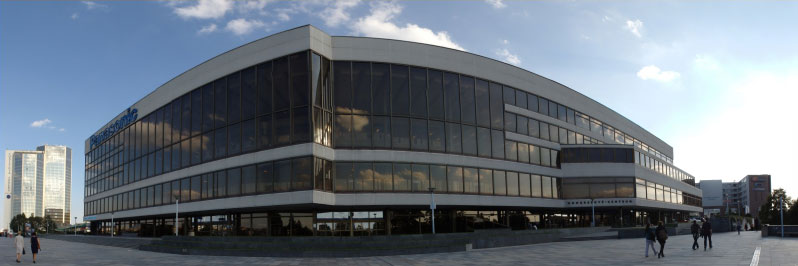
Prague Congress Centre (KCP)
5.května 65140 21 Prague 4
Czech Republic
Phone: +420 261 171 111
Website: www.kcp.cz