



Assessment of Verbal Fluency in Bilingual Speakers
Australians often encounter clinical scenarios where a single patient speaks several languages at home, at work, and in the wider community. Verbal fluency tasks—classic measures of executive function and lexical access—become complicated when the examiner and the patient do not approach words from the same linguistic starting line. The issue matters for neuropsychologists in cities from Perth to Brisbane, where Mandarin, Vietnamese, Italian, Greek, and Arabic are part of the everyday soundscape. Understanding how bilingualism shapes fluency performance is therefore not an academic curiosity but a daily practical requirement.
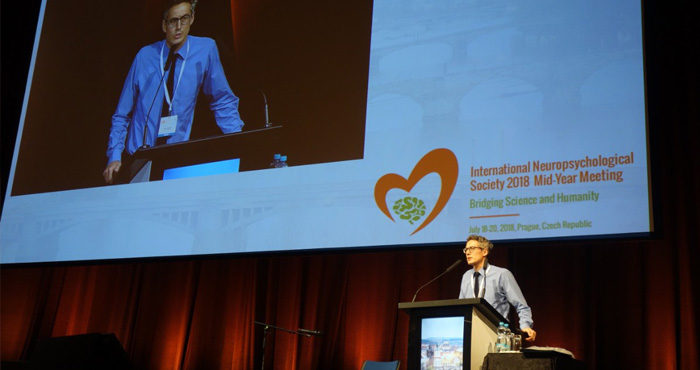
The gathering in Prague addressed this issue directly. Sessions on bilingual cognition emphasised that fluency is a network of processes involving switching, inhibition, and word retrieval. For clinicians in Australia, where multiculturalism is woven into the social fabric, these insights translate into more accurate diagnoses, fairer reports, and better outcomes for patients from non-English-dominant backgrounds.
This article summarises current thinking on how to assess verbal fluency in bilingual speakers. It highlights what Australian clinicians should keep in mind when selecting tests, interpreting scores, and reporting findings to referrers, courts, or rehabilitation teams.
Linguistic Diversity in Australian Clinical Populations
The linguistic diversity found across Australian suburbs is striking. In parts of Sydney, a neuropsychologist may assess a patient who attended primary school in Cantonese, completed secondary education in English, and now uses Mandarin at home. In Adelaide and Melbourne, large communities of Greek and Italian speakers have shaped local identity for generations. Recognising these trajectories helps clinicians choose assessment tools that respect the patient's full repertoire rather than penalising them for it.
A bilingual person does not necessarily have equal proficiency in both languages. Some individuals have stronger vocabulary in their first language, others in their second. Premature migration, interrupted schooling, or limited literacy in one tongue can all skew performance. Clinicians working within the Medicare-rebated Better Access scheme or preparing NDIS functional reports must therefore avoid assuming that low scores in English automatically indicate cognitive impairment.
Standard Tests and Their Shortcomings
Common fluency tasks ask patients to generate words beginning with a given letter ("phonemic fluency") or belonging to a specific category ("semantic fluency"), usually within a one-minute window. Norms for these tasks were largely developed on monolingual English speakers, often in North America or the UK. When the same tests are given to a bilingual Australian whose English was acquired in adulthood, the comparison breaks down immediately. The patient may have a richer lexicon in another language for animals or foods, yet appear "impaired" in English.
Even within English, Australian vocabulary differs. "Bush", "arvo", "footy", and "brekkie" are part of everyday talk, yet they rarely appear on word lists designed overseas. A patient from rural New South Wales might be unfairly penalised, or one from Western Australia might surprise a clinician with regionally specific items. Adjusting interpretation for local dialect is part of culturally responsive practice.
Adapting Assessment for Bilingual Patients
Best practice involves testing both languages when feasible and comparing performance across them. Some Australian neuropsychology services, including those affiliated with La Trobe University's speech and language research group, employ bilingual assessors or professional interpreters with training in cognitive testing. This approach respects the patient's strengths, identifies the more robust language, and reduces the risk of misdiagnosis in conditions like Alzheimer's disease, frontotemporal degeneration, or post-stroke aphasia.
When an interpreter is required, clinicians should brief them on the task structure, ensure they understand the time limits, and avoid direct translation of letter cues. Letters do not map neatly across scripts—for instance, Cantonese speakers do not use the Latin alphabet in the same way. Materials developed for specific language communities, such as the Hong Kong fluency norms or Italian adaptations, can be incorporated where peer-reviewed data exist. The Prague meeting highlights showcase similar efforts to harmonise cross-linguistic approaches.
Practical Steps for Clinicians
Before testing, gather a thorough language history. Ask when each language was learned, where it is used, and how comfortable the patient feels reading, writing, and speaking in each tongue. This background information shapes which language is used for testing and whether additional assessments are warranted. In a multicultural private practice in Parramatta or a public hospital outpatient clinic in Footscray, this conversation is not optional—it is the foundation of valid assessment.
When scoring, consider the qualitative aspects of fluency, not just the total count. Clustering (words within semantic categories), switching (movement between categories), and intrusions (words from the non-target language) all carry diagnostic weight. A high number of intrusions from Cantonese during an English task may simply reflect natural code-switching rather than poor self-monitoring. Reports should describe these patterns clearly so that referrers understand what the numbers mean.
Looking Ahead in the Asia Pacific Region
Cross-border collaboration is accelerating. The conference proceedings and other regional networks are working on norms that account for multilingual populations and varied educational systems. For Australian clinicians, engaging with regional research consortia and contributing local data strengthens the evidence base. As the country's multicultural profile continues to evolve, the field's ability to fairly assess bilingual speakers will remain a marker of clinical quality and cultural respect.
General Information
Important information about the meetingIndustry
Support and exhibition opportunitiesCzech Republic
Beautiful country situated in the very heart of EuropeContact
How can we help you?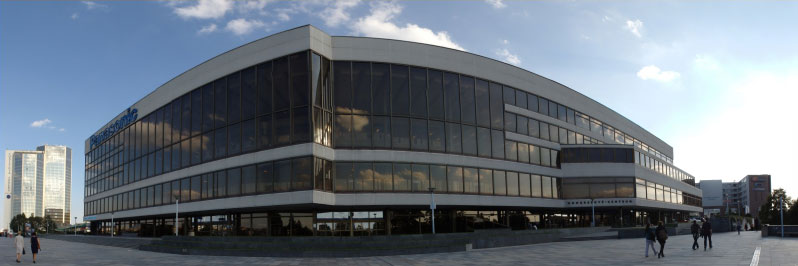
Prague Congress Centre (KCP)
5.května 65140 21 Prague 4
Czech Republic
Phone: +420 261 171 111
Website: www.kcp.cz