




Virtual Reality and the Ecological Assessment of Executive Function in Australia
For decades, neuropsychologists in Australian clinics have relied on pencil-and-paper batteries such as the Trail Making Test, Stroop, and Tower of London to characterise executive dysfunction. These tools are statistically robust, but they capture a sanitised slice of cognition that rarely resembles the busyness of a Bunnings car park on a Saturday morning or the split-second decisions required during peak-hour commuting on the Sydney Harbour Bridge. Ecological validity has long been the unspoken compromise of our field, and many clients leave the clinic room with scores that do not predict how they will cope in real life.
Immersive technology now offers a credible bridge between the controlled cubicle and the chaotic everyday. Head-mounted displays, room-scale trackers and game-engine environments allow researchers to script grocery aisles, workplaces and pedestrian crossings that respond to the participant's behaviour in milliseconds. As Australian neuropsychology groups in Melbourne, Sydney and Perth refine these protocols, the conversation is shifting from whether VR can supplement traditional testing to how quickly it should be embedded in routine practice.
The clinical pull is strongest where functional capacity matters most: return-to-work assessments, capacity determinations for the National Disability Insurance Scheme, and medico-legal reports for the Transport Accident Commission. This article maps the scientific rationale, the Australian regulatory landscape and the practical steps a clinician or research team can take when introducing VR into a service.
The Limits of Pencil-and-Paper Executive Tests
Executive function is an umbrella term covering inhibition, set-shifting, working memory and planning, and most legacy instruments sample only one or two of these in isolation. The Multiple Errands Test, designed in the 1990s, attempted a real-world fix by sending participants to a hospital kiosk, but its reliance on physical hospitals and trained observers made it expensive to replicate across regional Queensland or Tasmania. Standardised tests also suffer from practice effects when clients are reviewed every six months through the NDIS review cycle.
VR-based analogues solve several of these constraints at once. A grocery-shopping scenario can be programmed to record every gaze shift, every impulse purchase and every detour around a blocked aisle, generating rich continuous data that paper tests cannot match. Researchers at Macquarie University and the University of Melbourne have piloted such tasks with stroke and traumatic brain injury cohorts, reporting stronger correlations with caregiver-rated daily functioning than with conventional scores.
Immersive Scenarios as Probes of Everyday Cognition
The strength of VR lies in its ability to hold constant what matters and to vary what does not. Lighting, foot-traffic density, signage and background noise can each be dialled up or down to probe cognitive flexibility under graded demand. A participant navigating a simulated Brisbane CBD pedestrian crossing, for instance, can be tested on inhibitory control when the walk signal flashes red, on planning when a route is blocked by construction, and on working memory when a shopping list is interrupted by a phone call.
Commercial headsets such as the Meta Quest and HTC Vive have lowered the cost of entry, while open-source toolkits like Unity and Unreal Engine allow Australian postgraduate students to prototype tasks without licensing fees. This democratisation has enabled rural clinicians, often working solo in towns like Ballarat or Cairns, to run the same paradigm as their metropolitan colleagues.
Clinical Applications Across Australian Healthcare Settings
Hospitals and rehabilitation centres are the most obvious early adopters. The Royal Melbourne Hospital's cognitive assessment clinic, for example, has begun integrating VR walk-through tasks into its standard battery for patients recovering from stroke. In private practice, neuropsychologists registered with the Australian Health Practitioner Regulation Agency (AHPRA) are using VR return-to-work simulations to give employers concrete evidence of a worker's capacity to handle a busy warehouse or kitchen.
Funding pathways are slowly catching up. The Medicare Benefits Schedule covers selected neuropsychological services under specific item numbers, and some NDIS plans now accept VR-based functional assessments as evidence for plan reviews. Telehealth pilots in the Northern Territory have even tested remote proctoring, where a clinician in Darwin supervises a client wearing a headset in a remote community, demonstrating the technology's relevance to the Closing the Gap agenda.
Designing VR Tasks for Inhibition, Set-Shifting and Planning
A well-designed ecological executive task should combine several demands simultaneously rather than isolating them. The Virtual Apartment Shopping Task, for instance, asks participants to plan a weekly shop within a budget, switch strategies when prices change, and inhibit the temptation to add impulse items. Eye-tracking data reveals the moment-by-task cognitive cost of each decision, providing insights that no questionnaire can match.
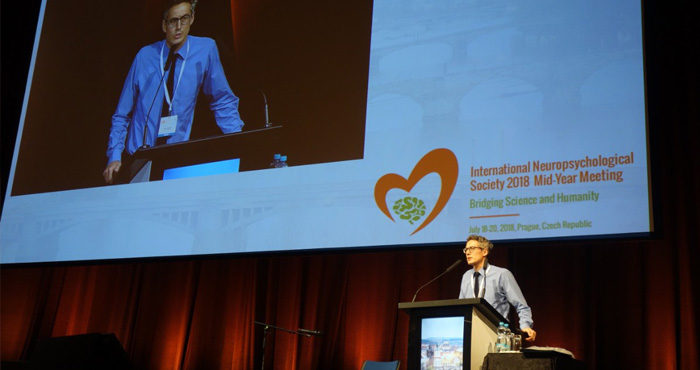
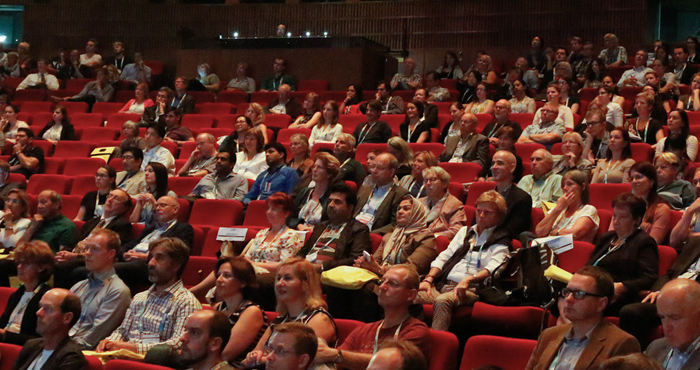
Researchers interested in the methodology can review broader clinical trials research, including studies on novel-anticoagulants-in-the-treatment-of-pulmonary-embolism-145, to see how rigorous trial design translates across specialties. Australian teams contributing to the International Neuropsychological Society's mid-year meetings, such as the gathering documented in the conference venue details, have showcased VR prototypes alongside traditional posters, signalling growing peer acceptance of immersive methods.
Cultural Safety and Linguistic Responsiveness in Diverse Populations
Australia's cultural diversity demands more than a translated instruction set. A VR grocery store with only Anglo-Australian products will under-estimate the cognitive load experienced by a Mandarin-speaking grandmother shopping in Chatswood or a Somali family navigating Coles in Footscray. Culturally responsive design teams now include Aboriginal health workers when scripting tasks for rural and remote communities, ensuring that virtual settings reflect local landmarks, languages and community expectations.
Linguistic responsiveness also extends to verbal instruction tracks, which can be recorded in community languages to remove the working-memory load of interpreting English while performing executive demands. Several Australian research groups are collaborating with Indigenous community-controlled organisations to co-design scenarios that feel safe and familiar, an essential step before any clinical inferences can be drawn.
Training, Regulation and Ethical Oversight
VR introduces new ethical questions. Cybersickness, data privacy and the storage of biometric gaze recordings all sit within the remit of the Office of the Australian Information Commissioner. Clinicians should ensure that headset data is encrypted, that participants understand what is recorded, and that data retention follows the National Health and Medical Research Council guidelines.
Professional development is the next bottleneck. The Australian Psychological Society's College of Neuropsychology, along with state-based bodies such as the NSW Psychologists Registration Board, are beginning to offer workshops on VR administration. Until formal credentials exist, clinicians should seek supervision from peers with documented VR experience.
Practical Recommendations for Clinicians and Research Teams
- Pilot a single ecological VR task alongside an existing battery before committing to a full transition.
- Engage a culturally diverse advisory group when scripting scenarios for Indigenous or culturally and linguistically diverse clients.
- Verify that VR platforms comply with Australian Privacy Principles and store data on onshore servers where possible.
- Negotiate VR assessment costs with NDIS planners by framing outputs as functional-capacity documentation.
- Document cybersickness screening and exclusion criteria in every protocol.
- Collaborate with metropolitan research hubs to access headsets, sharing equipment where rural travel is impractical.
- Plan longitudinal reassessments at twelve-month intervals to monitor whether VR gains translate into real-world independence.
General Information
Important information about the meetingIndustry
Support and exhibition opportunitiesCzech Republic
Beautiful country situated in the very heart of EuropeContact
How can we help you?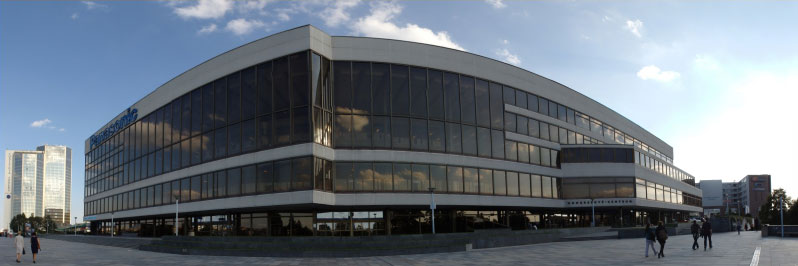
Prague Congress Centre (KCP)
5.května 65140 21 Prague 4
Czech Republic
Phone: +420 261 171 111
Website: www.kcp.cz