





Building Brief Cognitive Screens That Actually Hold Up Clinically
The waiting room is full, the GP has twelve minutes per patient, and a worried daughter wants to know whether her dad's memory changes are just ageing or something more serious. In clinics from Cabramatta to Cairns, neuropsychologists and allied health staff reckon with this scenario every arvo, and the temptation to reach for a five-minute cognitive screen is enormous. Brief instruments promise efficiency, early detection, and triage capacity in a healthcare system stretched across vast distances.
Yet the psychometric story behind these tools is rarely straightforward. Shortening a battery introduces cascading compromises to reliability, validity, sensitivity, and specificity. Instruments that work beautifully in well-resourced research cohorts often stumble in the messy reality of everyday practice, where literacy varies, English is a second or third language for many patients, and time pressure shapes how questions are asked and answered.
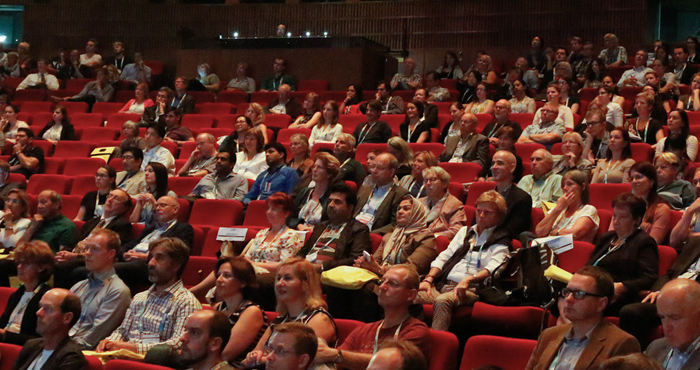
What follows is a look at the core psychometric hurdles any developer of brief cognitive screens must navigate. The challenges are technical, ethical, and deeply practical. Anyone attending the Prague meeting, including those staying at the hotel-embassy between sessions, would recognise that the science of brief assessment is inseparable from patient care.
The Tension Between Brevity and Psychometric Rigor
Reducing a battery to a short screen means dropping items, and every dropped item is a potential loss of information. Classical test theory reminds us that reliability is tied to test length: fewer items mean larger standard errors and wider confidence intervals around an individual's score. A four-word recall task may correlate strongly with a 16-word list in controlled conditions, but its internal consistency often dips below acceptable thresholds for individual decision-making.
Item response theory offers a more sophisticated path, letting developers identify the most discriminating items across the ability continuum. Yet IRT-based screens require large representative calibration samples, infrastructure that is expensive and time-consuming to build. Many published screens rest on shaky foundations because their developers prioritised speed of administration over rigorous piloting.
Sample Selection and Normative Reference Problems
Normative data are the backbone of any cognitive screen, and the reference sample shapes every clinical interpretation. Developers frequently draw norms from convenience samples: university students, single-site volunteers, or participants recruited through research registries. The resulting tables may not reflect the demographic realities of the population actually being screened, producing both false positives and dangerous false negatives.
In Australia, the picture is especially complicated. Practitioners assess patients from non-English speaking backgrounds, older adults in remote communities, and Aboriginal and Torres Strait Islander peoples whose cultural experiences differ from those encoded in most Western norms. A screen normed on Sydney retirees may tell clinicians very little about a patient from a rural town in the Kimberley, and extrapolating across populations is a clinical gamble no one should take lightly.
Sensitivity and Specificity in Real-World Settings
Sensitivity and specificity sound clean in journal abstracts, but they behave differently in frontline practice. Prevalence matters enormously: in a memory clinic where most referrals have cognitive impairment, a moderately sensitive tool performs reasonably well. In a general practice waiting room where the base rate is far lower, even a tool with 90 percent sensitivity generates an uncomfortable number of false alarms that consume scarce follow-up time.
Predictive values shift with every shift in case mix, meaning a screen that performs beautifully in one Australian state may disappoint in another. Developers who report only sensitivity and specificity, without describing the clinical sample, leave practitioners guessing about real-world utility. The honest psychometric report includes detailed demographic breakdowns, comorbidity profiles, and prevalence figures that allow local calibration of decision thresholds.
Cultural and Linguistic Adaptation Across Diverse Populations
Translation is not adaptation. A direct translation of verbal fluency or naming items may preserve surface meaning while losing the cultural references that make items genuinely comparable. Picture naming tasks that include culturally specific objects, arithmetic items embedded in unfamiliar contexts, or memory passages whose narrative structure does not translate cleanly into the patient's first language. Each can introduce construct-irrelevant variance that distorts scores.
Proper cultural adaptation involves forward and back translation, cognitive interviewing with target community members, and full revalidation with locally recruited normative samples. In Australia, this means investing in tools validated for Mandarin-speaking, Arabic-speaking, Vietnamese, and Greek communities, as well as for First Nations populations whose cultural frameworks for memory, time, and storytelling differ from those embedded in standard instruments.
Practical Implementation in Australian Healthcare Settings
Rolling out a screen is the easy part. Embedding it sustainably is where most initiatives quietly fail. Medicare and NDIS funding shapes which assessments are reimbursed, and clinicians often must select tools that fit existing workflow templates. A psychometrically elegant instrument that cannot be scored quickly, or that requires proprietary materials, will gather dust in a clinic cupboard.
Telehealth adds another layer, particularly for patients in the Pilbara, the Top End, or Tasmania's west coast. Screens administered via video need item sets that work without the examiner seeing the patient's hands, and norms collected in person may not transfer cleanly to remote administration. The most useful tools for the Australian context are those developed with these constraints in mind, validated on the populations they will actually serve, and flexible enough for a fifteen-minute consultation without compromising the measurement.
Practical Guidance for Developers and Clinicians
- Pilot items with cognitive interviewing before committing to a final form, including samples from the cultural and linguistic communities the screen will serve.
- Report reliability, sensitivity, specificity, and predictive values with full demographic detail rather than global figures alone.
- Build normative tables that reflect the population of intended use, and update them as demographic patterns shift.
- Evaluate feasibility within real Australian workflows, including time, cost, scoring burden, and telehealth compatibility.
- Plan for periodic revalidation, because instruments drift as populations, languages, and clinical presentations evolve.
General Information
Important information about the meetingIndustry
Support and exhibition opportunitiesCzech Republic
Beautiful country situated in the very heart of EuropeContact
How can we help you?
Prague Congress Centre (KCP)
5.května 65140 21 Prague 4
Czech Republic
Phone: +420 261 171 111
Website: www.kcp.cz