



Predictors and interventions in post-stroke cognitive recovery
Stroke remains a leading cause of long-term disability in Australia, where more than 50,000 new events occur each year and roughly 400,000 people live with its aftermath. Cognitive complaints often outpace motor limitations in shaping daily independence, affecting memory, processing speed, language, and executive function in ways that demand multidisciplinary care.
Australian clinicians bring particular strengths to this work, supported by national frameworks such as the Stroke Foundation's Living Clinical Guidelines and growing investment in rehabilitation research across major academic centres.
This article synthesises current evidence on predictors and interventions for cognitive recovery after stroke, with attention to practical realities in cities such as Sydney, Melbourne, and Brisbane, as well as rural and remote communities.
Understanding predictors of recovery
Recovery after stroke is rarely uniform, even among patients with comparable lesions. Age, education, premorbid cognitive reserve, and vascular risk factors consistently influence trajectories. Data from the Australian Stroke Clinical Registry show older age and prior cerebrovascular disease predict slower cognitive gains, while higher education tends to buffer against decline.
Developmental history also matters. Research on early life stress suggests childhood adversity may shape how the adult brain responds to acquired injury. Comorbid depression, sleep disturbance, and polypharmacy further complicate recovery and warrant routine screening.
| Predictor | Direction of effect | Clinical implication |
|---|---|---|
| Younger age | Faster initial gains | Prioritise intensive early therapy |
| Higher cognitive reserve | Better long-term outcomes | Use compensatory strategies early |
| Large lesion volume | Slower recovery | Plan extended rehabilitation input |
| Post-stroke depression | Worsened cognition | Treat mood in parallel |
| Strong social support | Improved engagement | Mobilise family resources |
Cognitive domains commonly affected
Attention and processing speed are almost universally affected in the subacute phase, often manifesting as difficulty managing multiple conversations or following complex instructions at work. Memory impairment, particularly in working and episodic systems, can persist long after motor recovery plateaus.
Executive dysfunction frequently disrupts return to driving, financial management, and vocational roles. Aphasia, present in roughly one-third of survivors, benefits from speech pathology integrated with neuropsychological care. Visuospatial deficits often contribute to falls and medication errors, particularly when navigating unfamiliar environments such as a Perth hospital lobby or a busy Melbourne tram.
Interventions that drive meaningful gains
Cognitive rehabilitation rests on three pillars: restorative training, compensatory strategy development, and environmental modification. Restorative approaches such as computerised attention training show modest effects when delivered intensively, with dose-response relationships documented by researchers at the Florey Institute of Neuroscience in Melbourne. Compensatory strategies often translate more readily into everyday function.
Group-based interventions offer efficiency within the Australian public health system, where outpatient caseloads are high. Vocational rehabilitation, supported through the NDIS and state-based schemes, can facilitate graded return to work.
Pharmacological and neuromodulation adjuncts
No pharmacological agent has yet earned a universal recommendation for cognitive recovery. Cholinesterase inhibitors, used widely in dementia care, show mixed results in vascular cognitive impairment and are sometimes trialled off-label by Australian neurologists. Antidepressants may indirectly support cognition by improving mood, sleep, and therapy engagement.
Non-invasive brain stimulation, including repetitive transcranial magnetic stimulation and transcranial direct current stimulation, has attracted interest as an adjunct to traditional therapy. Trials in Adelaide and Brisbane have explored these modalities for aphasia and neglect, though access is largely limited to research settings.
Service delivery in the Australian context
Australia's distributed geography shapes how cognitive rehabilitation is delivered. Patients in metropolitan Sydney or Melbourne access comprehensive stroke units, while those in the Northern Territory or western Queensland rely on telehealth and visiting specialists. Funding varies: Medicare supports neuropsychological assessment through the Better Access initiative, while the NDIS funds ongoing therapy for eligible participants under 65.
Cultural considerations are equally important. Aboriginal and Torres Strait Islander patients benefit from services co-designed with community-controlled organisations, particularly in regions such as the Kimberley or Far North Queensland.
Tailoring rehabilitation to the individual
Personalisation is the cornerstone of effective post-stroke cognitive care. Two practical considerations that shape treatment planning and daily function are outlined below.
Considerations for treatment planning:
- Screen for mood, sleep, and fatigue at every review
- Involve family members in goal-setting from the outset
- Coordinate with speech pathology, occupational therapy, and social work
- Reassess cognition at three, six, and twelve months post-event
Practical strategies for daily function:
- Use phone-based reminder apps rather than paper diaries
- Practise scripts for common conversations to reduce aphasia-related anxiety
- Schedule cognitively demanding tasks earlier in the day
- Encourage gradual resumption of community activities, such as a weekly visit to a Hobart library or a short walk through a Brisbane parkland
Recovery rarely follows a straight line, and setbacks related to fatigue, mood, or intercurrent illness are common. Clinicians who combine rigorous assessment, evidence-based interventions, and an appreciation of each patient's social context are best placed to support meaningful, lasting gains in cognitive recovery after stroke.
General Information
Important information about the meetingIndustry
Support and exhibition opportunitiesCzech Republic
Beautiful country situated in the very heart of EuropeContact
How can we help you?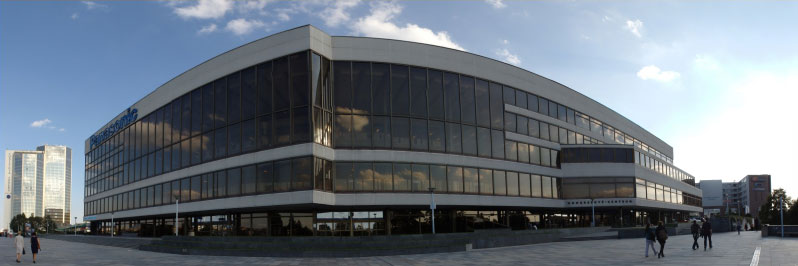
Prague Congress Centre (KCP)
5.května 65140 21 Prague 4
Czech Republic
Phone: +420 261 171 111
Website: www.kcp.cz