



Evaluating Spatial Neglect After Right Hemisphere Stroke
Spatial neglect is a disorder of attention and awareness that commonly follows a right hemisphere stroke. A person may leave food on the left side of a plate, collide with doorframes, shave only one side of the face or fail to notice a limb. These behaviours can look like poor concentration, visual loss or carelessness unless assessment is deliberate.
For Australian clinicians, the issue has practical weight across acute stroke units, inpatient rehabilitation and community services. A patient discharged from a metropolitan hospital may still struggle on a busy footpath in Parramatta, while someone in regional Queensland may have fewer opportunities for specialist neuropsychology review. Assessment needs to connect test performance with everyday safety, participation and culturally responsive care.
Why Spatial Neglect Is Easy To Miss
Unilateral spatial neglect is not the same as a left visual field cut. A patient with hemianopia may compensate by turning the head, whereas a person with neglect may fail to search towards the affected side or deny that anything is wrong. Right hemisphere injury can also affect sustained attention, spatial working memory, anosognosia and emotional regulation, making the presentation variable from hour to hour.
Standard conversation can conceal the problem. Someone may follow a speaker positioned on the left yet omit the left side when dressing or walking. Family members, nurses and occupational therapists often provide the clearest examples because they observe routines rather than isolated test responses. In Australia, these observations can be gathered across a multidisciplinary team in a public hospital or shared through electronic discharge documentation when services are spread across regions.
A Bedside Assessment That Captures Function
Begin with observation during transfers, grooming, meals and mobility. Watch whether the patient scans the environment, responds to people approaching from the left and uses the affected arm spontaneously. Ask about bumps, missed objects and “lost” belongings without assuming that the patient’s account will accurately reflect awareness.
Formal screening can then clarify the pattern. Cancellation tasks, line bisection, figure copying and clock drawing are useful, but each samples different demands. A single normal score should not overrule repeated everyday evidence, particularly when fatigue, aphasia, visual acuity or motor weakness affects performance.
A Practical Screening Set
A concise assessment battery can be adapted to the person’s communication and physical capacity:
- Star or bell cancellation for visual search
- Line bisection for lateralised spatial bias
- Clock drawing or a simple scene copy
- Functional observation during dressing or meal tasks
Record omissions, search strategy, response speed and error awareness rather than treating the result as a pass-or-fail label. If the patient speaks a language other than English, use an interpreter and select tasks with minimal cultural or literacy demands. This is especially relevant in Australia’s multilingual communities and when working with Aboriginal and Torres Strait Islander patients whose preferred communication style may differ from a standard clinic interview.
Signals Worth Recording
A useful clinical note can include specific behaviours that guide treatment:
- Collisions on the left during walking
- Food or grooming omissions on one side
- Failure to locate call bells, phones or personal items
- Limited recognition of errors or safety risks
Document the context, prompts required and whether performance changes with alertness. A patient who improves after a visual cue may benefit from structured scanning practice, while someone who remains unaware of omissions may need supervision and environmental modification. “Keep an eye on it” is less useful than recording the exact cue that worked.
Making Findings Culturally Relevant
Assessment should reflect the person’s home, work and social environment. A test room with uncluttered walls does not reproduce a tram stop in Melbourne, a crowded shopping centre in Sydney or uneven paths around a regional town. Ask family or support workers how the person manages medication, cooking, driving, public transport and community activities.
Language, culture and health literacy shape how symptoms are described. Some patients may avoid saying they are confused, particularly when authority figures are present; others may use familiar Australian terms such as “a bit crook” or “not quite right” rather than describe neglect directly. Respectful explanation, teach-back and family involvement can improve the accuracy of functional history without turning relatives into informal diagnosticians.
Turning Findings Into Rehabilitation Goals
Intervention may include visual scanning training, limb activation, cueing, prism-based approaches and task-specific practice. The choice should follow the observed impairment and the person’s goals. A patient preparing to return to work may need scanning for documents and screens, while another may prioritise safe showering, meal preparation or navigating a local bus interchange.
Goals should be measurable and meaningful: locate all items on both sides of a tray with one verbal cue, scan left before stepping through a doorway, or identify hazards during a supervised walk. Consider driving restrictions, falls risk and the requirements of Australian rehabilitation pathways, including communication between hospital teams, general practitioners, private providers and NDIS-funded supports where eligible.
Connecting Research With Clinical Practice
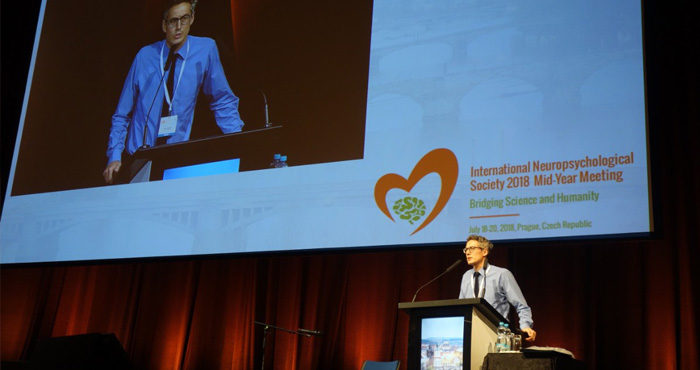
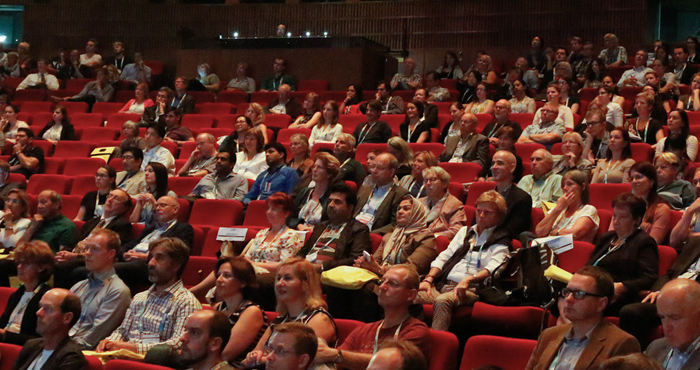
The 2018 International Neuropsychological Society meeting in Prague highlighted the value of linking neuroscience, clinical evidence and humane patient care. Its programme and poster culture remain relevant to clinicians reviewing neglect, visuospatial attention and post-stroke rehabilitation methods. Conference archives can also show how assessment tools were discussed alongside cultural and real-world considerations.
Professional resources are most useful when they help translate evidence into practice. Exploring the meeting’s sponsor information gives a sense of the wider clinical and research ecosystem surrounding neuropsychology, assessment technology and rehabilitation. For Australian practitioners, that perspective supports careful selection of measures rather than adopting a test simply because it is familiar or convenient.
General Information
Important information about the meetingIndustry
Support and exhibition opportunitiesCzech Republic
Beautiful country situated in the very heart of EuropeContact
How can we help you?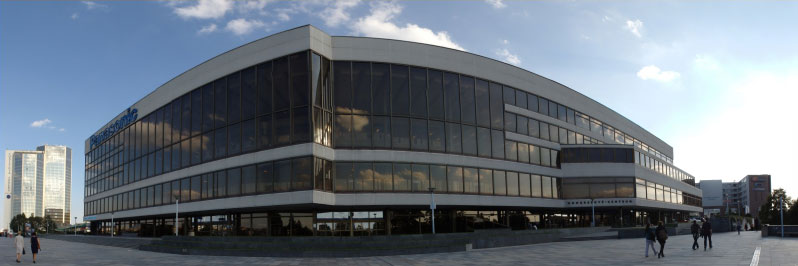
Prague Congress Centre (KCP)
5.května 65140 21 Prague 4
Czech Republic
Phone: +420 261 171 111
Website: www.kcp.cz