



Traumatic Axonal Injury: Executive Function and Psychosocial Outcomes
Acceleration-deceleration forces that shear axons across the white matter often leave no trace on early CT scans yet reshape cognition for decades. Australian clinicians have grown alert to subtle presentations in collisions and sporting concussions arriving at emergency departments in Sydney, Melbourne, and Brisbane.
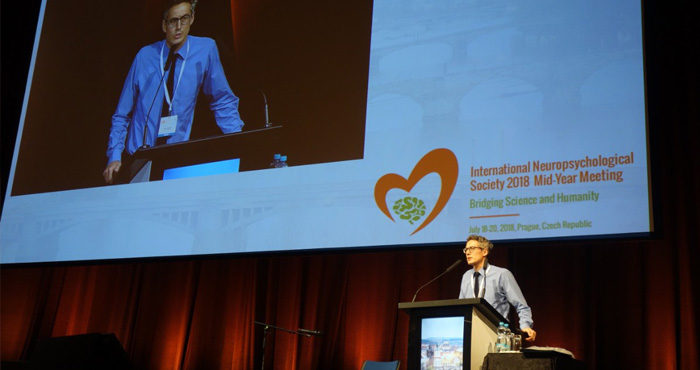
The neuropsychological consequences stretch well beyond memory complaints. Slower information processing, poor attentional control, and impaired flexible thinking dominate the clinical picture, while families notice shifts in personality, drive, and social judgement. Speakers at the International Neuropsychological Society mid-year meeting in Prague recognised that bridging laboratory neuroscience with humane, culturally aware care demands sustained dialogue between researchers, clinicians, and people living with the injury each day.
The conference dedicated a major symposium to outcomes after traumatic axonal injury, including executive dysfunction and psychosocial ripple effects that follow survivors back into their communities. The conference programme offered a rare chance to hear how different healthcare systems document recovery months and years after the initial trauma.
Mechanisms of Diffuse White Matter Damage
Axons stretched beyond tolerance undergo a cytoskeletal cascade that may take hours to unfold. Calcium influx, protease activation, and mitochondrial failure disconnect distal segments from cell bodies, even when the blow seemed trivial. Susceptibility-weighted MRI and diffusion tensor imaging reveal lesions older scanners missed, letting researchers correlate load and location with cognitive profiles.
Shear depth shapes prognosis. Lesions in the corpus callosum and dorsolateral prefrontal white matter typically produce stubborn executive impairment. Australian trauma centres including Royal Melbourne use advanced MRI protocols to help families understand why a relative who "looks fine" may struggle to plan, organise, or inhibit responses.
Neuroinflammation can extend vulnerability after discharge. Researchers track biomarkers including neurofilament light chain to tailor rehabilitation to biological reality rather than calendar time.
Executive Dysfunction After Diffuse Injury
Executive function covers working memory, cognitive flexibility, planning, inhibition, and higher-order control of goal-directed behaviour. After traumatic axonal injury these capacities rarely fail in isolation; they erode together, leaving patients who can hold a conversation yet struggle to manage a budget, return to study, or sequence meal preparation.
Clinicians often describe a gap between capacity and performance. Someone may score within normal limits in a quiet office, only to crumble amid the distractions of a busy household. This gap frustrates families and employers, particularly when early recovery seemed encouraging and return-to-work plans were made in haste.
Speech-language pathologists and occupational therapists in Australia use context-sensitive rehabilitation that mimics real-world demands. Community programs funded through the National Disability Insurance Scheme support graded re-entry into shopping, public transport, and voluntary work.
Psychosocial Outcomes and Community Reintegration
Returning to community life involves more than regaining physical independence. Mood disturbance, anxiety, and irritability frequently intensify once hospital structure fades, placing pressure on partners and friendships. Rates of relationship breakdown and vocational failure remain stubbornly high, even among those who recover mobility quickly.
Australian services have long grappled with these challenges. In Victoria, the Transport Accident Commission funds long-term psychological and vocational support for survivors of road trauma, while organisations such as Brain Injury Australia provide peer mentoring. Across the country, peer support groups meet in suburban libraries and online forums where a casual "how's your arvo going, mate?" can open conversations about fatigue that formal assessments miss.
Interventions pairing skill-building with social opportunities, such as supported volunteering, show promise across Western Australia and New South Wales, where executive deficits make it harder to initiate contact and sustain relationships.
Assessment Approaches for Australian Clinicians
Comprehensive evaluation involves tests of divided attention, set-shifting, and verbal fluency administered by clinical neuropsychologists registered with the Australian Health Practitioner Regulation Agency. Bedside screening with tools such as the Montreal Cognitive Assessment catches gross deficits, but structured batteries expose the subtle executive dysfunction characteristic of diffuse injury.
Cultural and linguistic diversity shapes testing. Australia is one of the most multilingual societies in the world, with significant Mandarin, Vietnamese, Arabic, and Italian-speaking communities alongside Aboriginal languages. Cross-cultural projects at Macquarie University and the University of Queensland aim to prevent misleading conclusions.
Funding pathways also influence how assessment unfolds. Medicare rebates under the Better Access initiative support limited sessions, while NDIS plans and state schemes such as icare NSW fund more comprehensive batteries. Clinicians must navigate these systems thoughtfully, advocating for thorough assessment when early presentations undersell the true burden.
Cultural Considerations and Equitable Care
Recovery unfolds within a cultural frame that shapes how symptoms are reported and acted upon. Patients from collectivist backgrounds may under-report personal struggles to spare family burden, while those from individualist traditions may over-emphasise setbacks. Clinicians attuned to these patterns ask better questions and avoid mistaking reserve for full recovery.
Australia offers a vivid case study. Aboriginal and Torres Strait Islander peoples carry a disproportionately heavy burden of traumatic brain injury linked to motor vehicle accidents, falls, and interpersonal violence. Aboriginal Brain Injury Coordinator roles in several states work alongside families to interpret findings through culturally grounded frameworks.
Language can also conceal cognitive change. A patient who speaks English as a second or third language may appear to decline when post-concussive symptoms erode effortful processing. Culturally adapted materials and family interviews help separate true cognitive loss from linguistic strain.
Bridging Science and Humane Care at the Prague Meeting
The INS 2018 programme reflected tension between the search for objective biomarkers and honouring each patient's lived experience. Plenaries on serum neurofilament light chain sat alongside workshops on communicating uncertainty to families.
Sessions on cultural humility invited delegates to examine how assumptions about recovery shape clinical recommendations. Australian delegates shared lessons from working alongside Aboriginal health liaison officers in remote communities, where tele-neuropsychology has begun to close long-standing service gaps.
Practical matters mattered too. Those travelling from the Southern Hemisphere found helpful Prague accommodation options on the meeting website, easing the load of a long flight. The gathering aimed to ensure progress in understanding traumatic axonal injury translated into steadier recovery for every survivor.
General Information
Important information about the meetingIndustry
Support and exhibition opportunitiesCzech Republic
Beautiful country situated in the very heart of EuropeContact
How can we help you?
Prague Congress Centre (KCP)
5.května 65140 21 Prague 4
Czech Republic
Phone: +420 261 171 111
Website: www.kcp.cz