




The cerebellum's hidden role in higher cognition
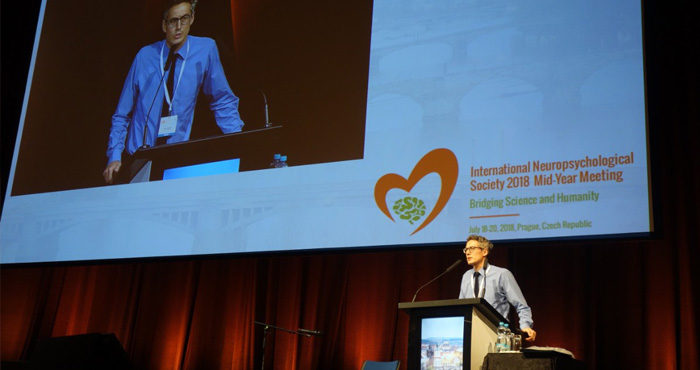
For decades the cerebellum was treated as a compact motor controller, the part of the brain responsible for balance, posture, and the smooth sequencing of movement. That textbook picture has steadily given way to a richer model in which the cerebellum also tunes language, executive function, and emotional regulation. The 2018 International Neuropsychological Society meeting in Prague placed this evolving story at the centre of its scientific program.
For practitioners working across Australia, these developments carry immediate practical weight. The National Disability Insurance Scheme, Medicare-funded neuropsychology items, and obligations under the Privacy Act 1988 all influence how cognitive assessments are scheduled, reported, and shared. Understanding the cerebellum's reach beyond movement helps translate neuroscience into clearer conversations with patients, families, and referring doctors.
A brief history of cerebellar thought
For most of the twentieth century, the cerebellum sat comfortably in textbooks as a precision instrument for posture and coordination. Damage to its hemispheres produced the ataxic gait, the intention tremor, and the slurred speech that clinicians in Adelaide and Perth wards learned to recognise at a glance. The notion that the same tissue could shape reasoning felt almost heretical.
That began to change in the 1990s, when functional imaging studies lit up cerebellar regions during language tasks, working memory probes, and emotional judgements. Researchers in Brisbane and Melbourne demonstrated cerebellar recruitment during verbal fluency and abstract reasoning. The emerging view positioned the cerebellum as a predictor, comparing expected and actual signals across domains far wider than movement.
Anatomy that supports prediction
The cerebellum's internal architecture is remarkably uniform, with repeating microcircuits of Purkinje cells, granule cells, and deep nuclei. This uniformity hints at a general computational role rather than a single motor one. Inputs arrive from cortical association areas via the pontine nuclei, while outputs loop back through the thalamus to prefrontal and parietal cortices.
White matter pathways linking the cerebellum to frontal networks are vulnerable to the same vascular risks that affect Australians living with hypertension or diabetes. Stroke services in western Sydney routinely document cerebellar lesions in patients whose subsequent cognitive complaints seem out of proportion to their motor recovery. Recognising this connectivity sharpens differential diagnosis at the bedside.
Language, fluency, and the right hemisphere
Agrammatic speech and aprosodia have long been linked to cerebellar damage, particularly on the right. Beyond articulation, the cerebellum supports lexical retrieval, verbal fluency, and the rapid sequencing of syllables. Patients recovering from posterior fossa surgery often show transient mutism, followed by slowed, effortful speech that gradually resolves.
Speech pathologists in Canberra and Hobart see these patterns in children who have undergone resection of midline tumours. The clinical lesson is to expect language difficulties even when motor signs appear minor.
Domains where cerebellar damage commonly disturbs cognition:
- Verbal fluency and word retrieval during timed tasks
- Set-shifting and mental flexibility on card-sorting measures
- Affective prosody and the melody of connected speech
- Social cognition, including reading of sarcasm and metaphor
Executive function and working memory
Everyday habits in Australian homes, from weekly meal prep to household budgeting, lean on a healthy working memory system. Cerebellar injury disrupts that system in subtle ways, affecting mental flexibility, set-shifting, and the suppression of prepotent responses. Patients describe losing track of a recipe mid-step or struggling to follow the prompts of an online tax return.
Neuropsychological batteries used in Australian clinics, including components of the CANTAB and the Rey Auditory Verbal Learning Test, can reveal these deficits when motor signs are minimal. Psychologists registered with the Australian Health Practitioner Regulation Agency then communicate findings to general practitioners who may have attributed the complaints to stress or normal ageing.
Emotion, social cognition, and the cerebellar affective loop
The cerebellum projects to limbic circuits, modulating fear responses, reward learning, and the interpretation of social cues. Cerebellar degeneration has been associated with flattened affect, impulsivity, and difficulties interpreting irony. In paediatric cohorts, cerebellar injury is a recognised risk factor for autism-like social profiles.
These findings matter for mental health teams across Queensland and Victoria, where demand for affective disorder assessments continues to grow. Formulation work that overlooks the cerebellum risks missing a treatable contributor to distress, particularly when mood follows a posterior fossa event or cranial irradiation.
Implications for Australian clinical practice
Reimbursement through Medicare's Better Access initiative and the NDIS both shape who can access thorough cognitive assessment. Time-pressured item numbers reward brief batteries, yet cerebellar contributions may require additional timed tasks, language sampling, or social cognition probes. Documentation must also satisfy the Privacy Act when sharing results across multidisciplinary teams.
Clinicians in Perth and Darwin note that culturally appropriate assessment of Aboriginal and Torres Strait Islander clients sometimes demands adjusted norms and slower pacing, particularly when language switches occur during a session.
Practical adjustments that fit Australian service settings:
- Build cerebellar hypotheses into referral triage rather than treating them as incidental findings
- Schedule extra time for language-rich batteries when Medicare item constraints allow
- Document Privacy Act considerations whenever reports cross service boundaries
- Offer telehealth follow-up for rural clients unable to attend in-person reviews
Continuing education and future directions
The Prague meeting highlighted several open questions, including how cerebellar stimulation might aid recovery from stroke and whether non-invasive neuromodulation could reshape language networks. Neurostimulation devices listed with the Australian Therapeutic Goods Administration remain limited to specific indications, leaving behavioural rehabilitation as the mainstay for most patients.
Practitioners keen to deepen their grasp of cerebellar cognition can review the archived workshop resources made available through the conference portal. Pairing those materials with peer supervision groups in Adelaide or Newcastle offers a practical route from theory to the families waiting in clinic waiting rooms.
General Information
Important information about the meetingIndustry
Support and exhibition opportunitiesCzech Republic
Beautiful country situated in the very heart of EuropeContact
How can we help you?
Prague Congress Centre (KCP)
5.května 65140 21 Prague 4
Czech Republic
Phone: +420 261 171 111
Website: www.kcp.cz