



Rethinking How We Measure Cognitive Flexibility in Older Adults
Cognitive flexibility underpins the way people adapt to shifting goals, switch between tasks, and re-evaluate familiar routines. As populations age worldwide, neuropsychologists face growing pressure to refine how this capacity is measured in older adults. The conventional pencil-and-paper toolkit, developed decades ago, often struggles to capture the subtle everyday adaptations that matter most for independent living.
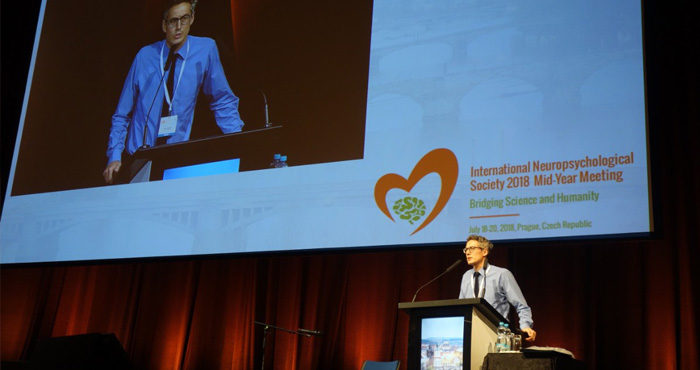
A shift is underway. Researchers at events like the INS 2018 meeting in Prague highlighted how digital biomarkers, ambulatory monitoring, and immersive simulations can reveal flexibility patterns hidden inside a clinic. Their message was clear: a one-off timed test in a quiet room tells only part of the story.
This matters particularly in countries such as Australia, where retirement villages dot the coasts from Queensland to Western Australia and where community memory clinics are stretched thin. Clinicians need tools that travel to the patient, respect cultural background, and feed directly into care planning under frameworks such as My Aged Care.
Why Traditional Tasks Struggle With Aging Brains
The Trail Making Test and the Wisconsin Card Sorting Test have anchored flexibility research for half a century. Yet older adults often perform worse because of slowed motor output, sensory loss, or unfamiliarity with abstract rules rather than true executive impairment. A missed instruction on Part B can look identical to a set-shifting deficit.
Normative samples also lag behind demographic change. Many published norms were collected from cohorts with different educational and linguistic backgrounds than today's patients in cities such as Sydney or Brisbane. The result is interpretive drift, where clinicians hesitate to label an ambiguous score as pathology.
Efforts to address this have produced large Australian normative studies and culturally adapted batteries, but the ceiling effect on healthy older adults remains. New approaches must add ecological validity without sacrificing psychometric rigour.
Digital and Mobile Tools for Set-Shifting
Smartphones now carry accelerometers, high-resolution touchscreens, and continuous connectivity. Apps built around card-sorting or number-switching paradigms can collect thousands of trials across weeks rather than minutes. Performance variability across the day often proves more diagnostic than a single clinic score.
In regional South Australia and the Northern Territory, where travelling to a specialist can take a full day, tablet-based tasks offer a practical compromise. Aboriginal and Torres Strait Islander health services have begun trialling such tools, provided the interface respects local languages and avoids assumptions about literacy in English.
Privacy remains a live concern. Australia's Privacy Act 1988 governs how app data may be stored and shared, prompting researchers to favour on-device processing and federated analysis wherever possible.
Adapting Tools for Diverse Australian Communities
Australia is one of the world's most multilingual societies, with older adults speaking Mandarin, Vietnamese, Italian, Greek, and many Aboriginal languages at home. A flexibility test designed for monolingual English speakers can systematically underestimate ability in these groups.
Co-design workshops with community elders have produced picture-based instructions, recorded voice prompts, and culturally relevant scenario content. In Western Sydney, a card-sorting task now uses familiar grocery items rather than abstract symbols.
Such adaptations require investment but yield fairer diagnostic decisions. They also align with the Closing the Gap framework that guides Aboriginal health policy, where cognitive screening must be both accurate and culturally safe.
Capturing Flexibility in Everyday Life
Ecological imaging assessment asks participants to report switching behaviour several times per day through short phone prompts. A retiree in Perth might log how they handled an unexpected phone call while cooking, or how they adapted their walking route after a footpath closure. These entries sample flexibility where it actually happens.
Aggregated signals correlate modestly with laboratory tasks yet strongly with caregiver reports of daily functioning. For clinicians weighing mild cognitive impairment against normal aging, this convergence is clinically useful. It also helps families understand subtle changes that a yearly review would miss.
The trade-off is participant burden and the risk of reactive logging. Well-designed studies keep prompts under thirty seconds and randomise them across waking hours.
Virtual Reality and Simulated Routines
Immersive scenarios let older adults practise switching between simulated tasks such as preparing a meal while answering a video doorbell. Head-mounted displays remain cumbersome for some, but flat-screen 3D environments on a living-room television work well for community-dwelling seniors in coastal towns.
Such scenarios can be tailored to Australian homes: a Melbourne tram announcement mid-task, or a sudden change in a recipe using metric measurements. Embedding culturally familiar cues boosts engagement and reduces the disorientation that can mask genuine executive performance.
From Clinic to Community
Translation is the hardest step. A tool that works in a research lab must survive Medicare billing constraints, limited clinic time, and the diversity of Australia's older population. Brief screening versions, automated scoring, and clinician dashboards all help.
Funding models are catching up. The Royal Commission into Aged Care Quality and Safety sharpened attention on cognitive screening at intake, while teleneuropsychology services expanded under pandemic-era reforms. Together they create a window for novel flexibility tools to enter routine care.
| Method | Setting | Strength | Main Limitation |
|---|---|---|---|
| Pencil-and-paper battery (TMT, WCST) | Clinic | Long-standing norms, low cost | Ceiling effects, motor confounds |
| Tablet or smartphone cognitive apps | Clinic or remote | High trial counts, automated scoring | Device familiarity, screen fatigue |
| Ecological imaging assessment | Daily life | Real-world validity | Burden, self-report bias |
| Virtual reality simulations | Clinic or home | Controlled yet immersive | Equipment cost, cybersickness |
| Caregiver-informed questionnaires | Home | Captures functional impact | Subjective, retrospective |
Choosing among these rarely means picking one. The strongest assessment plans blend a brief clinic task with at least one real-world sample, then weigh findings against informant report. For Australian clinicians, that blend is becoming not just desirable but expected.
General Information
Important information about the meetingIndustry
Support and exhibition opportunitiesCzech Republic
Beautiful country situated in the very heart of EuropeContact
How can we help you?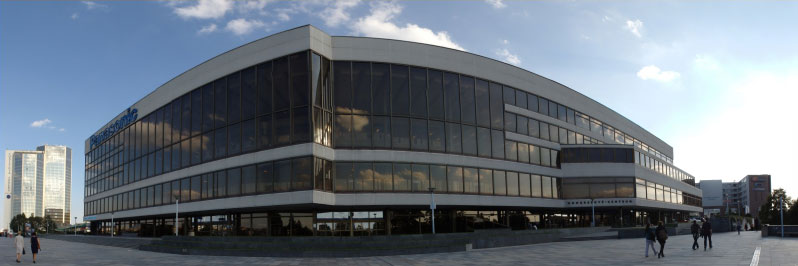
Prague Congress Centre (KCP)
5.května 65140 21 Prague 4
Czech Republic
Phone: +420 261 171 111
Website: www.kcp.cz