



Memory lateralisation and the intracarotid amobarbital procedure
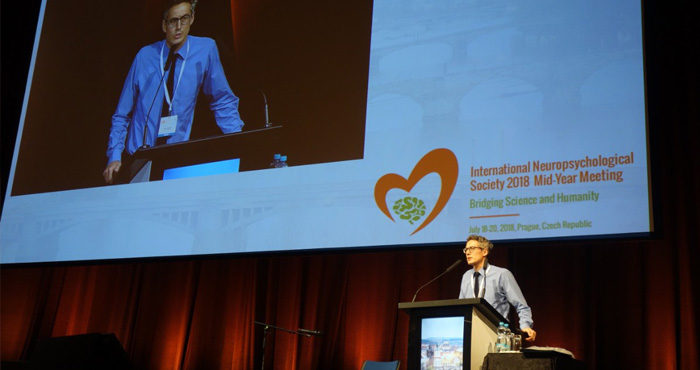
The 2018 mid-year meeting of the International Neuropsychological Society in Prague brought together clinicians and researchers committed to linking laboratory neuroscience with bedside care. Among the many clinical themes, the intracarotid amobarbital procedure, sometimes called the Wada test after its developer Juhn Wada, remains a cornerstone for evaluating how the two cerebral hemispheres support language and memory. For Australian practitioners, the conversation carries particular weight because epilepsy surgery programmes operate across a continent with uneven access to specialised services.
Memory lateralisation refers to the asymmetric distribution of verbal and visual memory functions between the left and right temporal lobes. Determining this asymmetry before surgery helps predict the risk of post-operative amnesia, a rare but devastating complication. The IAP offers a direct, although invasive, way to temporarily silence one hemisphere and observe the residual capacity of the other.
Historical development of the sodium amytal test
Wada first described the technique in 1949 while working in Japan, using sodium amytal to lateralise language dominance in patients being considered for epilepsy surgery. The procedure was later adapted in North America and Europe to assess memory, and by the 1980s it had become a routine component of presurgical workups at major epilepsy centres. Australian units adopted the test in a piecemeal fashion, influenced by training pathways through the Royal Melbourne Hospital and the Austin Health comprehensive epilepsy programme.
The drug itself, a short-acting barbiturate, acts within seconds when injected into the internal carotid artery. Its transient effect allowed clinicians to mimic the consequences of removing one hemisphere without actually doing so. This pharmacological approach provided an early answer to questions that structural imaging alone could not resolve.
How the intracarotid procedure works
During the test, a neuroradiologist advances a catheter from the femoral artery to the internal carotid, usually under fluoroscopic guidance. A small dose of amobarbital is injected while the patient remains awake and able to speak. The hemisphere contralateral to the injection becomes transiently weakened, allowing the examiner to observe speech arrest, dysarthria, or hemiparesis. Within minutes, memory items such as line drawings, words, or objects are presented, and later recall is tested once the drug wears off.
The procedure requires a coordinated team, typically a neuroradiologist, a neuropsychologist, and an epileptologist. In Australia, such teams are concentrated in tertiary hospitals in Melbourne, Sydney, Brisbane, Perth, and Adelaide, with smaller services extending to Hobart and Newcastle. Outside these hubs, patients often travel long distances, and Medicare reimbursement for interstate travel can be a deciding factor in whether a family proceeds with surgical evaluation.
Assessing hemispheric dominance for memory
The principal aim of the memory phase is to determine whether each temporal lobe can independently support new learning. A clear failure on the side of the proposed resection raises concern for global amnesia. Robust encoding by the contralateral hemisphere is reassuring. Most right-handed individuals show left hemisphere dominance for verbal material and right hemisphere dominance for non-verbal or visual material, though atypical patterns are common, especially in people with early-onset left hemisphere epilepsy.
Interpretation is not always straightforward. The dose of amobarbital, the speed of injection, vascular anatomy, and pre-existing cognitive impairment all influence results. Australian neuropsychologists often adapt the stimulus set to the patient's cultural and educational background, recognising that standard North American word lists may not reflect the vocabulary of a tradesperson from regional Victoria or a multilingual family from western Sydney.
Clinical use in presurgical epilepsy evaluation
Epilepsy surgery in Australia is shaped by state-level funding arrangements and the Epilepsy Foundation's clinical guidelines, which recommend multidisciplinary review for drug-resistant cases. The IAP has historically been requested when non-invasive methods leave doubt about memory lateralisation, particularly when MRI findings are ambiguous or when bilateral hippocampal abnormalities are present. In children, the test is used sparingly because of ethical concerns about informed assent and the technical challenge of arterial access.
The procedure is not without risk. Transient neurological deficits, carotid dissection, and rarely stroke have been reported. The Therapeutic Goods Administration classifies amobarbital as a Schedule 4 prescription-only medicine, and supply has at times been restricted because global manufacture has dwindled. Several Australian pharmacies have had to source the drug on a patient-by-patient basis, leading some centres to ration its use or transition to alternative agents such as methohexital.
Practice in Australian neuroscience centres
Specialist epilepsy surgery programmes in Australia include:
- Austin Health and the Royal Melbourne Hospital, which run a combined adult service for Victoria and Tasmania
- Royal Prince Alfred and Westmead hospitals, serving New South Wales
- The Prince Charles Hospital in Brisbane for Queensland referrals
- Sir Charles Gairdner Hospital in Perth, the main western Australian site
These centres collaborate through the Australian Epilepsy Clinical Trials Network and align their protocols with the Australasian Society for the Study of Brain Impairment. Continuing education workshops run by ASSBI and ANZAN help maintain consistency in how IAP results are interpreted alongside neuropsychological assessment batteries.
Ethical considerations and patient communication
Consent for the IAP requires careful explanation of risks, benefits, and alternatives. Under the Australian Charter of Healthcare Rights, patients are entitled to clear information about procedures performed in public hospitals, and the cognitive demands of the test itself must be understood before proceeding. Many Australian clinicians supplement verbal consent with visual diagrams and involve family members, recognising that fatigue and anxiety can influence performance during the procedure.
Cultural safety also matters. Aboriginal and Torres Strait Islander patients may have specific concerns about bodily integrity and decision-making authority, and clinicians are encouraged to consult with Aboriginal liaison officers. Similarly, culturally and linguistically diverse communities in suburban Sydney or Melbourne may require interpreters or adapted stimuli to make the test fair.
Functional MRI and other modern alternatives
Functional MRI has reduced the need for IAP in many centres, particularly for language lateralisation, but memory lateralisation remains more challenging to map non-invasively. Alternative or supplementary techniques include:
- Magnetoencephalography, available at a few Australian research sites
- Intracranial EEG with memory tasks, used in complex surgical cases
- Transcranial magnetic stimulation as an experimental tool for transient cognitive disruption
- Validated neuropsychological protocols that compare material-specific learning across modalities
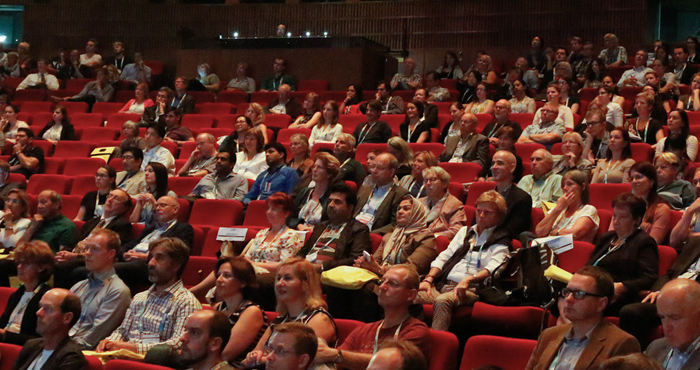
Despite these advances, the IAP retains a role when results are inconclusive or when surgical stakes are high. The Prague welcome cocktail offered delegates a chance to discuss how each technique fits within local resource constraints, and conversations there reinforced the value of retaining older methods while embracing newer ones.
General Information
Important information about the meetingIndustry
Support and exhibition opportunitiesCzech Republic
Beautiful country situated in the very heart of EuropeContact
How can we help you?
Prague Congress Centre (KCP)
5.května 65140 21 Prague 4
Czech Republic
Phone: +420 261 171 111
Website: www.kcp.cz