



Episodic memory tests in Australia: early detection of Alzheimer's
Neuropsychologists across Australia face growing demand for accurate, early identification of Alzheimer's disease, particularly among adults in their fifties and sixties who notice subtle changes in everyday recall. Episodic memory tests, which gauge the ability to learn new information and retrieve it after a delay, remain the most sensitive behavioural indicator of the degenerative processes that begin decades before a clinical diagnosis. Workshops held alongside meetings such as the International Neuropsychological Society mid-year conference have shown how brief structured assessments can be embedded into primary care.
In a country where more than 400,000 people live with dementia, pressure on memory services is acute. Medicare rebates for detailed neuropsychological testing are limited, and waitlists at tertiary memory clinics in Sydney, Melbourne, and Adelaide often stretch beyond six months. Early, evidence-based cognitive screening helps triage who needs specialist review and who can be monitored in the community.
The science of episodic memory decline before diagnosis
The hippocampus and surrounding medial temporal lobe structures are among the earliest regions affected by amyloid and tau pathology. As synaptic function falters, patients struggle to bind new information into long-term storage and retrieve it without cues. This pattern, prominent forgetting of recent material despite intact attention and language, distinguishes prodromal Alzheimer's from normal age-related forgetfulness or from frontotemporal syndromes.
Semantic clustering during encoding, impaired delayed recall with relative preservation of recognition, and high intrusion error rates are classic signatures. Research at the Florey Institute and the University of New South Wales has shown that certain list-learning paradigms predict conversion from mild cognitive impairment to Alzheimer's dementia within three years with accuracy above eighty per cent.
Standard cognitive tools used by Australian clinicians
A handful of well-validated instruments dominate clinical practice. Below is a practical comparison of the most commonly administered episodic memory measures in Australian memory clinics and private practices.
| Test | Time | Strengths | Limitations |
|---|---|---|---|
| Rey Auditory Verbal Learning Test | 15 min | Rich learning and retention profile | Lengthy for frail patients; manual scoring |
| California Verbal Learning Test, 3rd ed. | 20–25 min | Cued recall and forced-choice recognition | Higher cost for protocols |
| WMS-IV Logical Memory | 10–15 min | Australian normative data; familiar format | Less sensitive to subtle prodromal changes |
| Hopkins Verbal Learning Test–Revised | 5–10 min | Brief; suitable for telehealth | Limited diagnostic specificity |
| Free and Cued Selective Reminding | 15 min | Strong predictor of hippocampal dysfunction | Requires careful administrator training |
Most clinicians supplement these with a brief paragraph recall exercise and a category fluency task to capture language and executive contributions.
Local realities: access, cost, and rural service delivery
Geography shapes who receives timely assessment. Specialists cluster around tertiary hospitals in capital cities, while patients in regional centres such as Cairns, Ballarat, or Bunbury often travel several hours or rely on telehealth. The Australian Government's Better Access initiative supports some cognitive screening through GPs, but full neuropsychological batteries frequently fall outside rebate schedules, leaving families with out-of-pocket costs that can exceed one thousand dollars.
Telehealth delivery of verbal list-learning tasks has grown since the pandemic, particularly for patients in the bush who might otherwise miss appointments. Services accessible through My Aged Care help coordinate referrals, yet demand continues to outstrip supply. Adopting briefer, well-normed tools such as the HVLT-R allows clinicians to triage efficiently without sacrificing predictive value.
Cultural and linguistic considerations across diverse communities
Australian practice must accommodate a highly multilingual population. Verbal list-learning tests are heavily language-bound, so clinicians often choose culturally fair alternatives for patients from non-English-speaking backgrounds, including visual memory paradigms such as the Brief Visuospatial Memory Test–Revised. Older Aboriginal and Torres Strait Islander peoples in the Northern Territory and Western Australia benefit from assessment approaches that respect oral storytelling traditions and avoid time-pressured formats.
Practitioners experienced in neuropsychological evaluation more broadly often bring transferable skills to dementia work, including careful attention to effort, engagement, and linguistic background.
Integrating cognitive testing with biomarkers and imaging
Behavioural measures remain essential because they reflect real-world function, but they gain precision when combined with biomarkers. Amyloid PET, plasma p-tau assays, and structural MRI of hippocampal volume are increasingly available through the Australian Imaging, Biomarkers and Lifestyle (AIBL) study and through specialist clinics in Melbourne and Sydney. A borderline FCSRT result takes on greater weight when paired with a positive amyloid ratio in cerebrospinal fluid.
Practical algorithms reserve biomarker investigation for patients with objective memory impairment who can consent to lumbar puncture or PET imaging. Where biomarkers are inaccessible, serial cognitive testing at twelve-month intervals offers a pragmatic alternative for tracking progression.
Workforce training and continuing education
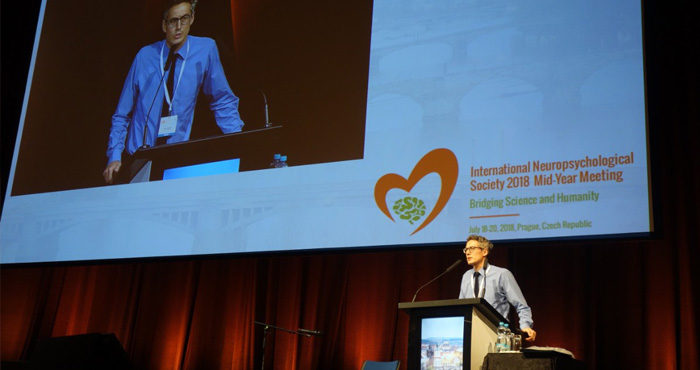
Building local capacity requires sustained education. International meetings, including the mid-year conference hosted in Prague in 2018, bring Australian trainees into contact with experts on diagnostic criteria and list-learning paradigms. Universities in Melbourne, Sydney, Perth, and Brisbane offer postgraduate clinical neuropsychology programs with supervised practice in memory assessment.
The Australasian Society for the Study of Brain Impairment and similar bodies run annual refresher courses. Combining these pathways with mentorship from senior clinicians helps maintain consistent test selection, scoring, and reporting across diverse settings, from Bondi to Broome.
General Information
Important information about the meetingIndustry
Support and exhibition opportunitiesCzech Republic
Beautiful country situated in the very heart of EuropeContact
How can we help you?
Prague Congress Centre (KCP)
5.května 65140 21 Prague 4
Czech Republic
Phone: +420 261 171 111
Website: www.kcp.cz