



Using D-KEFS across cultures and clinical settings
Executive-function assessment becomes more valuable when it reflects the language, education, culture and daily demands of the person being tested. The Delis–Kaplan Executive Function System (D-KEFS) offers a structured way to examine skills such as inhibition, cognitive flexibility, verbal fluency, planning and problem-solving, yet its interpretation requires care when the client comes from a different population than the reference sample.
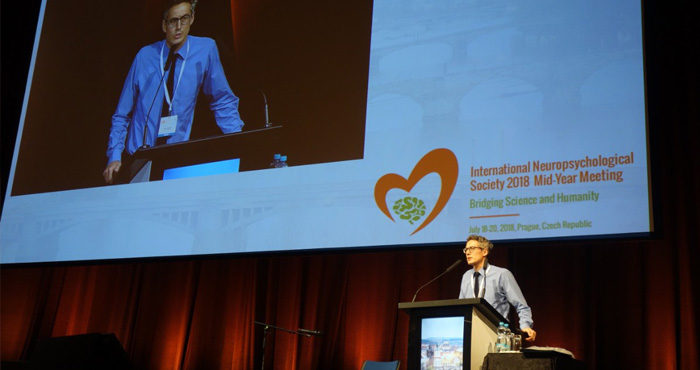
A workshop on applying D-KEFS internationally is therefore relevant to Australian neuropsychologists, researchers and allied health professionals. The discussion fits the wider purpose of the INS 2018 meeting, which connected neuroscience and clinical practice with humane care and cultural awareness; the programme’s conference context also highlights why assessment should be considered within real clinical environments rather than treated as a collection of scores.
What the D-KEFS can reveal
The battery contains several tasks that sample executive processes through different forms of activity. Trail Making examines sequencing and switching, Colour–Word Interference addresses inhibition and cognitive flexibility, and Verbal Fluency explores strategic word generation. Other measures, including Design Fluency, Sorting, Twenty Questions and Tower, offer further views of initiation, concept formation, planning and rule discovery.
This range is useful because executive dysfunction rarely appears as a single, uniform deficit. A client may perform adequately on a structured task yet struggle with open-ended planning, or show slow speed while retaining sound reasoning. Interpreters should therefore consider patterns across subtests, error types, time limits and behavioural observations rather than relying on one scaled score.
Language and cultural influences
Many D-KEFS tasks depend on language. Word-generation performance can be affected by vocabulary, bilingual development, literacy, schooling, the frequency of particular words and the language used at home. A person who speaks English as an additional language may need more time to retrieve words, even when their underlying executive ability is intact.
Cultural familiarity can also influence how a client understands instructions, responds to authority and approaches unfamiliar problem-solving tasks. For Aboriginal and Torres Strait Islander clients, culturally safe practice may involve consultation with local services, attention to community context and careful consideration of whether the testing environment feels respectful and predictable. An interpreter can assist communication, but interpretation is not the same as translating a norm-based score.
Adapting practice for Australia
Australian clinicians work across highly varied settings, from tertiary hospitals in Sydney and Melbourne to regional services in Townsville, Alice Springs and remote Western Australia. Travel, limited specialist access and telehealth can shape assessment choices. A flexible protocol may be necessary when a client has fatigue, sensory limitations, limited schooling or a long journey to the clinic.
The Australian market also includes public hospital neuropsychology, private assessment practices, university clinics, rehabilitation providers and services funded through schemes such as Medicare or the National Disability Insurance Scheme. Reports may be read by families, schools, insurers, employers and support coordinators, so technical findings should be explained in plain Australian English and linked to everyday functioning rather than presented as isolated percentile rankings.
Interpreting scores with appropriate caution
D-KEFS normative data can provide a useful reference point, but norms do not automatically transfer across countries or populations. Differences in education systems, bilingualism, socioeconomic conditions, test exposure and population health may affect performance. Australian practitioners should identify the normative sample used, document its fit and state when local evidence is limited.
A low score may reflect executive impairment, but it might also arise from language load, visual difficulty, unfamiliarity with timed testing, anxiety, pain or reduced engagement. Conversely, a familiar and highly educated client may compensate effectively during formal assessment. Integrating developmental history, school and employment records, informant reports and functional observations creates a more defensible formulation.
From workshop learning to patient care
Training is most valuable when it changes clinical decisions. Practitioners can practise explaining each task before administration, recording qualitative errors, distinguishing genuine rule violations from misunderstanding and checking whether the client’s behaviour matches the test profile. Case discussion is especially helpful for examining how the same score may carry different meanings in a refugee, bilingual, older or rural Australian population.
The clearest reports connect results to practical supports: breaking complex instructions into steps, using written reminders, allowing extra planning time, reducing distractions or providing supervision for safety-critical tasks. Neuropsychological assessment should describe both limitations and retained abilities, giving families and referrers information they can use.
International collaboration can strengthen this process by encouraging research with Australian participants and culturally diverse groups. Local validation studies, transparent adaptations and respectful engagement with communities will help clinicians use executive-function measures more confidently while preserving the individual, clinical meaning behind every result.
General Information
Important information about the meetingIndustry
Support and exhibition opportunitiesCzech Republic
Beautiful country situated in the very heart of EuropeContact
How can we help you?
Prague Congress Centre (KCP)
5.května 65140 21 Prague 4
Czech Republic
Phone: +420 261 171 111
Website: www.kcp.cz