





How clinicians can distinguish everyday forgetfulness from memory decline
Forgetting a name, misplacing keys or walking into a room without remembering why is common across adulthood. Stress, poor sleep, medication effects, hearing difficulties and divided attention can all disrupt recall without indicating a neurodegenerative disorder. The clinical task is to identify whether memory lapses are occasional and manageable or persistent, progressive and functionally significant.
In Australia, that assessment may occur in a busy GP clinic in Melbourne, a private practice in Sydney, a regional health service in Queensland or an Aboriginal Community Controlled Health Organisation. Clinicians need culturally safe, practical methods that account for language, education, health access and the patient’s usual responsibilities.
Start with the patient’s baseline
A useful assessment begins with the person’s previous level of functioning. Ask what they managed independently six months or two years ago, including work, driving, finances, cooking, medication routines and social commitments. A retired engineer, a young parent and an older person from a remote community may show very different memory demands.
Collateral information from a partner, adult child or trusted carer can clarify change over time. The clinician should obtain consent and avoid treating family observations as automatically definitive. Differences in expectations, family stress or cultural communication styles can influence how forgetfulness is described.
Examine attention before memory
Many apparent memory problems begin with weak attention. A patient who is rushing, anxious, sleep-deprived or trying to follow a conversation in a noisy waiting room may never properly register the information. Later, they may experience the failure as “forgetting”, even though the material was not encoded clearly.
Briefly explore sleep apnoea, depression, anxiety, pain, alcohol use and medication burden. Anticholinergic medicines, sedatives and some combinations of prescription and over-the-counter drugs can impair alertness. Hearing and vision should be checked as well, particularly when a person reports difficulty following conversations or instructions.
Look for progression and daily impact
Normal age-related memory change is usually occasional and may improve with reminders, written notes or extra time. Pathological decline is more concerning when it progresses, affects several settings and interferes with familiar activities. Repeatedly missing bill payments, getting lost on known routes or abandoning cooking because of confusion deserves closer investigation.
The pattern matters as much as the complaint. Alzheimer’s disease often affects new learning and recent events, while vascular cognitive impairment may involve slowed processing, executive dysfunction and an uneven course. Frontotemporal disorders can initially present through personality, language or social changes rather than forgetfulness.
| Clinical feature | More consistent with ordinary lapses | More concerning for pathological decline |
|---|---|---|
| Frequency | Occasional and linked to distraction | Increasingly frequent without a clear trigger |
| Recall | Improves with cues or recognition | Remains poor despite prompts |
| Function | Daily routines remain independent | Bills, medicines, driving or work are affected |
| Course | Stable or fluctuates with stress and sleep | Gradual, persistent deterioration |
| Insight | Person notices and compensates | Limited awareness or marked family concern |
Use culturally responsive cognitive assessment
A screening score should never be interpreted in isolation. Performance can be influenced by English proficiency, literacy, schooling, familiarity with testing, migration history and cultural concepts of ageing. An Aboriginal or Torres Strait Islander patient may need an assessment approach that respects community, kinship and communication protocols rather than relying on a narrow Western testing model.
Use an accredited interpreter where appropriate, and document the language in which the person is most comfortable. Neuropsychological assessment can provide a more detailed profile of verbal learning, visual memory, executive control and processing speed, especially when the results are interpreted against suitable normative data.
Distinguish memory from mood and health
Depression can produce slowed thinking, reduced concentration and a strong subjective sense of cognitive failure. Anxiety may cause constant self-monitoring, while grief can make attention and recall feel unreliable. These conditions can coexist with dementia, so apparent emotional explanations should not end the assessment prematurely.
Review thyroid disease, vitamin deficiencies, neurological illness, recent head injury and changes in alcohol intake. Ask about falls, fainting, seizures, headaches and fluctuations in alertness. A medication review with a pharmacist may be particularly valuable for older Australians managing multiple prescriptions through community pharmacies or residential care.
Communicate findings without creating alarm
Explain the difference between a symptom, a diagnosis and a risk factor. Patients often fear dementia after seeing a forgotten appointment or struggling to recall a word, so clinicians should describe the observed pattern precisely rather than using vague labels such as “senility”. Clear examples help families understand what should be monitored.
A written plan may include sleep and mood treatment, medication review, hearing support, exercise, social engagement and a repeat assessment after a defined interval. If safety is affected, discuss driving, cooking, wandering and financial protection sensitively. Australian clinicians should follow relevant state or territory guidance and involve the patient in decisions wherever capacity allows.
Choose appropriate follow-up
A single normal screening result does not rule out early disease, particularly in a highly educated person who is compensating well. Conversely, a low score does not prove dementia when the patient is acutely unwell, unfamiliar with English testing or severely anxious. Repeat assessment can reveal whether the pattern is stable, improving or progressing.
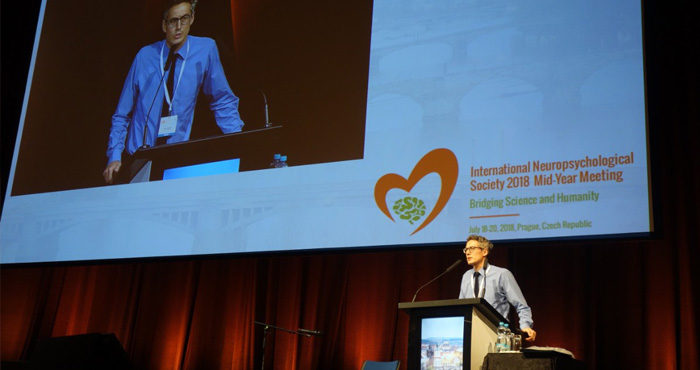
Referral to a geriatrician, neurologist, psychiatrist, memory clinic or neuropsychologist should reflect the presentation and local availability. For clinicians attending international neuropsychology meetings or planning professional travel, practical venue information such as Hotel Ankora details can support participation in education focused on humane, culturally informed care. The central standard remains consistent: investigate meaningful change while preserving dignity, independence and the person’s own account of their life.
General Information
Important information about the meetingIndustry
Support and exhibition opportunitiesCzech Republic
Beautiful country situated in the very heart of EuropeContact
How can we help you?
Prague Congress Centre (KCP)
5.května 65140 21 Prague 4
Czech Republic
Phone: +420 261 171 111
Website: www.kcp.cz