



Cross-cultural test translation for humane neuropsychology
Neuropsychological tests do not travel unchanged between languages, communities or health systems. A word that seems clear in English may carry a different level of formality, emotional force or cultural meaning in Arabic, Mandarin, Vietnamese or an Australian Aboriginal language. The workshop on Cross-Cultural Test Translation and Adaptation addressed how clinicians and researchers can respond to these differences without weakening scientific validity.
For Australian practitioners, this work has immediate relevance. Clinics in Sydney, Melbourne, Brisbane and Perth serve families with varied migration histories, while regional services may support Aboriginal and Torres Strait Islander communities with distinct languages, cultural frameworks and expectations of care. A translated test must therefore be understandable, respectful and appropriate for the setting in which it will be used.
Translation is also more than replacing English words. Adaptation may require revised examples, altered instructions, new normative data and careful consideration of literacy, education and familiarity with testing situations. A direct translation can preserve grammar while changing the difficulty of an item, creating misleading results for children, older adults or people with limited formal schooling.
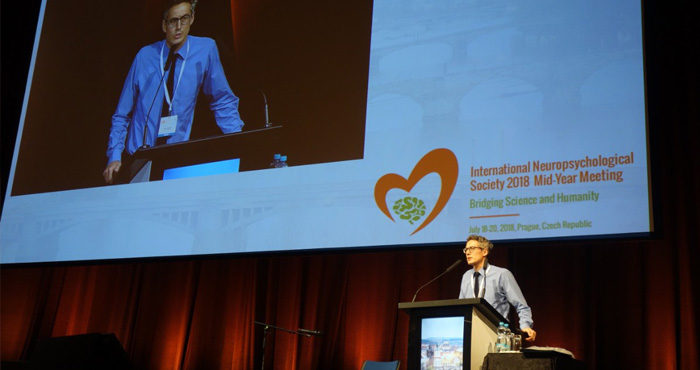
The Prague meeting connected these technical concerns with humane clinical practice. Its wider programme explored neuroscience, culture and patient care, making the workshop relevant to anyone involved in assessment, rehabilitation, research or continuing professional education.
Why literal translation is insufficient
A test item can depend on idioms, social conventions, school experiences or objects that are common in one country but unfamiliar elsewhere. A memory task involving a particular food, household routine or public service may measure cultural knowledge rather than memory. Similarly, an instruction that sounds neutral in English may be perceived as abrupt or confusing after translation.
Cross-cultural adaptation begins with conceptual equivalence. Translators and neuropsychologists first identify what an item is intended to measure, then examine whether the same construct exists in the target community. Linguistic equivalence, semantic clarity, relevance and cultural acceptability all need separate review rather than being assumed from a polished bilingual version.
A disciplined translation pathway
Best practice commonly uses forward translation by at least two suitably qualified translators, followed by reconciliation and independent back-translation. A review panel can then compare the versions, identify ambiguous wording and document why changes were made. Cognitive interviews with people from the target population reveal problems that professional translators may not detect.
Pilot testing should include the age, education, language and clinical characteristics of the intended sample. Australian teams may need separate evidence for metropolitan and rural populations, particularly when access to interpreters, schooling histories and exposure to written English varies. Findings should be reported transparently instead of presenting an adapted instrument as if it were identical to the original.
Psychometric evidence across cultures
Reliability and validity must be examined after adaptation. Internal consistency, test–retest stability and relationships with other measures provide useful evidence, but they do not prove that scores have the same meaning across groups. Researchers should also investigate floor and ceiling effects, response styles and whether individual items function differently.
Statistical literacy helps teams avoid treating a single coefficient as definitive proof. A simple statistical thinking example can illustrate why probability and sampling assumptions matter, although clinical validation requires considerably richer evidence. Differential item functioning, measurement invariance and appropriately matched normative samples are especially important when scores may influence diagnosis, education or access to services.
Practical checks for Australian teams
A culturally responsive workflow benefits from clear records and local consultation.
- Involve bilingual clinicians and community representatives early.
- Check idioms, images, names, currency and everyday references.
- Record every alteration to instructions, scoring or administration.
- Separate language proficiency from the cognitive ability being assessed.
Before using results in an Australian report, practitioners should confirm whether norms match the client’s age, education and language background. The Australian Psychological Society’s ethical expectations, the Privacy Act 1988 and the National Statement on Ethical Conduct in Human Research all support careful handling of identity, data and informed participation. The Disability Discrimination Act 1992 also reinforces the need for accessible assessment processes.
Working with communities and interpreters
Community consultation is strongest when it begins before a test is finalised. Aboriginal and Torres Strait Islander health services may advise on culturally safe communication, kinship concepts and appropriate engagement with local Elders. Consultation should be paid, credited and continued through interpretation of results, rather than treated as a one-off approval step.
Interpreters should not be asked to improvise technical explanations during testing. They need briefing on standardised instructions, confidentiality and the limits of their role. In everyday Australian practice, telephone or video interpreting can be useful when a specialist language is unavailable locally, but clinicians should consider privacy, rapport and the possibility that visual or timed tasks will be harder to administer remotely.
From conference learning to clinical practice
The value of a workshop lies in how its methods influence decisions after the event. A translated instrument may be suitable for screening but lack evidence for individual diagnosis. Reports should state the language used, interpreter involvement, norms applied, adaptations made and any limits on score interpretation.
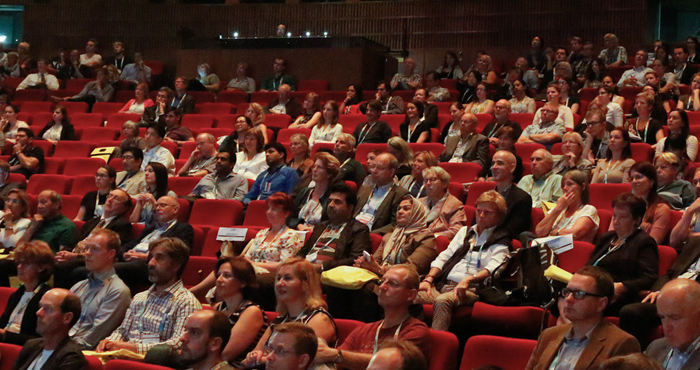
The INS 2018 meeting archive placed this discussion within a broader programme of clinical workshops, posters and scientific exchange in Prague. For Australian services, the same spirit can support partnerships between universities, hospitals, private practices and community-controlled organisations, helping assessment remain both empirically defensible and responsive to the person sitting in front of the clinician.
Evidence to retain during adaptation
- Translator qualifications and language expertise
- Review-panel decisions and unresolved disagreements
- Pilot sample characteristics and interview findings
- Reliability, validity and item-level analyses
Questions for implementation records
- Which population is the adapted test intended to serve?
- What interpretation limits apply to individual scores?
- How will feedback be explained in the client’s preferred language?
- When will the translation and norms be reviewed again?
General Information
Important information about the meetingIndustry
Support and exhibition opportunitiesCzech Republic
Beautiful country situated in the very heart of EuropeContact
How can we help you?
Prague Congress Centre (KCP)
5.května 65140 21 Prague 4
Czech Republic
Phone: +420 261 171 111
Website: www.kcp.cz