



The Bourneville-Pringle Connection: Cognitive Profile in Tuberous Sclerosis
Tuberous sclerosis complex (TSC), historically called Bourneville-Pringle disease, is a genetic disorder in which benign tumors develop across several organs, including the brain. Its neurological effects range from seizures and cortical tubers to sleep problems, autism traits, attention difficulties, and intellectual disability.
The cognitive profile is highly variable. Some people with TSC have average or superior abilities, while others experience significant developmental and adaptive challenges. Understanding this spectrum helps clinicians move beyond a disease label and create care plans that respect communication style, family context, culture, and personal strengths.
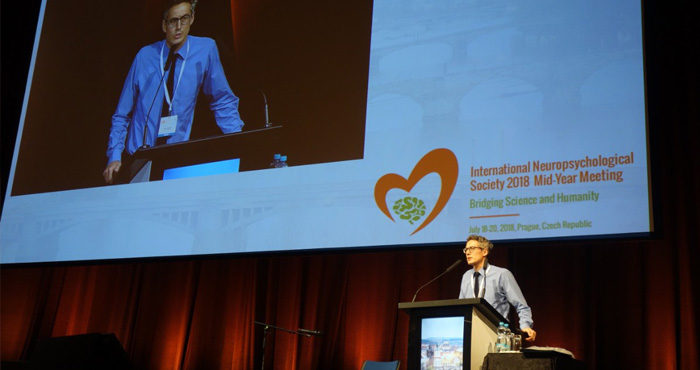
The International Neuropsychological Society’s 2018 meeting in Prague emphasized the connection between scientific progress and humane clinical practice. That perspective is especially relevant to TSC, where neurological findings must be interpreted alongside everyday functioning and quality of life.
From Bourneville-Pringle Disease to TSC
The condition was described in the nineteenth century by Désiré-Magloire Bourneville and John James Pringle. Modern genetic research identifies pathogenic variants in the TSC1 or TSC2 genes, which regulate the mTOR pathway involved in cell growth. Disruption of this pathway contributes to hamartomas and brain lesions known as cortical tubers.
TSC follows an autosomal dominant inheritance pattern, although many cases arise from a new mutation. The clinical presentation differs widely even within the same family. Genetic results, seizure history, brain imaging, kidney and skin involvement, and developmental milestones all contribute to an individualized neurological picture.
How Brain Involvement Shapes Cognition
Cortical tubers, subependymal nodules, and subependymal giant cell astrocytomas can influence cognition through different mechanisms. Early-onset epilepsy, frequent seizures, and epileptic encephalopathy may interfere with brain development, learning, and memory. Medication effects, poor sleep, anxiety, and sensory sensitivities can further alter test performance.
Common areas of difficulty include executive functioning, sustained attention, processing speed, working memory, language, visuospatial reasoning, and social cognition. Some individuals show a distinctive uneven profile: strong factual knowledge or visual skills alongside weak planning, flexible thinking, or independent organization. These discrepancies can be missed when assessment relies on a single intelligence score.
A Variable Neuropsychological Pattern
Neuropsychological evaluation should identify both impairments and preserved abilities. Developmental history, school reports, seizure patterns, caregiver observations, adaptive behavior, and direct testing provide a fuller picture than a brief screening measure. Repeated assessment can reveal changes associated with treatment, maturation, or increasing environmental demands.
| Cognitive or functional area | Possible presentation in TSC | Helpful clinical focus |
|---|---|---|
| Attention | Distractibility, slow task completion, inconsistent alertness | Short tasks, reduced distractions, monitoring fatigue |
| Executive function | Difficulty initiating, shifting, planning, or checking work | Visual schedules, stepwise instructions, coaching |
| Memory | Weak working memory or inefficient learning | Repetition, retrieval practice, multimodal teaching |
| Language and communication | Delayed language, pragmatic difficulties, reduced comprehension | Plain language, extra processing time, speech therapy |
| Social cognition | Trouble reading cues, regulating emotion, or adapting behavior | Structured social support and functional observation |
| Adaptive skills | Challenges with self-care, safety, money, or routines | Occupational therapy and real-world skill training |
Autism, Epilepsy, and TAND
TSC-associated neuropsychiatric disorders, often abbreviated TAND, include autism spectrum features, attention-deficit/hyperactivity symptoms, anxiety, mood problems, aggression, and sleep disturbance. These concerns may occur with or without intellectual disability and can fluctuate according to developmental stage and seizure control.
A comprehensive assessment should therefore examine behavior across settings rather than assume that every difficulty reflects a cognitive deficit. A child who appears inattentive may be experiencing absence seizures, medication sedation, sensory overload, or language-processing difficulty. Careful differential assessment prevents inappropriate expectations and supports targeted intervention.
Assessment That Supports Humane Care
Testing should be adapted to age, communication level, motor abilities, fatigue, and cultural-linguistic background. Clinicians should explain procedures clearly, allow breaks, and distinguish limited opportunity from limited capacity. A person’s preferred communication method should be treated as clinically meaningful evidence, not as an obstacle to standardized care.
Intervention planning can include educational accommodations, cognitive rehabilitation, behavioral therapy, speech-language treatment, occupational therapy, seizure management, and sleep support. Physical activity may also contribute to general brain health; wider research on exercise and cognition offers useful context, although exercise recommendations for a person with TSC should be individualized by the medical team.
Practical Priorities for Families and Clinicians
A coordinated plan is most effective when neurology, neuropsychology, psychiatry, education, rehabilitation, and family caregivers share information. Useful priorities include:
- Track seizures, sleep, medication changes, mood, and school or workplace performance over time.
- Use clear routines, visual prompts, and manageable task sequences for executive-function weaknesses.
- Screen regularly for autism traits, attention problems, anxiety, depression, and behavioral change.
- Translate test findings into practical goals for communication, independence, education, and safety.
- Reassess during major transitions, such as starting school, entering adolescence, or seeking employment.
The Bourneville-Pringle legacy now connects historical clinical observation with genetics, neuroimaging, developmental science, and patient-centered neuropsychology. A cognitive profile in TSC is best understood as dynamic and individual rather than predetermined by diagnosis or lesion burden.
Clinicians, educators, and families can use this framework to recognize hidden difficulties, build on existing abilities, and advocate for care that is scientifically informed and genuinely humane.
General Information
Important information about the meetingIndustry
Support and exhibition opportunitiesCzech Republic
Beautiful country situated in the very heart of EuropeContact
How can we help you?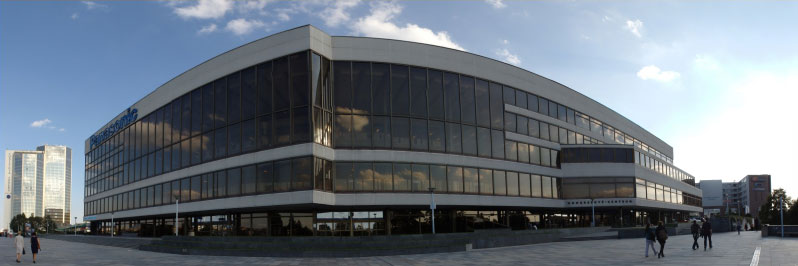
Prague Congress Centre (KCP)
5.května 65140 21 Prague 4
Czech Republic
Phone: +420 261 171 111
Website: www.kcp.cz